Expert Interviews
Sarcomas – Intraoperative Radiation Therapy

Alexandra Pfitzmann ·
Sarcomas are among the rarest types of cancer—and that is precisely what makes them so challenging. They are malignant tumors that can develop in soft tissue or bone and occur anywhere in the body. In Germany, approximately 2,500–3,200 people are diagnosed with sarcoma each year, accounting for about 1% of all new cancer cases. Despite their rarity, this group of tumors includes over 100 different subtypes that vary greatly in behavior, growth, and treatment. Early diagnosis and treatment at specialized centers are therefore crucial for the prognosis.
The editorial team of the Leading Medicine Guide had the opportunity to speak with Professor Dr. Tonus, a specialist who provides intraoperative radiation therapy at the Sarcoma Center in Hamburg and is one of the leading experts in this field.
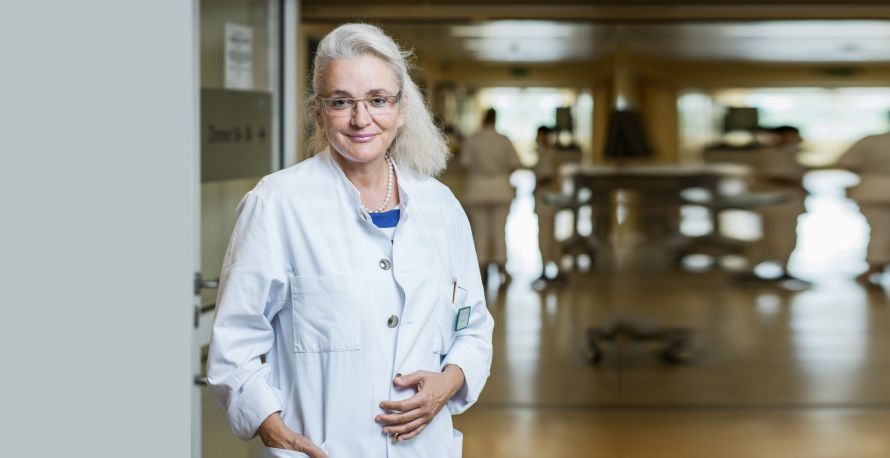
The location of a sarcoma often influences the surgical strategy more than any other characteristic of the tumor—sometimes even more than its size or biological behavior. If a sarcoma is located in close proximity to nerves, major blood vessels, or sensitive organs, this alters the entire surgical plan, as a delicate balance must be struck between oncological radicality and functional preservation.
“The diagnosis is so challenging because this is a true rare disease—a condition that occurs extremely rarely. The incidence is only about three to five cases per 100,000 people. If we assume an average of four per 100,000 and apply a rule of three to a population of around 80 million, this results in approximately 2,500 to 3,200 new cases per year. Depending on which incidence rate is used and which population figure is assumed, the number of cases in Germany thus ranges somewhere between 3,000 and 4,000 annually. This presents us with a condition that is not only rare but also challenging due to its enormous diversity—over 200 different types are known. This number continues to rise as diagnostic methods become increasingly precise. With refined immunohistochemical staining and increasingly sophisticated detection methods, more variants can be identified. The more precisely one searches, the more different forms one finds. “It is precisely this triad—rare disease, increasingly precise diagnostics, and the resulting sharp rise in subtypes—that means even specialized centers see many of these rare entities only a few times a year,” Professor Dr. Tonus makes clear at the beginning of our conversation.
We need specialized sarcoma centers that pool expertise and achieve sufficiently high case volumes. This is the only way to ensure the necessary diagnostic and therapeutic quality.
“The patients who arrive there have very different backgrounds. Many—especially younger people—are digitally savvy; they do their research early on, read hospital reviews, and specifically seek out specialized facilities. Some arrive with a diagnosis and a suspicion of sarcoma even before a biopsy has been performed. This procedure, too, must meet certain quality criteria, such as core biopsies with at least six—and preferably more—samples. Others, on the other hand, are referred or follow recommendations. And then there is the opposite extreme: people who only present at a very advanced, metastatic stage and are looking for a last-ditch effort—even though treatment often no longer offers any realistic benefit at this point,” states Prof. Dr. Tonus.
Experience shows that tumors can begin to become malignant once they reach a size of about five centimeters—a finding based on large-scale screening studies from England.
Prof. Dr. Tonus illustrates the procedure: “To illustrate this, I like to use a simple analogy: A benign lipoma would be removed like a ball—clearly defined and without requiring a large safety margin. A sarcoma, on the other hand, I operate on in such a way that I don’t even see the tumor itself. It remains completely surrounded by a healthy capsule, which is removed along with it. Everything that directly borders the tumor must be removed as well. That is the principle of sarcoma surgery: A skilled sarcoma surgeon does not see the tumor. If a tumor is located in close proximity to relevant blood vessels or nerves, these structures must be replaced or—depending on the extent of the defect—reconstructed or sacrificed. The spectrum ranges from small tumors to retroperitoneal masses weighing 20 kilograms. The surgical challenge therefore always depends on the location. If a tumor is favorably situated—for example, in the groin region, surrounded by muscle tissue without critical vessels or nerves—it can be removed easily and without collateral damage. However, if large tumors grow around important arteries, veins, or nerves, this presents surgeons with difficult decisions. In the leg, this affects, for example, the large femoral nerve at the front or the sciatic nerve at the back. Although the leg is preserved, its function may be lost. In such cases, a careful assessment must be made as to whether surgery is advisable or whether targeted radiation therapy—such as stereotactic radiation—is a viable alternative.”
Once a diagnosis of a medium-sized sarcoma has been confirmed, it does not constitute an acute medical emergency that would require immediate surgery on the same day. Nevertheless, prompt action must be taken—but only after the guidelines have been fully followed.
“The first step is imaging: either a patient notices a new swelling, or an MRI is already available. This is followed by a puncture in the form of a fan-shaped biopsy, in which multiple samples are taken from the suspicious areas. These are sent to the pathologist, and if a malignancy is confirmed, staging is performed using a CT scan of the thorax and abdomen, since sarcomas typically metastasize to the lungs. Only then is the case discussed at the tumor board. For very large tumors, neoadjuvant therapy may be appropriate. A so-called “Sarkulator” helps assess the risk of recurrence or death; if this risk exceeds 60 percent, it supports the decision for pre-treatment. “Despite the urgency, the detection of a malignant tumor does not mean that one should rush into treatment. What is crucial is a swift but structured approach in accordance with the guidelines,” emphasizes Prof. Dr. Tonus regarding the treatment process.
Intraoperative radiation therapy (IORT) can offer a significant therapeutic advantage in selected situations because it addresses issues where conventional radiation therapy reaches its limits. It is administered directly during surgery, after the tumor has been removed, and allows for highly precise irradiation of the tumor bed before the body is closed again. This opens up possibilities that would not be achievable with external radiation therapy alone.
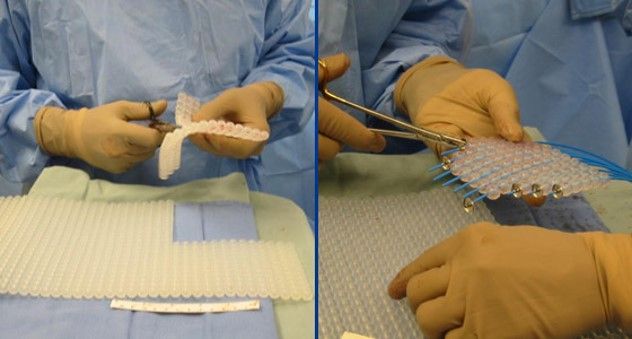
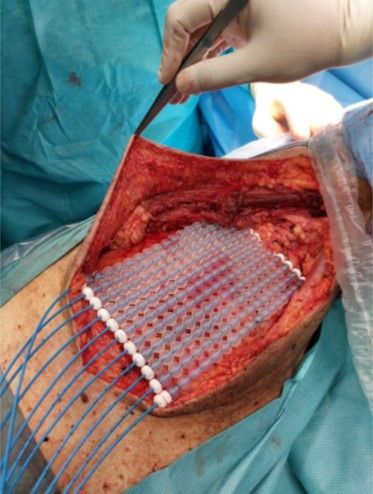
Prof. Dr. Tonus explains the advantages of IORT in detail: “In the retroperitoneum, sarcomas can often grow very large before they even become clinically apparent—the abdominal cavity compensates for a long time, and many patients only notice that they have to loosen their belt further and further. Such tumors must be surgically removed, regardless of their size. But even when they are removed, it is not always possible to do so with a wide safety margin. Often, only a very narrow layer of healthy tissue remains, sometimes even just a microscopic remnant—that is, an R1 situation. This is exactly where the flap comes into play. If it is inserted after tumor removal, the tumor bed can be specifically shaped. This allows radiation therapy to be precisely targeted at the area where the tumor was located. The advantage is obvious: the targeting is optimal because the surgeon is right there and is performing the surgery anyway. No additional incision into the abdomen is needed; everything is done in a single procedure. In addition, radiation-sensitive structures can be deliberately spared. The small intestine or ureter can be positioned so that they lie outside the irradiated field; the corresponding segments of the radiation applicators are then left unloaded. This planning is carried out in collaboration with physicists and radiation oncologists and is tailored individually to the patient’s anatomical situation.”
Intraoperative radiation therapy is a procedure with an extremely low complication rate, which plays an important role in patient education. Many patients also find it reassuring that part of the necessary radiation dose can be administered during the surgery itself.
Prof. Dr. Tonus explains: “If, for example, a total dose of 50 Gy must be achieved postoperatively and a boost of about 15 Gy can be administered intraoperatively, this reduces the remaining dose and thus the number of subsequent radiation sessions. Three aspects are crucial: targeted placement directly at the tumor bed, the low complication rate, and the ability to keep radiation-sensitive organs out of the field using retractors. The flap, which can be visualized as shown in the images, allows for precise coverage of the target area. The calculation of the radiation dose follows a clear principle. The decisive factor is whether the tumor has been completely removed or whether potentially microscopic tumor residues remain that cannot be detected with the naked eye. The penetration depth of such remnants is usually only a few millimeters. This is precisely why it is called brachytherapy: “brachy” means “short”—the dose acts close to the surface, where it reaches high levels, while penetrating only minimally into the depth. The physicist uses imaging to assess where suspicious areas are located and calculates the necessary maximum dose at the corresponding depth. “We’re talking about millimeters here, not centimeters or even larger body regions,” she explains, adding:
“Patient groups with large liposarcomas in the retroperitoneum, for whom IORT is already established as an option in the guidelines, benefit particularly from this approach. It is equally useful for recurrences of rectal cancer, especially in the narrow pelvis. Furthermore, it is an option for locally advanced tumors when other options have been exhausted. However, it is not intended for small tumors that can be clearly resected with a margin of healthy tissue. Essentially, therefore, this involves a negatively selected patient population for whom the combination of surgery and intraoperative radiation offers an additional therapeutic benefit. Since surgery is performed anyway, this add-on can be easily integrated by precisely positioning the flap over the tumor bed at the end of the procedure.”
IORT is also particularly valuable for recurrent sarcomas—that is, tumors that reappear after prior treatment—because repeat external radiation therapy is often only possible to a limited extent.
“Intraoperative radiation plays a particularly important role in sarcomas that, due to their location, are difficult to remove with an adequate safety margin. Shallow tumor residues, in particular—which cannot be completely excised surgically within healthy tissue—benefit from a high-dose boost delivered directly to the tumor bed. While postoperatively one can only reconstruct the location of residual disease based on imaging, the surgeon knows exactly during the operation where the final dissection step took place. That is precisely where the flap is applied—not because it is particularly complicated, but because it can be done immediately and precisely. This reduces the recurrence rate and takes advantage of brachytherapy’s shallow penetration depth. The optimization of the radiation dose results from a clear collaboration between surgery, radiation therapy, and physics. Together with the anesthesia team, this group forms a well-coordinated four-person team. The flap is positioned in the operating room exactly as it is to be irradiated later. Based on this, the physicists calculate the penetration depth and dose for each individual source. The small iridium spheres are inserted one after another into the hollow needles, pause at defined points, deliver the calculated dose, and continue moving. Each sphere and each catheter is calculated separately, resulting in a highly personalized treatment. “If, for example, the ureter lies beneath a particular segment, the dose there can be reduced or the corresponding source omitted to avoid exceeding the critical exposure limit. This ensures that sensitive structures such as nerves, blood vessels, the small intestine, or the ureter are protected as effectively as possible,” explains Prof. Dr. Tonus.
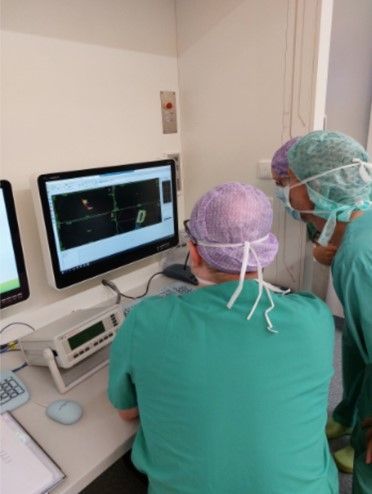
The IORT procedure is clearly structured in terms of timing: After surgery, the implant is inserted, which takes about half an hour to three-quarters of an hour. The actual radiation therapy is controlled from an adjacent, radiation-shielded control room, where the medical physicist and the radiation oncology team monitor the entire procedure via monitors and cameras and precisely control the dose delivery.
Prof. Dr. Tonus comments: “The actual radiation treatment proceeds quickly, depending on the size of the flap and the ‘freshness’ of the iridium source. A new source delivers the dose faster, while an older one does so more slowly. Overall, the radiation treatment usually takes between thirty minutes and one hour. How long the patient stays in the hospital afterward does not depend on the radiation treatment, but solely on the extent of the surgical procedure. Superficial flaps, such as those on the chest wall, heal quickly, especially if the skin could be preserved. Major procedures, such as pelvic exenteration—involving the removal of the bladder, prostate, or uterus—require significantly longer hospital stays.”
IORT does not replace or supplement conventional radiation therapy. It is a component of a multimodal approach that improves the chances of local tumor control—particularly in cases of complex or anatomically challenging sarcomas—without unnecessarily compromising the function of surrounding structures.
Intraoperative radiation therapy (IORT) can significantly reduce the risk of local recurrence in sarcomas—especially when the tumor’s location makes it difficult to remove with an adequate safety margin. It is precisely in these anatomically challenging situations that IORT demonstrates its strengths.
When a sarcoma is located close to nerves, blood vessels, or organs, the tumor can often be completely removed, but the surgical safety margin is inevitably narrow. This means that even if all tumor tissue has been removed macroscopically, microscopic clusters of cells may remain in the surgical area. These microscopic remnants are the most common source of local recurrence. This is precisely where IORT comes into play. Immediately after tumor removal, the tumor bed is treated with a single, high-dose radiation therapy. Since the surgical site is still open, sensitive structures such as the intestine and, if necessary, nerves or blood vessels can be actively kept out of or protected from the radiation field. This allows the radiation to reach those critical zones with a precision that would not be possible from the outside—that is, through conventional external radiation therapy.
Optimizing the radiation dose for soft tissue sarcomas is a balancing act between maximum local tumor control and the protection of sensitive structures. It is crucial that radiation therapy not be viewed as a rigid protocol, but rather as a precisely tailored approach based on tumor biology, location, and individual anatomy.
To ensure that intraoperative radiation therapy (IORT) can be performed safely, precisely, and effectively during surgery, the surgical, radiation oncology, and physics teams must work closely together. This procedure is not a spontaneous additional step, but a meticulously coordinated process that begins long before the actual surgery and continues into the postoperative phase.
“The goal is always an R0 resection. While the patient is intubated and on a ventilator, these three specialties work closely together: the surgeon exposes the tumor bed, the radiation oncologist assesses the indication and placement, and the physicist calculates the dose distribution with millimeter precision. The number of centers offering this form of intraoperative radiation therapy with a flexibly moldable flap is small. Large linear accelerators are often too unwieldy for the small pelvis because their rigid tubes are difficult to adapt to anatomical conditions. The flaps used here—the so-called Freiburg flap—consist of small spheres inside hollow needles that, as described earlier, can be precisely conformed to the contours of the tumor bed like a flexible mat. “Meanwhile, physicists and radiation oncologists are seated at their workstations in the adjacent room, while the anesthesiologist monitors the anesthesia,” explains Prof. Dr. Tonus, adding:
“The strength of this method is particularly evident in cases of rectal cancer recurrence: The flap can be inserted into the narrow pelvic cavity in a semicircular shape or in a 270-degree arc, directly over the former tumor site. The isodose lines reached at depth can be precisely visualized and controlled. The procedure is technically impressive, but surprisingly simple to apply because the flap can be palpated by touch and the dose distribution remains individually adjustable. Whether a patient would have poorer survival chances without this adjunctive radiation therapy cannot be answered in general terms. The decisive factor is whether the tumor was removed along with healthy tissue. Small sarcomas that can be completely resected (R0) do not require intraoperative radiation. The procedure is particularly relevant for large tumors in the pelvis and for rectal cancer recurrences—that is, for situations in which anatomical conditions make safe removal difficult. “In principle, sarcoma surgery belongs in the hands of experienced specialists. This is the only way to build the necessary expertise.”
Certification as a sarcoma center requires at least fifty surgeries per year. The center in Hamburg is currently in the certification phase. However, the number of cases alone is not sufficient.
“The German Cancer Society and Onkozert require comprehensive structural and process quality. These include standardized procedures such as gold-standard MRI, the mandatory presentation of every case at the tumor board, qualified pathology and radiology services, defined minimum diagnostic volumes, distress screenings for patients, and numerous other quality indicators. The surgical specimen is only a small part of a comprehensive set of requirements designed to ensure that treatment is provided at the highest level,” notes Prof. Dr. Tonus, emphasizing at the conclusion of our conversation:
“Many people could benefit from IORT but are unable to reach the specialized centers—a fact that is disheartening. The method is established, scientifically proven, and logically sound, and yet it is not being utilized on a broad scale to the extent that its potential warrants. My own stance on this remains deliberately modest: Those who specialize in sarcomas and complex tumors, as I do, do not, in turn, perform surgery on the esophagus or the pancreas—procedures that are rightly subject to minimum volume requirements and for which there are also designated centers. But precisely because the infrastructure is in place and the evidence is clear, it is sad that this treatment option does not reach patients more often—patients who could truly benefit from it. This is particularly painful in the case of the two conditions for which intraoperative radiation therapy is clearly recommended or even supported by clinical guidelines: large liposarcomas and recurrent rectal cancer. For advanced tumors, the procedure is often a last resort—something one would not want to promote aggressively. But for the other two groups, broader communication and use would simply be sensible and medically consistent.”
Thank you very much, Professor Dr. Tonus, for this important information on treatment with intraoperative radiation therapy!
- Specialist in Surgery, Visceral Surgery, Specialized Visceral Surgery, and Proctology; Chief Physician of General and Visceral Surgery at the Asklepios Clinic St. Georg
- Specialist in intestinal surgery, rectal surgery, and colorectal tumor surgery; long-standing director of a coloproctology center of excellence. Outstanding expertise in complex tumor surgery and procedures such as transanal full-thickness excision and extracorporeal rectal resection (Altemeier)
- Extensive experience with emergency surgeries (intestinal obstruction, perforation, circulatory disorders), adhesions, sarcomas, and intraoperative radiation therapy (IORT)
- Leading surgeon with an impressive track record: over 7,000 colorectal surgeries and more than 1,500 hernia repairs at her previous institution
- Scientifically recognized expert in benign and malignant diseases of the colon and rectum; habilitated, Associate Professor at the University of Frankfurt
- International surgical experience gained through research and clinical fellowships on four continents
- A media-savvy expert, appearing in medical documentaries and at professional conferences, particularly on colorectal cancer, early detection, and modern treatment strategies
- Chair of the Hamburg regional chapter of the Professional Association of German Surgeons (BDC)
Share this article
Expert Interviews
Read next
- Expert interview
Expert interview with Professor Dr Elmar Herbst, PhD
Oct 15, 2026
Patient-centred and personalised knee surgery
Read more - Expert interview
Cardiogeriatrics: Significance and benefits in the context of hospital reform
Sep 21, 2026
Cardiogeriatrics: Significance and benefits in the context of hospital reform
Read more - Expert interview
Expert Interview with Professor Dr. Amadeus Hornemann, MPH
Sep 18, 2026
Prof. Amadeus Hornemann on Precision Medicine in Gynecology: Modern Surgery, New Techniques, Better Quality of Life
Read more