Expert Interviews
Areas of Focus: Prostate Disorders, Kidney Stones, and Restorative Urology (Reconstruction, Prosthetics)

Alexandra Pfitzmann ·
There are a wide variety of urological conditions, including prostate disorders, kidney stones, and reconstructive urology (reconstruction, prosthetics). The editorial team at Leading Medicine Guide spoke with Professor Dr. Wille about these topics and learned more details.
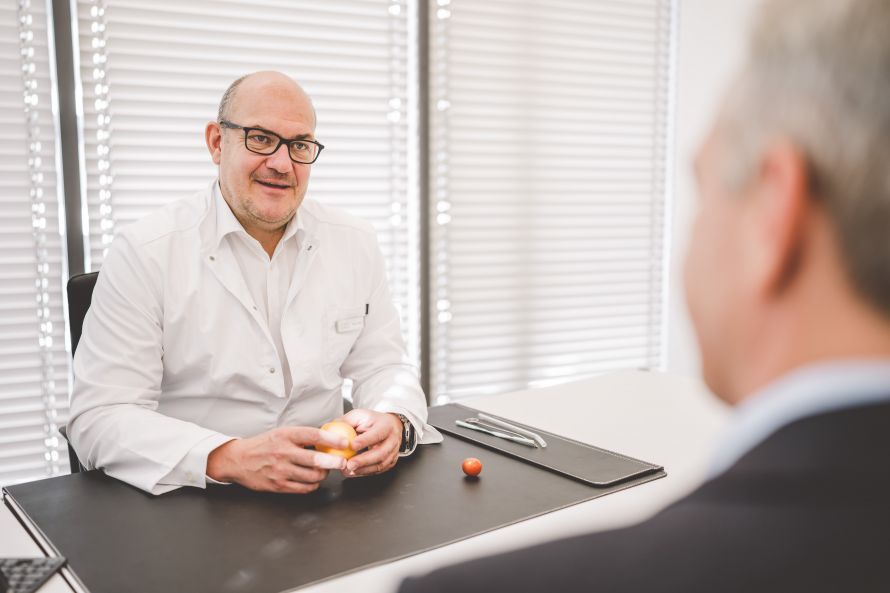
Benign prostatic hyperplasia (BPH) and kidney stones are two common urological conditions that occur primarily in older adults. While benign prostatic hyperplasia is characterized by a benign enlargement of the prostate that leads to urinary tract symptoms, urinary stones (urolithiasis) are stubborn mineral deposits in the urinary tract that can cause pain and blockages.
Both conditions significantly impair urinary function and require a targeted diagnosis and individualized treatment, particularly as symptoms worsen. Reconstructive or prosthetic procedures are performed when there are severe symptoms resulting from changes in the ureter or urethra, or in cases of incontinence, impotence, or pelvic organ prolapse.
Symptoms can vary widely depending on the type of condition, its location, and severity. Pain or a burning sensation during urination often occurs, accompanied by frequent urination, nocturia, and occasionally blood or cloudy, foul-smelling urine. In some cases, lower abdominal pain or a sensation of pressure in the renal fossa and pelvic region may also occur.
“Benign prostatic hyperplasia (BPH) is primarily associated with urinary dysfunction. Frequent nighttime urination is a typical symptom: While most men get up once or twice a night, men with BPH often have to go to the bathroom three, four, or five times. Another key symptom is what is known as an urgent urge to urinate. Men often report a sudden, strong urge to go to the bathroom immediately, which can severely limit their daily lives.
In some cases, bladder control is so impaired that it leads to involuntary urine leakage—known as urge incontinence. A broad distinction is made between obstructive and irritative urinary symptoms. With obstructive symptoms, urination is difficult: the onset of urination is delayed, so that those affected often have to wait a long time before the first drop comes. The duration of urination is also prolonged; while younger men empty their bladders in a few seconds, men with obstructive prostate symptoms often require 45 seconds to one and a half minutes.
Irritative symptoms are more similar to a bladder infection: Frequent urination combined with a small urine volume and a strong urge to urinate can lead to unpleasant pain and dribbling incontinence. “Both types of symptoms are caused by an enlarged prostate, which constricts the urethra and makes urination difficult,” explains Prof. Dr. Wille at the beginning of our conversation, describing further symptoms:
“Residual urine often remains—in some patients, 250 to 800 milliliters—even though they have already urinated. In more severe cases, acute urinary retention can occur, in which the bladder contains up to 800 or 1,200 milliliters of urine and the patient cannot empty even a single drop. This situation is extremely painful and, in an emergency, can even force a patient to request an immediate landing during a flight.
Most men these days discuss these symptoms early on. While incontinence in women is still a major taboo, the problem among aging men is increasingly viewed by society as a normal part of aging. Many men first consult their primary care physician and then a urologist. It usually takes three to six months for patients to take the first step and visit a doctor’s office—unless they are experiencing acute symptoms that require immediate treatment.”
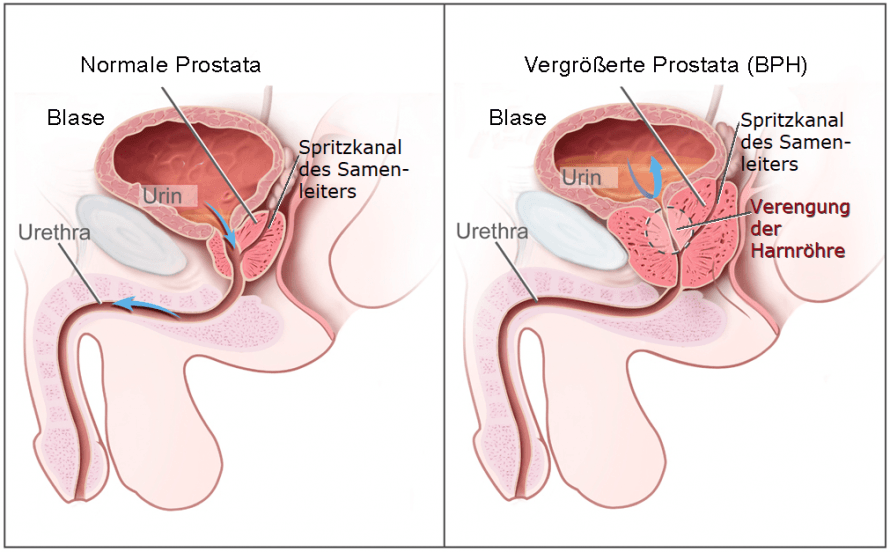
“The development of benign prostatic hyperplasia is a unique condition that can progress differently in every man. It depends neither on diet nor on lifestyle. Starting around age 30, the prostate begins to grow in every man due to hormonal changes, but the extent of this growth and the direction it takes vary from person to person. If the prostate grows outward rather than into the urethra, fewer problems arise. So it cannot be said that small prostates are harmless and large ones are always problematic.
In general, the only rule is: The larger the prostate, the more likely symptoms are to occur. At the same time, there are men with relatively small or only slightly enlarged prostates who nevertheless experience significant problems. It’s safe to assume that the cause is primarily genetic. Other factors such as lifestyle, diet, or other medical conditions generally do not play a role—apart from specific, rarer conditions that can additionally affect urination. However, men who undergo regular screenings can influence the course of the disease.
Early treatment, for example with medication, can slow the progression of the condition. If a man delays seeing a doctor, his treatment options will be significantly more limited later on. Over time, the bladder muscle thickens and the bladder becomes increasingly stretched. Eventually, the bladder can become so flaccid that the man can no longer urinate at all. At that point, surgery is often the only option. There are patients who don’t seek care until very late—one of my patients had urinary retention with two liters of urine in his bladder, which is more than five times the normal amount of about 350 to 400 milliliters.
Such cases require surgery, but even after that, irreversible damage may remain. “Although this patient can urinate better than before, he still has to wear a catheter. However, if surgery is performed in a timely manner, the symptoms can usually be significantly alleviated, and the bladder’s emptying function is usually preserved,” explains Prof. Dr. Wille.
Diagnosis begins with a detailed medical history, during which the symptoms, their progression, known incidents, and risk factors are documented. The physical examination usually includes a digital rectal exam to assess the prostate.
Imaging techniques play a central role in diagnosis: Ultrasound (transabdominal or transrectal ultrasound) is usually the first method used to visualize prostate enlargement, kidney stones, or bladder emptying disorders. In cases requiring further evaluation, computed tomography (CT) or magnetic resonance imaging (MRI) is used. Bladder pressure measurement (urodynamics) is employed for the specific evaluation of bladder emptying disorders.
The following section describes the treatment methods for benign prostatic hyperplasia (BPH) and kidney stones, as well as reconstructive and prosthetic procedures.
Regarding surgery, Prof. Dr. Wille explains: “Ultimately, the surgery involves reducing the size of the prostate and widening the urethra—this is the basic principle underlying all procedures. The prostate can be treated in various ways: it can be resected, ablated with a laser, treated with metal baskets, or steam can be introduced into the tissue. The goal is always the same: the prostate is reduced in size, the urethra is widened, and urination improves.
As with any procedure, there are potential complications that patients should be aware of. Patients’ greatest concern is irreversible damage to the sphincter muscle, which can lead to incontinence. In the hands of an experienced surgeon, however, the risk is extremely low—in my own case, with over 30 years of surgical experience, it has never occurred. Patients are informed that the risk is approximately 0.2 to 1 percent. A typical outcome that occurs with most procedures is retrograde ejaculation. This means that although the man experiences a normal orgasm, the semen does not exit the body but instead enters the bladder. The ejaculate is then expelled along with the urine the next time he urinates.
This is not a complication, but a normal consequence of the procedure. There are procedures that preserve visible ejaculation; however, this may be accompanied by a slightly impaired ability to urinate. The choice of technique depends on the patient’s situation and individual preferences. Visible ejaculation serves both reproductive purposes and purely sexual aspects—many patients simply value the fact that the semen is expelled “normally” outward.
The surgery does not affect erectile function. Occasionally, there is concern that sexual potency might be affected, but this is not medically plausible. Pain or other side effects in the initial period after surgery may temporarily affect sexual function, but the frequency, firmness, and ability to achieve erections remain unchanged.”
Even after prostate surgery, the prostate may begin to grow again. Prostate growth cannot be stopped and progresses differently in every man. In rare cases, it may be necessary to treat the prostate again after ten to fifteen years.
“In my experience over the past 30 years, however, this is rather rare once the prostate has been thoroughly and completely removed. Occasionally, scarring or narrowing of the urethra occurs as a result of the surgical instruments used during the operation. Such scars may occasionally need to be corrected at a later date. In the first few weeks after surgery, so-called dysuric symptoms may occur—a burning sensation when urinating or frequent urination. You can think of it this way: the ‘cavity’ in the prostate created by the removal of tissue is gradually covered by a protective layer of cells, the epithelium.
Similar to a wound, new tissue forms, which may occasionally still cause discomfort. Bloody urine or small pieces of tissue that break off may also occur. These symptoms usually subside completely after about four weeks, or after three months at the latest. There are various surgical procedures, most of which are standardized. Over the years, I have focused on four methods that have proven effective. One is the classic transurethral resection of the prostate (TUR-P) using state-of-the-art technology; the other is the steam method, in which the prostate is reduced in size using steam while simultaneously dilating the urethra. I also insert a special wire basket into the prostate, which is removed after about 5 days.
This allows for a significant improvement in urination through a minimally invasive procedure performed on an outpatient basis. In addition, for very large prostates, I perform adenoma enucleation, which also yields very good results. However, the central goal of all procedures remains the same: to reduce the size of the prostate and widen the urethra in order to permanently facilitate urination,” explains Prof. Dr. Wille.
Urolithiasis, the formation of urinary stones, is a condition in which solid mineral and salt crystals form in the urinary tract. These crystals can occur in the kidneys, the ureter, and also in the bladder.
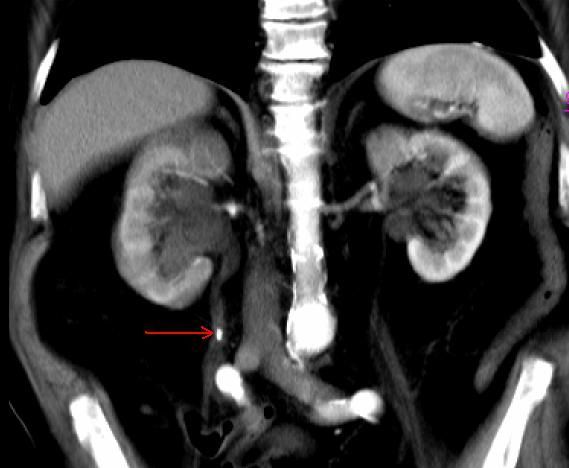
In cases of urolithiasis, the goal is usually the rapid removal or fragmentation of the stones to eliminate pain, blockages, and infections. The success rate for stone removal is generally very high; in most cases, the stones are completely removed after treatment, especially in the case of smaller stones. The stones form due to a concentration of minerals in the urine, a process that is exacerbated by certain risk factors such as obesity, dehydration, metabolic disorders, or hormonal changes.
The typical symptoms of stones in the urinary tract are sudden, extremely painful renal colic, which usually begins in the flank or back and radiates to the groin or lower abdomen. These pain attacks are often accompanied by nausea, vomiting, blood in the urine (hematuria), and, in some cases, fever if an infection is present or the urinary tract is blocked. In cases where stones remain in the bladder or block the flow of urine, patients may also experience difficulty urinating or a feeling of incomplete bladder emptying.
Treatment options range from dissolving small stones with medication to extracorporeal shock wave lithotripsy (ESWL), as well as minimally invasive endoscopic procedures or surgical interventions for larger or impacted stones. Success rates for stone removal are usually over 90%, and modern techniques such as laser-based stone fragmentation are very gentle and effective. Side effects are usually minor and limited to temporary blood in the urine, mild pain, or infections, all of which are easily treatable.
Prof. Dr. Wille comments on this: “The exact cause of urolithiasis—that is, the formation of stones in the kidneys or urinary tract—is not fully understood. There are various theories: Some refer to it as a ‘disease of affluence’ caused by excessive meat or alcohol consumption. This is partly true, but not always—there are also people who drink hardly any alcohol and eat little meat, yet still develop stones.
Genetic predisposition plays an important role. Some people are simply more susceptible to it. Fluid intake and stress can also contribute to stone formation: Insufficient fluid intake or high stress levels increase the risk, as animal studies have shown. In the past, there were numerous recommendations to avoid certain foods—fried potatoes, spinach, Swiss chard, beer, coffee, high-fat foods, dairy products—all of which were supposedly off-limits.
In practice, however, it has become clear that such restrictions are often of little benefit and tend to be burdensome for patients. Healthy moderation is key: Milk and cheese are generally not harmful, even though most stones consist of calcium oxalate. “In a healthy metabolism, the body can regulate excess calcium. The risk can actually increase only in cases of specific metabolic problems,” he explains, adding:
“Treatment depends on the stone’s size, location, and the patient. Small stones can often be monitored over time, supported by drinking plenty of fluids or medication, such as alpha-blockers. Larger stones, especially those in the renal pelvis, often require several sessions of extracorporeal shock wave lithotripsy (ESWL). In some cases, a ureteral stent is also inserted or the stone is surgically removed, especially if it cannot pass on its own.
Urolithiasis is not age-dependent—even children can develop stones. However, they most commonly occur in people aged 40 or 50 and older. Fluid intake often plays a role: People who drink too little, especially during hot summer months, are more likely to develop stones. Therefore, the most important advice is to drink enough fluids. Exercise, relaxation techniques, or short breaks can help reduce stress, even if you can’t completely eliminate work-related stress.”
One of the most important strategies is adequate fluid intake: Drinking plenty of fluids—usually at least 2 to 3 liters daily—dilutes the urine, thereby reducing the concentration of minerals and salts and making it more difficult for crystals to form. Especially for people prone to stone formation, an individualized urine analysis can be helpful in identifying specific factors, such as an excess of calcium, oxalate, uric acid, or a particular metabolic disorder that promotes stone formation.
State-of-the-art equipment at the Beta Clinic! New high-performance laser and new ureteroscopes with direct suction function

“In addition to a modern range of instruments, we’ve recently begun using innovative techniques for stone removal: a high-performance laser for stone fragmentation and newly developed ureteroscopes that allow the resulting stone debris to be suctioned out directly, eliminating the need for an internal stent in many cases. Patients often find the internal stent uncomfortable.
The instrument is slightly larger but can collect the fragments using a special collection mechanism—a very elegant procedure. This is important because any remaining debris could theoretically form new stones as proteins attach to them and cause them to grow again. This procedure is particularly interesting because it makes stone removal even more thorough. “At our private clinic, we can offer patients this high-end technology directly,” Prof. Dr. Wille emphasizes.
In conclusion, Prof. Dr. Wille emphasizes: “The Beta-Klinik is, without a doubt—and this is confirmed not only by me but above all by the patients—a private clinic where radiological diagnostics are closely linked to my private practice, surgical options, and direct, comfortable inpatient care.
Patients receive a diagnostic and treatment plan immediately here. If a patient arrives with colic, they drive into the underground parking garage, come upstairs—perhaps they’re experiencing colic right now or had it just a few days ago. I perform an ultrasound and a urinalysis—which takes three minutes—and shortly thereafter, the high-resolution CT scan is already on the screen. This special service is virtually unthinkable in other clinics. This allows me to decide immediately: If the stone is passing on its own, we’ll try shock wave therapy; or, if the criteria are met, we’ll proceed with surgical stone removal.
We offer all types of stone surgery at the highest level—from shock wave therapy to endoscopic procedures and open stone removal when other methods aren’t effective. This allows us to act quickly, even for older patients who can no longer tolerate the pressure and fear of colic. Even when it’s not an emergency surgery, treatments are performed without long wait times. A unique feature of the Beta Clinic is that we care for patients flexibly and according to their individual needs. This ensures that our patients receive fast, effective, and comfortable treatment.”
Thank you very much, Prof. Dr. Wille, for this special insight into urology!
- Dr. Sebastian Wille is a world-renowned urologist at the Beta Klinik in Bonn and a specialist in prostate disorders, kidney stones, and reconstructive urology (reconstruction, prosthetics).
- He received his training in Munich, Bern, Marburg, and Cologne, supplemented by international continuing education in Spain, France, and the U.S.
- Founder and coordinator of the Continence and Pelvic Floor Center, characterized by scientific expertise and patient-centered care.
- An innovator with developments such as the Wille Capsule for catheter-free urodynamics and extensive experience in minimally invasive surgery.
- Author of numerous publications, peer reviewer, lecturer, and organizer of medical conferences.
- Places great emphasis on individualized, empathetic patient care in a private facility that meets the highest medical standards.
- Combines scientific progress with personal commitment and creates optimal conditions for successful treatment and sustainable preventive care.
Share this article
Expert Interviews
Read next
- Expert interview
Expert interview with Professor Dr Elmar Herbst, PhD
Oct 15, 2026
Patient-centred and personalised knee surgery
Read more - Expert interview
Cardiogeriatrics: Significance and benefits in the context of hospital reform
Sep 21, 2026
Cardiogeriatrics: Significance and benefits in the context of hospital reform
Read more - Expert interview
Expert Interview with Professor Dr. Amadeus Hornemann, MPH
Sep 18, 2026
Prof. Amadeus Hornemann on Precision Medicine in Gynecology: Modern Surgery, New Techniques, Better Quality of Life
Read more