Expert Interviews
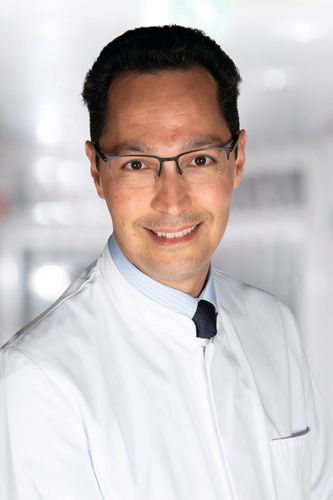
Rectus Diastasis and Complex Abdominal Wall Hernias: A Focus on Challenges and Treatment Options—An Expert Interview with Dr. Pöschmann

Alexandra Pfitzmann ·
Dr. Enrico Pöschmann and the Swiss Hernia Center offer first-class care and a wide range of innovative procedures in hernia surgery. With two locations in the canton of Zurich and additional locations in Schaffhausen, Schwyz, and Zug, the Swiss Hernia Center has established itself as a leading point of contact and serves as a recognized center of excellence for hernia treatment. Under the direction of Dr. Pöschmann, an experienced board-certified surgeon, the range of services includes diagnosis, consultation, and the selection of the appropriate surgical procedure. Dr. Pöschmann has extensive experience, particularly with complex hernias, including incisional hernias, rectus diastasis, and sports hernias.
This high level of medical expertise is supported by modern diagnostic procedures such as ultrasound, computed tomography, and MRI. A wide range of surgical techniques—including open surgery, minimally invasive procedures, and robot-assisted surgery—enables personalized treatment. The Swiss Hernia Center also offers mesh implantation, with patients having the choice between permanent synthetic meshes and biodegradable (absorbable) meshes.
Dr. Pöschmann and his team are committed to accelerating patients’ recovery and minimizing the risk of recurrence. Close collaboration with various top-tier clinics in and around Zurich ensures that patients have access to the best facilities and operating rooms. The most common types of hernias treated include inguinal hernias, umbilical hernias, incisional hernias, diaphragmatic hernias, and rectus diastasis. The choice of treatment method is determined on an individual basis, taking into account factors such as age, overall health, and the type of hernia. Dr. Pöschmann places great importance on ensuring that his patients can return to their normal daily lives as quickly as possible. With extensive experience and leadership roles at leading clinics, as well as an academic background and teaching experience, Dr. Pöschmann brings impressive expertise in hernia surgery to the table.
The Swiss Hernia Center is a certified center of excellence and is committed to continuous quality improvement in hernia surgery. Close collaboration with national and international professional societies, as well as exchanges with colleagues, ensure that patients always receive up-to-date and innovative care. The editorial team of the Leading Medicine Guide wanted to learn more about rectus diastasis and complex abdominal wall hernias and took the opportunity to speak with Dr. Pöschmann about these topics.

Rectus diastasis and complex abdominal wall hernias are medical conditions that affect the abdominal wall and can occur in both men and women of all ages. Rectus diastasis describes the separation of the rectus abdominis muscles, which leads to a bulge or stretching of the central abdominal region. Complex abdominal wall hernias can have various causes and refer to hernias in the abdominal wall that require more complex surgical interventions. These conditions can lead to pain, functional impairments, and cosmetic concerns. Treatment often requires a multidisciplinary approach that includes surgical procedures, physical therapy, and careful follow-up care.
“Normally, these muscles are connected by a firm connective tissue structure called the linea alba. In rectus diastasis, this connective tissue structure is weakened or stretched, resulting in a noticeable gap between the abdominal muscles. “The main cause of rectus diastasis is excessive stretching of the abdomen, such as can occur during pregnancy,” explains Dr. Pöschmann at the beginning of our conversation. During pregnancy, the abdominal wall undergoes significant stretching due to the growing fetus and the expanding uterus, which can lead to a separation of the rectus muscles. However, this condition can also occur in people who have not been pregnant, particularly in cases of obesity, intense or improper exercise, or in people who have experienced weakening of the abdominal wall due to abdominal surgery.
Not everyone with a certain gap between the abdominal muscles automatically develops rectus diastasis. A diagnosis typically requires a gap of more than two centimeters and often includes accompanying symptoms such as abdominal wall tension and back pain. The exact cause and severity of rectus diastasis can vary from person to person.
Rectus diastasis can cause various symptoms that indicate the presence of this muscle separation.
“Signs include a visible bulge or protrusion in the abdominal area, which becomes particularly noticeable when tightening the abdominal muscles or when sitting up from a lying position. This slit-like protrusion usually appears lengthwise down the center of the abdomen. In addition, patients may experience a general feeling of abdominal weakness or discomfort in the abdominal area, which indicates increased abdominal wall tension. Back pain may also occur, as the weakened abdominal muscles provide less support for the spine. “The main symptom, however, is a lack of stability, such as when trying to lift something heavy,” explains Dr. Pöschmann. Some people with rectus diastasis experience digestive problems such as bloating or constipation, which may be related to this muscle separation. In rare cases, incontinence issues may also occur, with noticeable difficulty controlling urine.
Rectus diastasis is typically diagnosed by a surgeon or a gastroenterologist.
The doctor will perform a physical examination and check the abdomen for visible bulges and the width of the gap between the rectus muscles. “A clinical examination alone usually provides a clear diagnosis. In some cases, small bowel loops can be felt simply by palpation. An ultrasound or computed tomography (CT) scan is also often used to determine the severity of the diastasis and the exact location of the muscle separation. Grade 1 rectus diastasis is up to 3 cm, Grade 2 is 3–5 cm, and Grade 3 refers to separations of 5 cm or more. Precise biomechanical studies support this classification,” says Dr. Pöschmann. It is important to receive a correct diagnosis, as not all abdominal symptoms automatically indicate rectus diastasis, and treatment may vary depending on the severity.
Treatment options for rectus diastasis vary depending on the severity and individual circumstances.
“In milder cases, conservative measures such as targeted abdominal exercises as part of physical therapy and the use of abdominal binders, kinesiology tape, or compression garments can help alleviate symptoms and stabilize the abdomen. Lifting and breathing techniques can also be taught by physical therapists, and in the case of women after childbirth, by
midwives. If rectus diastasis is significant—measuring 20 cm or more—this means that the intestines are also positioned differently in the pelvis or within the body than is normally the case. In such severe cases or when symptoms are severe, surgery can and should be considered. There are 48 different surgical techniques worldwide, ranging from a large vertical incision to robot-assisted surgery. This also determines the length of the hospital stay and the postoperative care.
Ultimately, I offer my patients two options, which are also based somewhat on aesthetic considerations. For men, I generally recommend open surgery because of its high stability, as men are often less stable in terms of body weight than women. For women, I usually recommend classic laparoscopic surgery—a minimally invasive procedure—or robot-assisted surgery, which we perform using the da Vinci robot, because it requires only three small incisions. This does not affect the amount of skin or fat involved. The abdominal incision line is restored and reinforced using a synthetic mesh (absorbable or non-absorbable). With minimally invasive surgery, the patient naturally recovers more quickly.
With standard, open surgery, an incision is made across the mid-abdomen from right to left or in the lower abdomen, where a cesarean section is also performed. A tummy tuck can be performed at the same time, which is recommended for many women with severe damage to the connective tissue, as it allows for the removal of part of the abdominal wall along with the damaged skin. However, this results in a large wound and requires special vacuum dressings. For the patient, this means they will initially be unable to walk upright for the first two weeks. It is important to understand that closing the rectus diastasis—that is, this wide gap—significantly increases abdominal pressure, which initially causes pain and puts pressure on the intestines, potentially leading to intestinal paralysis at first. The length of the patient’s hospital stay depends on the level of pain. Typically, the hospital stay lasts 4–7 days, and the patient can be discharged with mild pain medication. Afterward, patients wear an abdominal support belt for about 6 weeks to provide stability and to prevent the accumulation of serous fluid. Physical activity should be avoided during this period. After the 6 weeks, another ultrasound examination is performed to confirm that the muscles are indeed lying flush against one another. Then rehabilitation begins with very intensive physical therapy,” explains Dr. Pöschmann, outlining the surgical options and post-operative measures.
The use of synthetic meshes has taken on a significant role in modern surgery for abdominal wall hernias.
These innovative meshes, also known as hernia meshes, are used in the treatment of hernias to support and stabilize the weakened abdominal wall. Their use has proven to be one of the most effective and commonly used techniques to support the restoration of the abdominal wall and reduce the likelihood of a recurrent hernia. Dr. Pöschmann describes the differences between the meshes: “First and foremost, a distinction is made between two types of meshes: permanent meshes and biological/biodegradable meshes. The permanent meshes remain in the patient’s abdomen for life. Biological meshes used to be derived from cattle and pigs—and we know that these do not yield good results. They have not yet disappeared from the market, but are rarely used anymore—I do not use them either. And then there are the synthetic biodegradable meshes, which are broken down by the body in a controlled manner over a certain period of time (approx. 15–18 months) and replaced by the body’s own stable connective tissue. Ultimately, it always comes down to the surgeon’s experience to decide which type of mesh to use and when.”
Complex abdominal wall hernias.
“Rectus diastasis is a complex abdominal wall hernia. In the past, these were referred to as incisional hernias—for example, when the scar ruptures in a patient who has previously undergone surgery and the intestine protrudes outward, or when the hernia is so large that a significant portion of the small intestine is no longer in the abdominal cavity but is instead located within the hernial sac itself. Even if hernias are not in the center but more toward the side, these are also considered complex abdominal wall hernias because they are more difficult to treat,” explains Dr. Pöschmann.
Rectus diastasis primarily refers to the separation of the abdominal muscles, whereas a complex abdominal wall hernia involves the presence of a hernia or defect in the abdominal wall itself, through which abdominal organs or tissues can enter the hernial sac. In a complex abdominal wall hernia, organs such as the intestines, peritoneum, or other structures can pass through the gap in the abdominal wall and become trapped in the hernial sac. In a rectus diastasis, organs do not typically protrude.
Risk factors for complex abdominal wall hernias can be diverse and vary depending on individual anatomy and lifestyle.
A history of abdominal surgery, particularly surgeries that affect the abdominal wall, can increase the risk of complex abdominal wall hernias. “Women who have had multiple pregnancies or
have given birth to multiples are at increased risk for abdominal wall hernias, as the abdominal muscles are subjected to significant strain during pregnancy and there is increased connective tissue weakness. Being overweight or obese, as well as weight fluctuations, subject the abdominal wall to additional pressure and increase the risk of abdominal wall hernias. Recurrent hernias can also be triggered by a ruptured appendix. Age, of course, also plays a role, as connective tissue is usually weakened with age as well,” explains Dr. Pöschmann.
There are several preventive measures that anyone can take.
“A certain amount of daily exercise for the abdominal muscles is always beneficial. Of course, this is only recommended if there are no complications such as abdominal wall hernias, which can also be painful. After pregnancy, postpartum exercise is truly important to keep engaging the muscles so they don’t continue to weaken. It’s about achieving balance between the back and abdominal muscles. This creates a good foundation. It’s no guarantee that rectus diastasis won’t occur—I’ve even had elite athletes with this diagnosis in my practice. There’s also an element of fate involved. Ultimately, what’s important is being in tune with your body, and if you notice that something is getting looser or weaker, it’s important to try to train against it. And if that doesn’t work, it needs to be medically evaluated,” Dr. Pöschmann strongly recommends.
Complex abdominal wall hernias can occasionally recur after surgery, especially if the patient is exposed to additional risk factors.
Long-term effects on quality of life can be compromised by pain, scarring, or loss of function. Regular follow-up care and rehabilitation can help maintain or improve quality of life. “In any case, it’s important to maintain a positive body image after surgery and to notice even small changes. The risk of recurrence is very low today, precisely because of advanced surgical techniques and the high quality of the meshes used. Women should be more vigilant as they go through hormonal changes, and men should be more vigilant if they gain weight, which alters their overall body anatomy. This increases the risk of recurrence or even new hernias,” advises Dr. Pöschmann to patients after surgery.
In good hands at the Hernia Center in Switzerland!
The Hernia Center in Switzerland is a leading medical center at the forefront of hernia treatment. With a highly specialized and multidisciplinary approach, the center offers innovative and customized solutions for patients suffering from various forms of abdominal wall hernias or diaphragmatic hernias. Complete pelvic floor reconstructions are also performed at the Hernia Center in Switzerland. By applying state-of-the-art techniques under the guidance of experienced surgeons, the center ensures comprehensive care and support at the highest medical standard. “Our structure wasn’t initiated by a single clinic, but rather through a collaboration of colleagues who also perform a large number of hernia surgeries. Direct and personal contact with the patient is clearly our top priority. We also benefit from short communication channels and a high level of interaction among our colleagues. This means we discuss our cases within the team and operate together. This way, we always have two specialists at the operating table, so that by working together and exchanging ideas, we can achieve the best possible outcome for the patient. We have multiple locations in various cantons across Switzerland, collaborate with various partner hospitals, and engage in ongoing continuing education to ensure we’re always up to date. In addition, we have a very robust internal and external quality assurance system, which ultimately demonstrates that we have an excellent track record with very few complications and a very low risk of recurrence,” emphasizes Dr. Pöschmann, bringing our conversation to a close.
Dr. Pöschmann, thank you very much for this clear insight into the treatment options and challenges involved in treating abdominal wall hernias!
Share this article
About the medical author
Alexandra Pfitzmann
Editor
Alexandra Pfitzmann – medical author: expert knowledge, professional articles and medical insights in the Leading Medicine Guide.
More about the medical author →Expert Interviews
Read next
- Expert interview
Cardiogeriatrics: Significance and benefits in the context of hospital reform
Sep 21, 2026
Cardiogeriatrics: Significance and benefits in the context of hospital reform
Read more - Expert interview
Expert Interview with Professor Dr. Amadeus Hornemann, MPH
Sep 18, 2026
Prof. Amadeus Hornemann on Precision Medicine in Gynecology: Modern Surgery, New Techniques, Better Quality of Life
Read more - Expert interview
Expert Interview with Professor Dr. Konstantinos Anagnostakos
Sep 15, 2026
Prof. Anagnostakos on Painful Knee Replacements
Read more