Expert Interviews
Treatment with Inusphere: An Expert Interview with Dr. Gruther and Dr. Heuberer

Alexandra Pfitzmann ·
The healthPi Medical Center in Vienna is a pioneer in healthcare and offers a unique combination of specialists in orthopedics, orthopedic surgery, traumatology, rheumatology, internal medicine, metabolism, preventive medicine, and rehabilitation. Here, personal needs, issues, and goals related to pain, metabolism, stress, and sports are addressed holistically to ensure high-quality medical care that balances prompt recovery with the long-term maintenance of physical performance.
At the heart of the center are outstanding physicians such as University Lecturer Dr. Wolfgang Gruther, MSc TCM, and PD Dr. Philipp R. Heuberer. Dr. Gruther is a specialist in physical medicine and general rehabilitation and is regarded as an expert in spinal injuries and disorders as well as rehabilitation. His expertise in conservative orthopedics and pain management makes him an ideal point of contact for patients with back problems and other orthopedic conditions. Dr. Heuberer, a specialist in orthopedics and orthopedic surgery, is known for his comprehensive knowledge of regenerative medicine, particularly in the field of shoulder surgery.
The healthPi Medical Center offers personalized health solutions centered on the “four S’s”: pain, metabolism, stress, and sports. From pain management and metabolic regulation to stress management and athletic performance enhancement, the center covers a broad spectrum of health topics. The highly qualified team relies on state-of-the-art equipment that has been specifically selected to provide targeted on-site care.
Through a sophisticated combination of laboratory tests, imaging, and functional diagnostics, a personalized examination package is created, enabling a precise diagnosis and individualized treatment plans based on it. With a comprehensive approach and a first-class team of specialists and other experts, the healthPi Medical Center ensures top-notch medical care and enables patients to lead active and healthy lives. Purification, cleansing, detoxification: these are familiar terms from the detox trend.
Inusphere therapy is another approach to ridding the body of toxins. To learn more about this treatment method, the editorial team at Leading Medicine Guide spoke with Dr. Wolfgang Gruther and PD Dr. Philipp R. Heuberer.
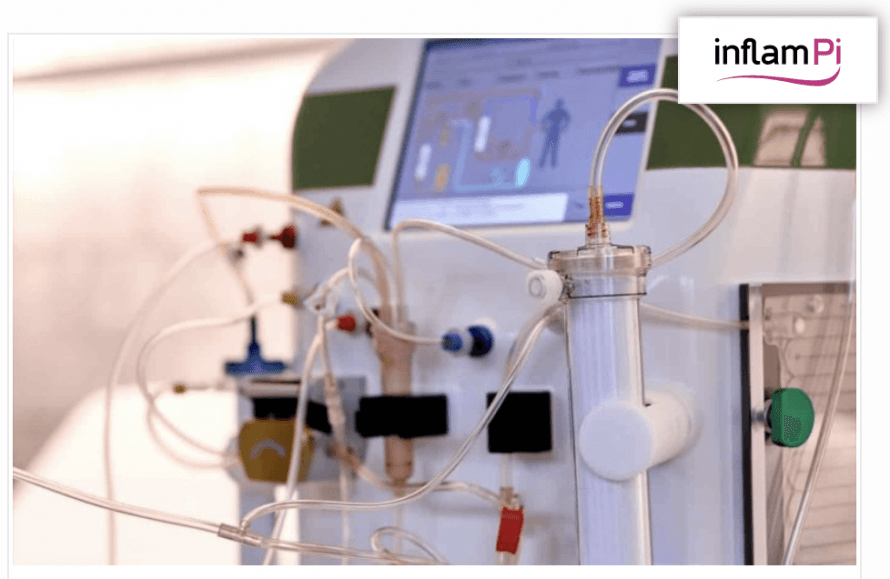
Inusphere therapy is a form of treatment that has gained increasing importance in recent years. It is based on the concept of extracorporeal blood purification, in which blood is passed through a dialysis machine outside the body to remove harmful substances and relieve the body.
Inuspherese is used to treat hypercholesterolemia, or high cholesterol levels.
“Inuspherese is the brand name and was developed in Germany. Essentially, it is a type of blood purification, similar to dialysis as used in nephrology. The procedure has been around for some time, but it has never been heavily marketed, nor is it supported by the pharmaceutical industry; however, it is now a recognized standard medical procedure. The filtration system used in Inuspherese, however, is different. Here, the red blood cells are separated from the plasma; the plasma is then washed and returned to the patient. It is a completely safe procedure, and a hospital stay is not necessary. Inuspherese may be particularly indicated for patients with familial hypercholesterolemia or other genetic disorders of lipid metabolism. The main goal of Inuspherese is to lower blood cholesterol levels in order to reduce the risk of cardiovascular disease. High cholesterol levels are considered a risk factor for the development of atherosclerosis, heart attack, and stroke. Lowering cholesterol levels can reduce these risks and improve the patient’s long-term health. The procedure is performed over three days—on Day 1, hemodialysis is performed; Day 2 is a rest day; and on Day 3, hemodialysis is performed again. “We proceed this way because it always takes a while for toxins (e.g., environmental toxins, heavy metals) to ‘catch up,’ so to speak, so that they can then be flushed out during the second blood purification session,” explains Dr. Heuberer, adding: “The concern here, of course, is always that the body’s own electrolytes, such as minerals, will also be flushed out. To a certain extent, this is naturally unavoidable. That’s why we repeatedly administer mini-infusions to maintain electrolyte balance,” and Dr. Gruther also explains:
“To understand this, you have to know how the filtration process works in inusphere. It’s not like what you might imagine with, say, a kitchen strainer, where something is caught and the rest drips through—which is the basic idea behind a filter. Here, it works a little differently: The filters are positioned to the right and left of a central tube (the current) through which the blood flows. The filters’ membranes have specific pore sizes through which components can diffuse to the other side or flow back again. Outside the stream in the center, a charge of + and – builds up. Since the body wants to create perfect proteins, the good ones automatically remain in the center—in the stream—while the bad ones are flushed out, which relieves the body.”
Inusphere is a form of lipid apheresis in which certain lipoproteins are removed from the blood, particularly LDL cholesterol, or “bad” cholesterol.
Before undergoing inusphere therapy, a patient goes through a thorough diagnostic phase to assess the condition of their cardiovascular system as well as other relevant health parameters.
“The first step is to find out why the patient is motivated to undergo Inuspherese therapy in the first place. What are their motivations, and what kind of problem are they facing? Most of our patients have symptoms such as Long COVID or inflammatory reactions. However, it’s important to know beforehand whether we’re treating a metabolic disorder or an inflammatory condition. Is it an accumulation of toxins or heavy metals, or is it immune system exhaustion with low ATP levels? There is a questionnaire for the patient to address this, and the subsequent diagnostic process is guided by the answers. Typically, the patient has already undergone blood tests and a lung function test, and the results are normal or at least largely normal. We then turn to a specialized laboratory that assesses inflammatory markers not typically measured in routine laboratory testing. These include, for example, inflammatory changes or autoantibodies against nerve cells, which can then confirm Long COVID, heavy metal exposure, or an inflammatory disease. “This is how we try to narrow down the possibilities and determine whether Inuspherese is truly appropriate,” explains Dr. Gruther.
BATP: The Energy Source for Our Cells
Throughout the day, our body needs energy for numerous functions. To meet this need, it uses a nucleotide called adenosine triphosphate (ATP). This molecule acts as the cells’ fuel and drives all their reactions.
Dr. Heuberer adds at this point: “For about 1.5 years now, we’ve been seeing roughly two patients per week. They typically have conditions with complex causes, are stressed, and feel left alone because their previous efforts to manage their symptoms have failed. The patients’ symptoms range from chronic immune disorders to chronic fatigue syndrome. Vaccine reactions can also be treated with inusphere therapy. This is because the problem is usually not the vaccine itself, but the adjuvants added to it—which are mostly heavy metals (nanoparticles). We flush these out, though this typically requires multiple treatments. Many patients have already endured a long and difficult journey. Therefore, all necessary parameters are tested and evaluated in a laboratory in Germany so that we know where the problems lie and a treatment plan can be developed. Sometimes, multiple forms of therapy must be combined—for example, inusphere therapy plus hyperbaric oxygen therapy or brain neurostimulation—because many toxins and poisons primarily accumulate in the brainstem.”
As part of a physical examination, the doctor performs a series of tests to assess the patient’s overall health. These include measuring blood pressure, pulse, body weight, and height, as well as examining the heart and lungs for signs of disease.
“If there is an indication for Inusphere therapy, internal medicine clearance is required. We can handle this in-house, or the patient can provide it (routine lab tests: complete blood count, ECG, kidney and liver function tests, along with the medical clearance for this treatment). It’s important to clarify everything thoroughly here, since Inusphere therapy is a rather costly treatment—it costs 2,700.00 euros per session and is generally considered a private service. It depends on whether part of the cost can be covered by health insurance after all. This is because Inusphere therapy was actually developed to lower fat levels—specifically, cholesterol. “And if, as a patient, you meet the medical criteria for needing to lower that level, then you can pass the costs on to supplemental or private insurance and have a strong case,” says Dr. Gruther regarding the important diagnostic steps before beginning Inusphere therapy.
Dr. Heuberer comments on this: “The material costs associated with Inuspherese are relatively high. This is also one reason why Inuspherese is not offered in hospitals—because it would create a billing problem or result in a financial loss. This is therefore a purely financial decision and not a medical one.”
Inusphere therapy is a minimally invasive procedure for treating cardiovascular diseases, particularly in patients with coronary heart disease (CHD) or other arterial narrowings.
“The patient is given a small task to complete at home before the treatment. Unlike any other medical blood draw, the patient must be well-nourished and have consumed plenty of fluids before the treatment, as a high blood sugar level is required for the procedure—which is energy-intensive for the body. During treatment, the patient expends energy like an athlete, so we need to ensure the body is well-fueled—and thus maintain a good blood sugar level. Before starting, another check-up is performed in the form of an ECG; venous access points are established in the right and left arms (the treatment can alternatively be performed via a groin catheter), and blood pressure and blood sugar levels are checked, and the patient is briefed once more, after which they provide their informed consent again. The access points are then established and flushed with fluid, and treatment can begin. Blood is drawn from one side using a pump, and the plasma and red blood cells (erythrocytes) are separated. The red blood cells are immediately returned to the patient on the other side, so the patient does not lose any blood. The separated plasma is passed through a filtration process and, once purified, is also returned to the patient on the other side. Therefore, there is a continuous inflow and outflow during the treatment. The patient notices almost nothing during the procedure; that is, neither dizziness nor nausea occurs. (There is an information sheet for the patient explaining that mild dizziness or a slight drop in blood pressure may occur. There may also be some post-procedure bleeding at the puncture site or allergic reactions to the tubing or the heparin used.) The entire procedure takes about 2–3 hours and consists of 2–3 flushes. The catheters are removed, the patient can then go home immediately, and the collected eluate (the filtered fluid) is examined for color and consistency and sent to the lab for testing,” explains Dr. Gruther regarding the treatment process, adding one more note:
“To ensure the machine functions properly, the patient is also administered a dose of heparin (a blood thinner) in an amount as small as that which would be given prophylactically to prevent thrombosis during a long-haul flight. After one treatment, we are able to wash out approximately 50% of the plasma. It is therefore recommended to repeat the treatment after two days so that approximately 93–95% of the plasma is washed out. The rule here is: Once is better than never! It also always depends on the patient’s underlying condition. If someone has suffered a single episode of intoxication, a single treatment is sufficient. For chronic conditions, multiple treatments are recommended. Some patients choose to repeat the treatment annually as a preventive measure (like a detox). Preventive treatment makes sense when considering lead in water, amalgam in dental fillings, or mercury that may be present in fish. The patient is also informed about this after the eluate has been analyzed, to explain what should be avoided in order to prevent toxic substances from accumulating in the body in the future.”
- Environmental toxins can play a significant role in the development and progression of chronic diseases. These toxins are substances found in the environment that can be harmful to humans, whether through direct contact, inhalation, ingestion, or absorption through the skin. A wide range of environmental toxins, including heavy metals such as lead and mercury, industrial chemicals such as pesticides and solvents, air pollutants such as fine particulate matter and ozone, as well as certain pharmaceutical residues, can be linked to chronic diseases.
- Particulate matter, ozone, and other air pollutants are associated with an increased rate of cardiovascular diseases such as heart attacks, strokes, and hypertension.
- Lead and mercury can cause neurological problems and increase the risk of developmental disorders in children. They have also been linked to kidney problems, cancer, and other chronic diseases.
- Exposure to pesticides and herbicides, which are widely used in agriculture, can be linked to a variety of health problems, including cancer, neurological diseases such as Parkinson’s and Alzheimer’s, and reproductive issues.
- Chemicals such as bisphenol A (BPA) and phthalates can disrupt the endocrine system and interfere with hormone production and regulation. This can lead to problems such as hormonal imbalances, reproductive disorders, and even cancer.
- Residues of medications in the environment, particularly antibiotics and hormones, can promote antibiotic resistance and strain the ecosystem. In the long term, they can also harm human health by facilitating the development of pathogens and the emergence of resistant strains.
The long-term benefits of inusphere therapy compared to other blood purification methods can be manifold.
“You have to distinguish between the filtration method and the absorption method. Inusphere therapy uses the filtration method described earlier, which works like a net that filters things out, with filters of varying fineness. The finer the net, the more effective it is for delivering nutrients to the patient, since more substances simply get trapped in a finer net. That is why dialysis in kidney patients is considered a very coarse procedure. The absorption method, on the other hand, works on a lock-and-key principle—the goal here is to remove a specific substance. To do this, we identify antibodies that bind only to that one selected substance. This is an elegant method for very specific indications. The catch is that if I want to remove multiple substances, I have to connect several filters in series. This system is prone to errors, more complex, and requires administering more heparin to the patient. If we look specifically at the dialysis process, it’s important to note that it already works well and is also affordable. And even kidney patients can undergo inusphere therapy as a complementary treatment, because it fundamentally improves kidney function. Dialysis, however, cannot do this—it cannot filter out the immune complexes that are straining the kidneys. Dialysis merely removes the accumulated toxins that the body can no longer eliminate on its own. The underlying disease is not treated. “Inusphere therapy can influence the inflammatory process,” Dr. Gruther explains.
“The crucial question here is: We all live in the same environment. Why does one person get sick and another doesn’t? It’s suspected that there’s a problem with detoxification. But if the body can’t handle detoxification on its own, then I simply have to help it—and inusphere therapy is the most effective way to do that,” states Dr. Heuberer.
Inuspherese has gained more attention due to COVID-19
Holistic treatment at the healthPi Center in Vienna
“Here at the healthPi Center in Vienna, we’ve been offering Inusphere therapy for 1.5 years. Due to COVID-19 and Long COVID, this treatment has increasingly come into focus. In Germany, the procedure has been established for 10–15 years and was previously known as plasmapheresis. At the healthPi Center, our primary focus is on identifying each patient’s specific problem. Inusphere therapy is one component of this approach. We offer additional treatment options, such as hyperbaric oxygen therapy, and always strive to take a holistic view of the patient and, based on diagnostic findings, determine the best possible course of action for them. Treatment with Inusphere is certainly not a “bargain,” but for many patients for whom all other therapies have failed, it is often their last hope. That’s actually a shame—because this prolonged ordeal doesn’t have to be the case. Nevertheless, the reality is that we primarily see patients who have already tried everything else. This means that, for the most part, we never even encounter the ‘mild’ cases,” says Dr. Gruther, and with that, we conclude our conversation.
Many thanks to Dr. Heuberer and Dr. Gruther for the fascinating insight into therapy with Inusphere!
Share this article
Expert Interviews
Read next
- Expert interview
Expert interview with Professor Dr Elmar Herbst, PhD
Oct 15, 2026
Patient-centred and personalised knee surgery
Read more - Expert interview
Cardiogeriatrics: Significance and benefits in the context of hospital reform
Sep 21, 2026
Cardiogeriatrics: Significance and benefits in the context of hospital reform
Read more - Expert interview
Expert Interview with Professor Dr. Amadeus Hornemann, MPH
Sep 18, 2026
Prof. Amadeus Hornemann on Precision Medicine in Gynecology: Modern Surgery, New Techniques, Better Quality of Life
Read more