News
Cannabis as Medicine—Opportunities, Limitations, and Current Applications

Melanie Al Tikriti, BSc ·
Cannabis has been the subject of controversy for years. While many people associate the plant primarily with recreational use, it has long since established itself in medicine as a valuable treatment option for certain conditions. In recent years, scientific research has increased significantly, leading to a better understanding of when medical cannabis can actually help—and where its limitations lie.
Nevertheless, numerous misconceptions still persist. Some patients view cannabis as a natural alternative to conventional medications, while others remain skeptical of the treatment. However, cannabis is neither a miracle cure nor is it suitable for every illness. Treatment with it must be medically supervised and tailored to the individual needs of the patient.
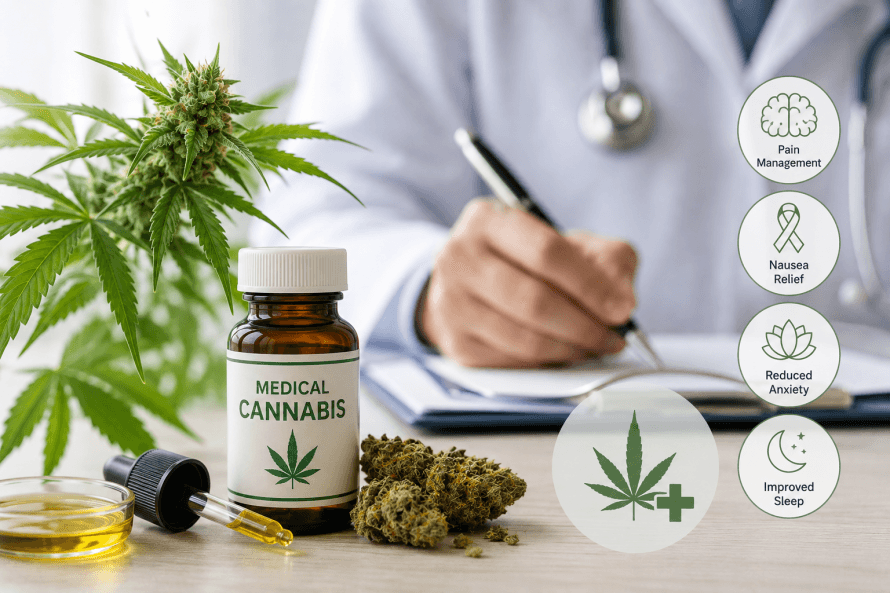
Image generated by AI
What is medical cannabis?
Medical cannabis refers to medications whose active ingredients are derived from the cannabis plant or produced synthetically. The most important active ingredients are tetrahydrocannabinol (THC) and cannabidiol (CBD). Both act on the so-called endocannabinoid system, which influences numerous bodily functions—including pain processing, appetite, muscle tension, sleep, and general well-being.
THC has, among other things, pain-relieving, muscle-relaxing, and appetite-stimulating properties. At the same time, this substance is known for its intoxicating effects. CBD, on the other hand, is not intoxicating; rather, it has anti-inflammatory, anti-anxiety, and antispasmodic effects. Depending on the condition, different formulations with various combinations of active ingredients are used. Medical cannabis is prescribed exclusively by a doctor and differs significantly from unregulated recreational use.
For which conditions can medical cannabis help?
Its range of applications has expanded in recent years. Medical cannabis is used only when established treatment options are insufficient or cause severe side effects.
The most common uses include:
- chronic pain
- spasticity associated with multiple sclerosis
- Nausea and vomiting during chemotherapy
- Loss of appetite and weight loss associated with serious illnesses
- certain forms of epilepsy that are difficult to treat
- Selected neurological disorders
- Tourette syndrome
What are the benefits of medical cannabis?
Some patients report a significant improvement in their quality of life. In particular, people with chronic pain are better able to manage it and require less potent pain medication. Sleep quality may also improve, which in turn can have positive effects on physical and mental resilience. In multiple sclerosis, cannabis can reduce muscle stiffness and painful spasticity. During chemotherapy, some patients benefit from reduced nausea and improved food intake.
However, not all patients respond equally well to the treatment. The success of the therapy depends, among other factors, on the underlying condition, the dosage, and the body’s individual response.
What are the risks and side effects?
Like any medication, medical cannabis can cause side effects. At the start of treatment, dizziness, dry mouth, or difficulty concentrating may occasionally occur. Some people also report heart palpitations, fluctuations in blood pressure, or mood changes.
Possible side effects include:
- Fatigue
- Dizziness
- Dry mouth
- Difficulty concentrating
- Slowed reaction time
- Heart palpitations
- Drop in blood pressure
- Nausea
Since THC can impair reaction time, patients should consult a doctor to determine whether and when they may drive or operate machinery. Interactions with other medications must also be taken into account.
Who should not use medical cannabis?
Not every patient benefits from cannabis therapy. Caution is advised, for example, in cases of severe mental illness, certain cardiovascular conditions, or a known hypersensitivity to the active ingredients. Medical cannabis is also not recommended during pregnancy and while breastfeeding.
What dosage forms are available?
Medical cannabis is now available in various forms. These include standardized cannabis flowers, oils, capsules, and ready-to-use medications. The appropriate form depends on the specific condition, the patient’s symptoms, and their personal needs. Treatment usually begins with a low dose, which is gradually increased until a sufficient effect is achieved with as few side effects as possible.
What do current studies show?
Numerous scientific studies have been conducted in recent years. For some indications—such as chronic pain, spasticity associated with multiple sclerosis, or nausea caused by chemotherapy—there is now robust evidence of therapeutic benefit. However, research findings show that cannabis is not effective for all conditions, and further studies are needed.
Conclusion: Individualized treatment planning is crucial
Medical cannabis has established itself in recent years as a valuable treatment option for selected conditions. Particularly in cases of chronic pain, multiple sclerosis, or distressing symptoms during chemotherapy, treatment can significantly improve quality of life. At the same time, however, it is not a cure-all. Whether cannabis is a viable medical option depends on the specific condition, previous treatments, and the individual’s health status. Thorough medical consultation and regular follow-ups are essential to carefully weigh the benefits against the potential risks.
Share this article
Verified expertise
Recommended specialists
7 specialists
7 results









News
Read next
- News
Scabies: A contagious skin disease that is easily treatable
Oct 26, 2026
Severe itching and minor skin changes should be taken seriously
Read more - News
Heat Rash: What's Behind the Itchy Blisters
Oct 23, 2026
Heat Rash: Heat and Sweat Can Disrupt the Skin's Balance
Read more - News
Enlarged Prostate – When Medication Is Sufficient and When Surgery Is Recommended
Oct 21, 2026
Why Many Men Ignore Urinary Problems for Too Long
Read more