News
Carpal Tunnel Syndrome: The Pinched Nerve in the Wrist

Melanie Al Tikriti, BSc ·
Tingling in the fingers, numbness in the hand, or nighttime pain are often initially considered harmless symptoms. However, if the symptoms persist or recur, carpal tunnel syndrome may be the underlying cause. In this condition, the median nerve is compressed in the wrist area. Among other things, this nerve is responsible for sensation in the thumb, index finger, middle finger, and parts of the ring finger, as well as for certain movements of the hand.
Carpal tunnel syndrome is one of the most common nerve compression syndromes. Initially, symptoms often occur only occasionally, but over time they can increase significantly. Without treatment, the constant pressure can damage the nerve and limit the function of the hand.
Why the Nerve Becomes Compressed
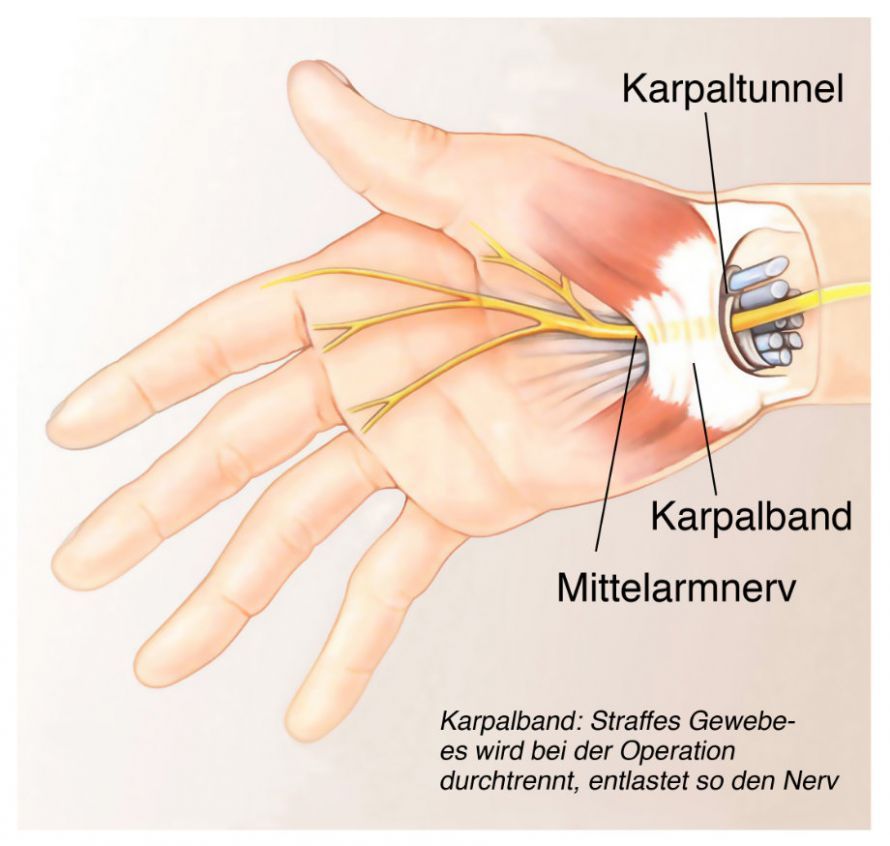
The carpal tunnel is a narrow passageway on the inner side of the wrist. The median nerve and several flexor tendons of the fingers pass through it. Normally, this tunnel provides sufficient space. However, if the surrounding tissue swells or the tunnel narrows, pressure on the nerve increases.
As a result, nerve impulses are no longer transmitted properly. Initially, this causes tingling or numbness; later, pain and loss of strength may develop. If the pressure persists over a long period, the nerve can be permanently damaged.
Various factors can increase the risk
It is not always possible to identify a single, clear cause. Often, several factors play a role at the same time.
The most common risk factors include:
- Repetitive strain on the hand
- pregnancy
- Diabetes mellitus
- Thyroid disorders
- rheumatic diseases
- Obesity
- Wrist injuries
- Genetic predisposition
Women are affected significantly more often than men. Carpal tunnel syndrome occurs more frequently, particularly between the ages of 40 and 70.
The first warning signs often appear at night
Many people with the condition initially notice the symptoms only at night. They wake up because their fingers tingle, go numb, or hurt. At first, it often helps to shake out the hand or change its position.
As the condition progresses, the symptoms increasingly occur during the day as well. Even everyday activities such as writing, talking on the phone, or holding a book can become uncomfortable.
Typical symptoms include:
- Tingling in the thumb, index finger, and middle finger
- Numbness
- Nighttime pain
- Burning sensation in the hand
- Fingers that have gone numb
- Decreased grip strength
- Difficulty holding small objects
In advanced stages, the muscles at the base of the thumb may atrophy. This makes simple movements increasingly difficult.
Not all tingling originates in the wrist
Numbness or pain in the hand can have various causes. Conditions affecting the cervical spine, nerve damage, or circulatory disorders can also cause similar symptoms.
Therefore, carpal tunnel syndrome should not be self-diagnosed. A medical examination helps rule out other conditions and initiate the appropriate treatment.
How the Diagnosis Is Made
Even the description of the symptoms provides important clues. The doctor then examines the range of motion, sensation in the fingers, and muscle strength of the hand. In addition, special functional tests are used, in which the wrist is moved into specific positions or gently tapped. If these maneuvers trigger the typical symptoms, this suggests carpal tunnel syndrome.
To confirm the diagnosis, nerve conduction velocity is often measured. This helps determine the extent to which the median nerve is already impaired.
What treatment options are available
The appropriate treatment depends on the severity of the symptoms and whether nerve damage has already occurred. In the early stages, a wrist splint—worn especially at night—is often sufficient. It holds the wrist in a favorable position and relieves pressure on the nerve. In addition, anti-inflammatory medications or, in certain cases, cortisone injections may be used.
If the symptoms are already more severe or there is significant compression of the nerve, surgery is often recommended. During the procedure, the ligament that forms the wall of the carpal tunnel is cut. This creates more space for the nerve and relieves the pressure.
What People with Carpal Tunnel Syndrome Can Do Themselves
There are also some measures you can take in your daily life to relieve pressure on the wrist and prevent symptoms.
The following are helpful, among other things:
- Avoiding one-sided strain as much as possible
- taking regular breaks when working at a computer
- using ergonomic workstations
- Keep your wrists as straight as possible
- Consistently wear prescribed splints
- Perform the exercises prescribed by your physical therapist
Responding to the first signs of discomfort early on can often prevent symptoms from worsening.
Conclusion: Relieving pressure on the nerve in a timely manner can prevent permanent damage.
Carpal tunnel syndrome usually develops gradually and often begins with seemingly harmless symptoms such as nighttime tingling or numb fingers. If the pinched nerve is treated in time, pain, numbness, and loss of strength can be significantly improved in many cases. This helps the hand maintain its mobility and function in the long term.
Share this article
Verified expertise
Recommended specialists
7 specialists
7 results

GASSMANN MEDICAL
Münstertal (Black Forest)


Dr. med. Regina Becker
Munich





News
Read next
- News
Kissing Disease: Recognizing Symptoms and Treating It Properly
Oct 12, 2026
Pfeiffer's Glandular Fever: This viral infection can take a toll on the body for weeks
Read more - News
Parkinson's Disease – Modern Therapies and New Treatment Options
Oct 9, 2026
Parkinson's: Why an Early Diagnosis Can Have a Positive Impact on the Course of the Disease
Read more - News
Kidney Stones – Modern Treatments, from Shock Waves to Lasers
Oct 7, 2026
Why Sudden, Severe Flank Pain Can Be a Warning Sign
Read more