News
Rectus Diastasis: Causes, Symptoms, and Effective Ways to Achieve a Flatter Stomach

Sabine Schneider ·
A flat stomach despite rectus diastasis? Yes, it’s possible! In this post, you’ll learn what rectus diastasis looks like, why it’s often associated with a “big belly,” which exercises really help—and which physical therapy approaches are effective.
What is rectus diastasis?
Rectus diastasis refers to the separation of the rectus abdominis muscles along the linea alba—the connective tissue seam in the center of the body. It occurs particularly frequently after pregnancy, but can also occur in men or non-pregnant individuals, for example due to excess weight, improper exercise, or weak connective tissue.
What does the abdomen look like with rectus diastasis?
A typical sign is a protruding or dome-shaped abdomen, especially when sitting up straight or tightening the abdominal muscles. Some people also report a groove or indentation in the center of the abdomen—especially when lifting or straining.
Visually, the abdomen often appears bloated or pregnant despite a normal weight, even though childbirth may have occurred months ago. This appearance is often mistaken for a “mommy belly”—but in fact, rectus diastasis is frequently the underlying cause.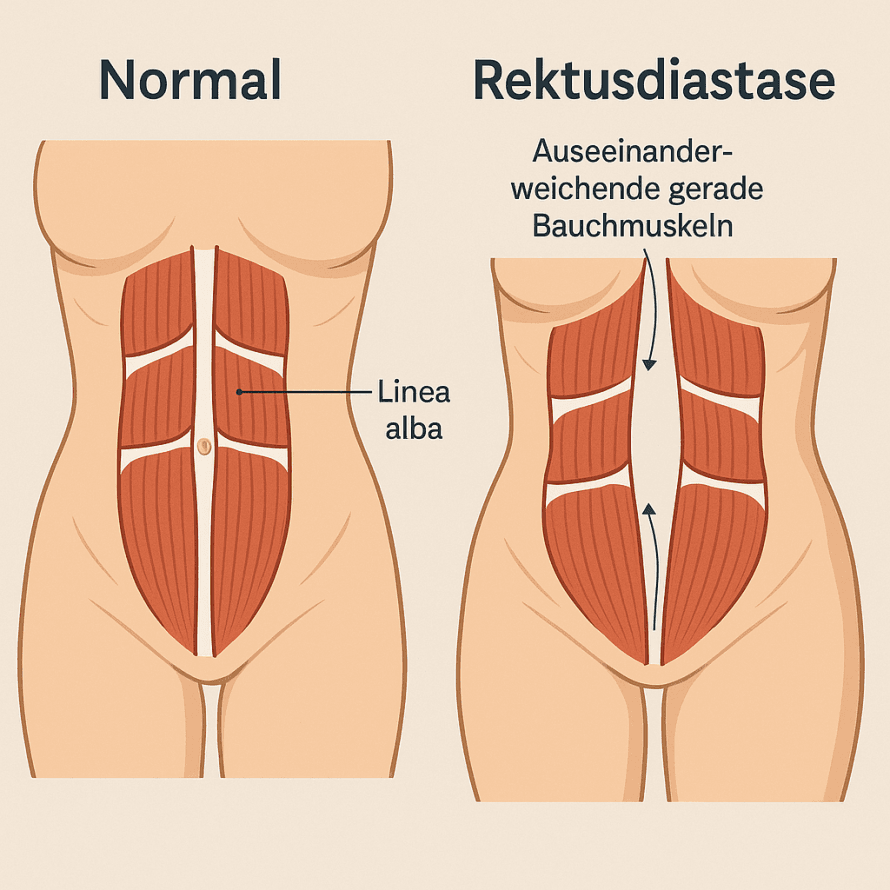
Why does a “big belly” develop with rectus diastasis?
The “bulging belly” is not caused by fat, but by a loss of deep abdominal support. Because the rectus abdominis muscles have separated, there is a lack of support in the body’s center, and the internal organs push forward. This is often accompanied by weakness in the deep abdominal muscles (especially the transversus abdominis) and the pelvic floor, which destabilizes the entire core system.
What exercises help with rectus diastasis?
Not every abdominal exercise is suitable! Classic sit-ups, crunches, or planks can actually worsen rectus diastasis.
Appropriate exercises focus on:
- Activating the deep abdominal muscle (transversus abdominis)
- Improving posture
- Strengthening the pelvic floor
- Improving diaphragmatic breathing
Example exercises:
- Crocodile breathing (diaphragmatic breathing)
- Pelvic floor activation while lying down
- Abdominal muscle activation with a towel or band (rectus diastasis closure technique)
- “Dead Bug” with abdominal tension (only in the advanced phase)
Always make sure that no bulging or doming occurs during training. If in doubt: it’s better to apply less pressure than too much!
What kind of physical therapy is recommended for rectus diastasis?
Physical therapy is an important component of rectus diastasis treatment. The goal is to functionally stabilize the abdominal muscles and improve posture.
A good physical therapy plan includes:
- Manual therapy for fascial release
- Breathing therapy to activate the diaphragm
- Functional training of the core muscles
- Postural training (posture correction)
- Biofeedback or ultrasound for muscle control
Therapists specializing in postpartum rehabilitation or pelvic floor therapy are highly recommended.
How can I flatten my stomach if I have rectus diastasis?
It is possible to achieve a flatter stomach despite rectus diastasis—but not through diet or crunches. Instead, you need:
- Daily activation of the deep abdominal muscles—in a targeted and controlled manner
- Regular, tailored exercise—ideally under supervision
- Patience and body awareness—the connective tissue needs time to regenerate
- Combining this with pelvic floor and breathing exercises
- Avoiding pressure-inducing activities in daily life (e.g., heavy lifting, improper carrying)
Tip: An abdominal band or cloth can help you feel and better control your muscles in the initial phase—but should not be used long-term.
Conclusion: Recognize and treat rectus diastasis specifically
A bloated or protruding abdomen can indicate rectus diastasis—and it’s not a matter of “more exercise” or “eating less.” With targeted training, physical therapy support, and a little patience, you can strengthen your core again and make your abdomen visibly flatter.
You
can find an insightful interview here:
--> “The Mommy Makeover Treats Rectus Diastasis and Abdominal Wall Hernias—Combined with Cosmetic Corrections”
Share this article
Verified expertise
Recommended specialists
15 specialists
15 results


Practice Clinic Winkelmann & Kappel
Bielefeld



Dr. Kirsten Meurer
Bochum


Chirurgie im Zentrum
Basel




Dr. med. Jörg Celesnik
Bottrop





Prof. Dr. med. Oliver Drognitz
Karlsruhe

1 / 2
News
Read next
- News
Kissing Disease: Recognizing Symptoms and Treating It Properly
Oct 12, 2026
Pfeiffer's Glandular Fever: This viral infection can take a toll on the body for weeks
Read more - News
Parkinson's Disease – Modern Therapies and New Treatment Options
Oct 9, 2026
Parkinson's: Why an Early Diagnosis Can Have a Positive Impact on the Course of the Disease
Read more - News
Kidney Stones – Modern Treatments, from Shock Waves to Lasers
Oct 7, 2026
Why Sudden, Severe Flank Pain Can Be a Warning Sign
Read more