News
Rosacea: Understanding and Targeting Skin Redness

Melanie Al Tikriti, BSc ·
A chronic skin condition that can be effectively treated today.
Facial redness, visible broken capillaries, or inflammatory skin changes are often initially mistaken for sensitive skin or acne. In fact, however, rosacea is often the underlying cause. This chronic skin condition usually develops gradually and occurs in flare-ups. If left untreated, symptoms can worsen over time and leave permanent visible changes to the skin.
Rosacea cannot be cured, but it can usually be well managed with a personalized treatment plan. Appropriate skincare and avoiding personal triggers are just as important as medication. By doing so, many people with rosacea can significantly reduce the frequency of flare-ups.
What Causes Rosacea
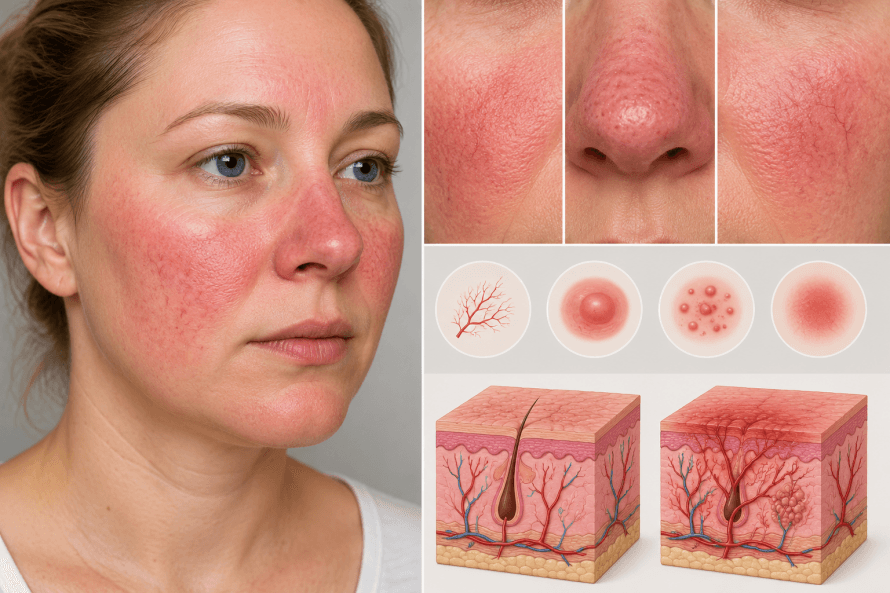
Rosacea is a chronic inflammatory skin condition that primarily affects the central part of the face. Changes most commonly appear on the cheeks, nose, forehead, and chin. Typical symptoms include persistent redness, visible small blood vessels, and inflammatory nodules and pustules.
The exact causes remain unclear to this day. It is believed to result from a combination of various factors. In addition to a genetic predisposition, changes in the blood vessels, a compromised skin barrier, and an overactive immune response are thought to play a role.
Why the Skin Suddenly Reacts More Severely
Many people with rosacea notice that their skin worsens significantly in certain situations. Such flare-ups are often triggered by irritants to which the sensitive facial skin reacts particularly strongly.
The most common triggers include:
- intense sunlight
- heat or extreme cold
- spicy foods
- Alcohol
- hot beverages
- Physical exertion
- Stress
- Inappropriate skin care products
Not everyone reacts to the same triggers. Being mindful of your personal triggers can help reduce symptoms over the long term.
Early signs are often misinterpreted
At first, the redness often occurs only occasionally. Many people notice it after physical exertion, when drinking hot beverages, or during temperature fluctuations. Since the skin initially calms down again, little significance is often attached to these changes. As the condition progresses, the redness persists longer and additional symptoms develop.
Typical signs of rosacea include:
- persistent facial redness
- visible small blood vessels
- inflammatory nodules and pustules
- Burning or stinging sensation on the skin
- A feeling of tightness
- Dry and sensitive skin
- Swelling in certain areas of the face
In some people, the eyes are also affected. They may be red, feel a burning sensation, or feel dry.
Why Rosacea Is Often Confused with Acne
Since rosacea also involves the development of pustules and inflammatory skin lesions, the condition is often mistaken for acne. However, there are clear differences.
While acne usually begins during puberty and causes typical blackheads, rosacea predominantly occurs in adulthood. Furthermore, rosacea is characterized by persistent skin redness and visible blood vessels.
How the Diagnosis Is Made
In most cases, the typical skin appearance is sufficient to recognize rosacea. The dermatologist assesses the lesions and asks about the course of the condition to date as well as possible triggers.
Further tests are rarely necessary. Above all, it is important to rule out other skin conditions such as acne, atopic dermatitis, or allergic skin reactions.
What treatment options are available
Treatment depends on the severity of the condition. Mild forms can often be treated with special creams or gels containing anti-inflammatory ingredients. For more severe symptoms, antibiotics or other medications may also be necessary.
In addition to medication, daily skin care plays an important role. Mild cleansers, moisturizing creams, and consistent sun protection help protect sensitive skin and prevent new flare-ups.
What People with Psoriasis Can Do Themselves
In addition to medical treatment, making changes to daily routines can also help relieve skin irritation.
The following are recommended:
- using sunscreen daily
- use mild skincare products
- Avoiding harsh exfoliants
- Avoiding known triggers as much as possible
- Test new cosmetic products with caution
- Attend regular checkups
Consistent skin care and avoiding individual triggers often help to positively influence the course of the condition.
Conclusion: Rosacea can usually be well managed
Although rosacea is a chronic skin condition, symptoms can often be significantly alleviated with a personalized treatment plan and consistent skincare. Those who are aware of typical triggers and have any changes in their skin evaluated by a doctor early on can often prevent new flare-ups and improve their quality of life in the long term.
Share this article




News
Read next
- News
Scabies: A contagious skin disease that is easily treatable
Oct 26, 2026
Severe itching and minor skin changes should be taken seriously
Read more - News
Heat Rash: What's Behind the Itchy Blisters
Oct 23, 2026
Heat Rash: Heat and Sweat Can Disrupt the Skin's Balance
Read more - News
Enlarged Prostate – When Medication Is Sufficient and When Surgery Is Recommended
Oct 21, 2026
Why Many Men Ignore Urinary Problems for Too Long
Read more