
News
Stroke symptoms: recognising the warning signs in an emergency

Sabine Schneider ·
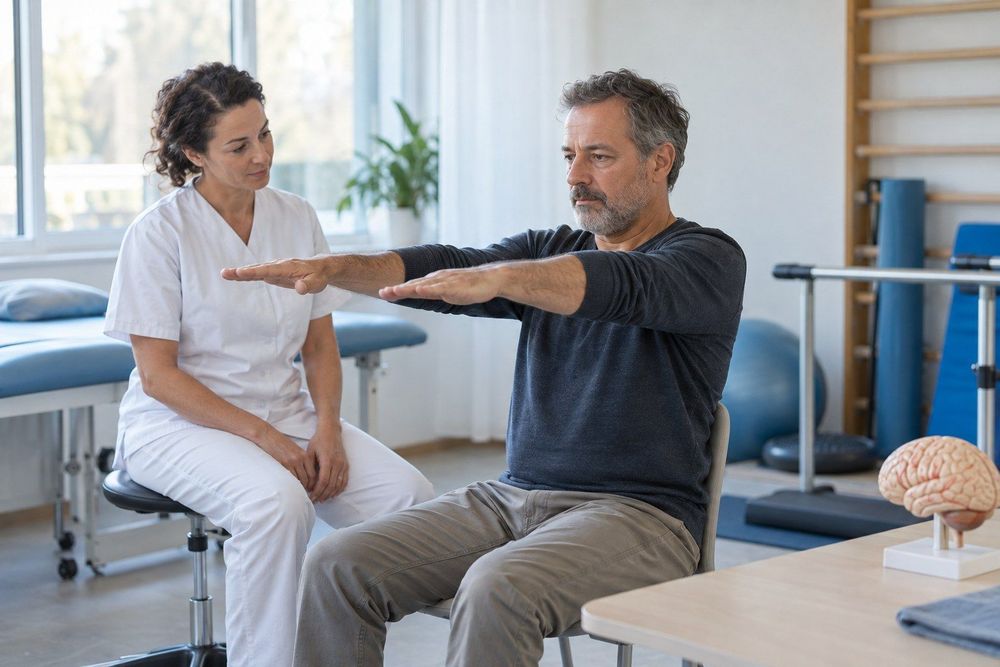
Experimental studies on stroke are investigating how immune cells might influence the damage caused. For relatives and people with risk factors, this has not yet led to any new treatments. If symptoms occur, only one thing matters: dial the emergency number 112 immediately.
A stroke occurs when a blood clot blocks a blood vessel in the brain or when a brain haemorrhage occurs. Treatment should ideally take place in a specialised stroke unit. Depending on the consequences, this is followed by rehabilitation.
Key facts at a glance
- Warning signs: Sudden paralysis, speech difficulties or a drooping corner of the mouth may indicate a stroke.
- First aid: If you suspect a stroke, swift action is crucial: call 112 immediately and state when the symptoms began.
- Acute treatment: Where a suitable vascular occlusion is present, thrombolysis and thrombectomy can be combined.
- Stroke unit: Care in a specialised stroke unit improves outcomes and reduces mortality and long-term effects.
- Further recovery: Regular exercise can still lead to improvements even a long time after a stroke.
What are the signs of a stroke?
A sudden drooping of the corner of the mouth is a possible sign. Paralysis on one side of the body and speech difficulties are also among the symptoms assessed in the FAST test.
If one side of the body is affected, this may manifest, for example, as a loss of strength or numbness.
The FAST rule helps to quickly recognise a possible stroke. FAST stands for Face, Arms, Speech and Time. The face, arms and speech are checked. ‘Time’ serves as a reminder not to waste any time if abnormalities are detected.
- A drooping corner of the mouth or a one-sided change in facial appearance is a cause for concern.
- Arms: If one arm drops, this may indicate paralysis.
- Speech: Slurred or unintelligible speech is a cause for concern.
- Time: If you notice any of these signs, call 112 immediately.
The FAST test is not a substitute for a diagnosis, but it provides relatives with a simple guide for the first few minutes. This also applies if the symptoms improve: the person affected must be taken to a suitable hospital as quickly as possible.
If neurological symptoms subside within a short time, a transient ischaemic attack (TIA) may be the cause. Such a temporary loss of function is an indication of this.
What should you do immediately if you suspect a stroke?
A possible stroke is a medical emergency. Dial the emergency number 112 immediately. Describe the symptoms that have suddenly appeared and state that you suspect a stroke. To avoid delays, do not wait to see if paralysis or speech difficulties disappear on their own.
It is particularly important for the ambulance service to know when the symptoms began. If the person is unable to provide this information themselves, relatives should state the time when they were last symptom-free. This enables the medical team to assess the situation correctly and select the appropriate emergency treatment.
Neurology deals with disorders of the brain and their consequences. Specialists in neurology are also responsible for further assessing neurological deficits.
What are the possible causes?
Two fundamental processes can lead to a stroke: a blood clot blocks a blood vessel in the brain, or a haemorrhage damages the surrounding tissue. The blockage of the blood vessel leads to a disruption in blood flow. The affected area of the brain is then no longer adequately supplied with blood.
In the second type, blood leaks into or around the brain. Such a cerebral haemorrhage requires a different treatment to that for a blocked blood vessel. The cause cannot be reliably identified on the basis of symptoms alone, such as a headache or dizziness.
The time of onset is crucial, as doctors tailor treatment to the patient’s findings and state of health. Relatives can help by stating the time the symptoms began as accurately as possible.
How is a stroke treated in the acute phase?
Acute treatment should take place in a specialist stroke unit. There, patients are closely monitored and treated. This care improves treatment outcomes and reduces both mortality and long-term complications.
The choice of treatment depends primarily on the cause and the findings.
| Procedures | What happens? | Classification |
|---|---|---|
| Thrombolysis | A drug is used to dissolve the blood clot. | This is an option in cases of suitable vascular occlusion. |
| Thrombectomy | The blood clot is removed from the occluded vessel using a catheter. | The procedure is intended for suitable patients with a blocked blood vessel. |
| Combination | The treatment comprises thrombolysis and thrombectomy. | Both procedures can be combined in suitable patients. |
| Treatment of a cerebral haemorrhage | Different measures are required compared with a blood clot. | The cause of the symptoms must be established before targeted treatment can begin. |
The medical team will decide which treatment is possible following examinations in hospital.
What happens after discharge from hospital?
Hospital treatment often lasts around 1 to 2 weeks. The actual length of stay depends on the extent of the damage, any potential complications and the level of support required.
Rehabilitation following a stroke is designed to help those affected regain their abilities and manage everyday life as independently as possible. Various skills can be practised, such as mobility, everyday activities and communication.
Depending on the limitations, support in daily life may also include nursing care and care advice. Nursing staff practise, for example, transfers or everyday routines. Relatives can receive guidance on providing care at home.
Progress is not limited to the first few weeks. Regular training can lead to improvements even a long time after the stroke. Which support options are suitable in the long term depends on individual limitations. Sometimes this includes physiotherapy with exercises for the arms or legs and other rehabilitation measures.
Mental health also deserves attention. Around a third of people develop depression requiring treatment following a stroke. Persistent low mood, withdrawal or a lack of motivation should be discussed with the treating doctor.
What do studies reveal about the immune system?
Research is investigating how immune cells influence damage following an ischaemic stroke. ‘Ischaemic’ means that the tissue is not receiving sufficient blood supply. The research provides experimental evidence, but does not yet offer a treatment for humans.
One study investigated a signalling pathway in microglial cells, the immune cells of the central nervous system. This signalling pathway was activated in mice prior to an experimentally induced stroke. Subsequently, the infarct size was smaller after 24 hours in female mice and after 7 days in both sexes.
However, there is a clear limitation to the transfer of these findings to patients. The activation took place before the artificially induced stroke, and any benefit for humans was not investigated. Consequently, no treatment recommendation can be derived from the mouse experiment.
Another experimental study focuses on regulatory T cells. These immune cells are absent shortly after the event, whilst neutrophil immune cells migrate into the damaged area.
The studies describe possible biological processes and avenues for further research. Based on these findings, anyone taking medication for prevention or treatment should not change their regimen without consulting a doctor.
How can a further stroke be prevented?
One of the modifiable risk factors is high blood pressure. High blood pressure increases the risk of stroke.
Atrial fibrillation also increases the risk. This heart rhythm disorder can lead to the formation of blood clots, which are carried by the bloodstream towards the brain. Anticoagulant medication can significantly reduce the risk of stroke in people with atrial fibrillation.
However, this treatment also carries risks. Bleeding is the most common side effect of anticoagulants, i.e. blood-thinning medicines. Doctors must weigh up the potential benefits against the risk of bleeding.
Another possible cause lies in the carotid artery. In carotid stenosis, deposits narrow the vessel. These can be removed surgically. Whether such a procedure is advisable depends on the individual findings.
Early stroke detection focuses on risk factors and possible vascular changes. In an acute situation, it is no substitute for calling the emergency services. If paralysis, speech difficulties or facial changes occur suddenly, you must dial 112 immediately.
Frequently asked questions about stroke
What does it mean if the symptoms disappear again?
Temporary neurological symptoms may indicate a transient ischaemic attack, or TIA for short. Even in such cases, immediate medical assessment is required.
Can depression occur after a stroke?
Depression requiring treatment can occur after a stroke. Persistent low mood, social withdrawal or a lack of motivation should be discussed with a doctor.
What are the risks associated with anticoagulant medication?
Bleeding is the most common side effect of anticoagulants. Whether such treatment is appropriate depends on an individual’s personal risk of stroke and bleeding.
Has immunological research already led to a new treatment?
No. The experimental studies described have not yet led to a treatment for humans. One study was carried out on mice, whilst another investigated immune processes, also on an experimental basis.
Share this article
Verified expertise
Recommended specialists
5 specialists
5 results






News
Read next
- News
Hyperthermia in cancer treatment: What heat therapy can achieve
Nov 13, 2026
Hyperthermia in cancer treatment: What heat therapy can achieve
Read more - News
Hallux valgus: What really helps with a crooked big toe
Nov 11, 2026
Hallux valgus: What really helps with a crooked big toe
Read more - News
Gallstones: When they are harmless – and when the gallbladder needs to be removed
Nov 9, 2026
Gallstones: When they are harmless – and when the gallbladder needs to be removed
Read more


