News
Thrombosis – When a Blood Clot Forms

Sabine Schneider ·
Thrombosis occurs when a blood clot (thrombus) forms in a blood vessel, obstructing or completely blocking blood flow. This most commonly affects the veins in the legs; arteries or other blood vessels are less frequently affected. If a thrombus is not detected in time, it can break loose and travel with the bloodstream to other organs—in the worst case, to the lungs, where it can cause a pulmonary embolism.
Causes and Risk Factors
Thrombosis occurs when the balance between blood clotting and blood flow is disrupted. The main causes are summarized in what is known as Virchow’s triad:
- Slowed blood flow—for example, due to lack of exercise, being bedridden, long trips, or casts
- Altered blood vessel walls—e.g., due to injuries, inflammation, or surgery
- Increased tendency of the blood to clot—due to congenital clotting disorders, hormones (e.g., the birth control pill), pregnancy, or cancer
The most important risk factors include obesity, smoking, advanced age, high blood pressure, diabetes, and a history of thrombosis.
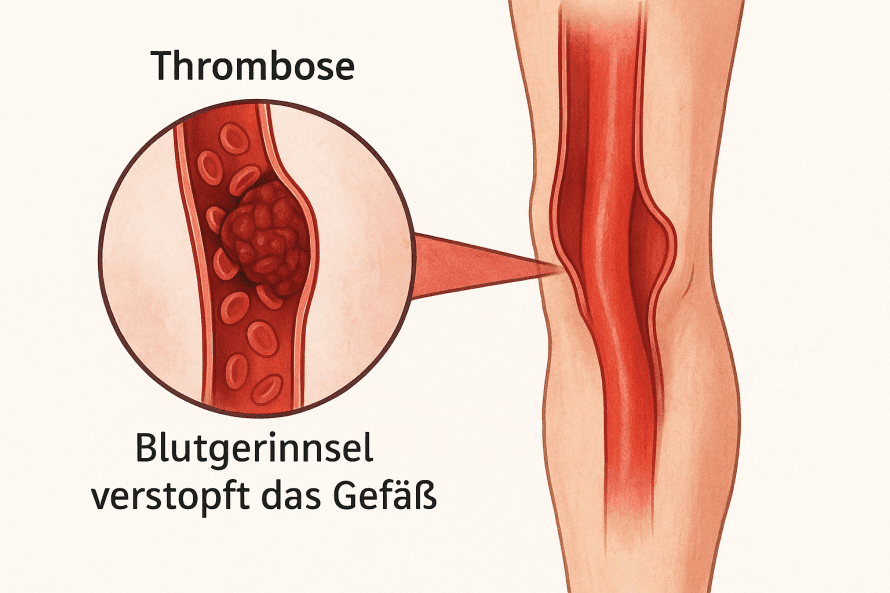
Symptoms—how does a thrombosis manifest itself?
Depending on the location, symptoms can vary in severity. Typical signs of venous thrombosis, particularly in the deep veins of the leg (DVT), include:
- Swelling of a leg (or arm)
- A feeling of tightness and pain, especially in the calf or when stepping down
- Redness or bluish discoloration of the skin
- Warmth in the affected area
- Visibly prominent superficial veins
Superficial thrombophlebitis (inflammation of superficial veins) is characterized by redness, pain, and a palpable hardening along the course of the vein.
Diagnosis
The diagnosis is made through a combination of clinical examination and imaging studies:
- Duplex or compression ultrasound: A standard procedure for visualizing the veins and blood flow.
- D-dimer test: A laboratory test that indicates possible thrombosis if levels are elevated.
- Phlebography (X-ray imaging): Used only in specific cases when ultrasound does not provide clarity.
Treatment of Thrombosis
The goal of treatment is to stop the clot from spreading, prevent embolisms, and restore blood flow in the vessel.
Acute treatment
- Anticoagulation (blood thinning): Standard therapy with heparin or direct oral anticoagulants (DOACs).
- Compression therapy: Compression stockings improve venous return and reduce swelling.
- Movement Instead of Bed Rest: Early mobilization is recommended to prevent long-term complications.
Additional measures
- Thrombolysis: In severe cases, the clot can be dissolved with medication.
- Thrombectomy: Surgical removal of the clot in cases of impending tissue damage or massive thrombosis.
Follow-up Care and Prevention
After a thrombosis, several months of follow-up treatment with anticoagulants is necessary, usually lasting 3 to 6 months. In certain cases—such as genetic clotting disorders or recurrent thromboses—long-term therapy is required.
The following measures can help prevent thrombosis:
- Regular exercise, especially after prolonged sitting or traveling
- Drinking plenty of fluids to keep the blood thin
- Compression stockings for at-risk patients
- Early mobilization after surgery
- Treatment of underlying conditions such as diabetes or heart failure
Possible complications
If left untreated, a thrombosis can lead to serious consequences:
- Pulmonary embolism, if a piece of the thrombus breaks off and travels to the lungs
- Post-thrombotic syndrome, a chronic venous insufficiency characterized by swelling, skin changes, or open leg ulcers
- Recurrent thrombosis due to inadequate anticoagulation
Regular follow-up care and monitoring of coagulation levels reduce the risk.
Share this article
Verified expertise
Recommended specialists
14 specialists
14 results


Dr. med. Dipl. oec. med., FESC Michael Lichtenberg
Chief Physician


Dr. med. Konstantinos Verginis
Duisburg



Dr Thomas Riester
Karlsbad










1 / 2
News
Read next
- News
Scabies: A contagious skin disease that is easily treatable
Oct 26, 2026
Severe itching and minor skin changes should be taken seriously
Read more - News
Heat Rash: What's Behind the Itchy Blisters
Oct 23, 2026
Heat Rash: Heat and Sweat Can Disrupt the Skin's Balance
Read more - News
Enlarged Prostate – When Medication Is Sufficient and When Surgery Is Recommended
Oct 21, 2026
Why Many Men Ignore Urinary Problems for Too Long
Read more