News
Urinary incontinence is not uncommon—and in many cases, it can be effectively treated.

Melanie Al Tikriti, BSc ·
Many people unintentionally leak a few drops of urine when they cough, sneeze, or laugh. Others suddenly feel such a strong urge to urinate that they can barely make it to the bathroom in time. Bladder weakness is very common, but hardly anyone likes to talk about it. This condition is by no means a sign of aging, as even young people can suffer from it.
According to estimates, millions of people are affected—women significantly more often than men. Often, these symptoms significantly limit the daily lives of those affected. Many avoid longer outings, trips, or physical activities for fear of unintentional urine leakage. That’s why it’s all the more important to identify the cause in order to improve quality of life.
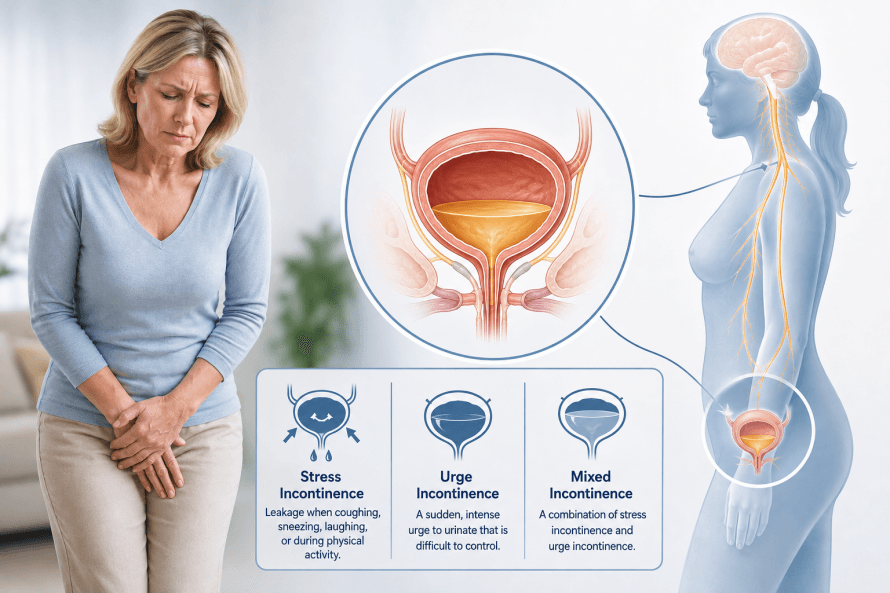
Image created with AI
The bladder functions only through perfect coordination
The bladder stores urine until it is emptied. For this to work reliably, the bladder muscle, sphincter, pelvic floor, and nervous system must work together optimally. If this coordination is disrupted, bladder weakness can develop.
Depending on the cause, the bladder may leak urine during physical activity or contract suddenly even though it is not yet fully filled. The specific type of bladder weakness determines the appropriate treatment.
Different causes lead to the same problem
Urinary incontinence can occur at any age. Symptoms often develop gradually and worsen steadily over time.
The most common causes and risk factors include:
- Pregnancy and childbirth
- weakened pelvic floor muscles
- hormonal changes during menopause
- Obesity
- Chronic cough
- neurological disorders
- Diabetes mellitus
- Pelvic surgery
- an enlarged prostate in men
Not all cases of urinary incontinence feel the same
The symptoms of bladder weakness vary depending on the type. Stress incontinence and urge incontinence are the most common.
Stress incontinence: In this case, urine leaks involuntarily when coughing, sneezing, laughing, or lifting heavy objects. The cause is usually a weakened pelvic floor or a weak sphincter muscle.
Urge incontinence: With this type, those affected experience a sudden, almost uncontrollable urge to urinate. Often, they are unable to make it to the bathroom in time.
Typical symptoms include:
- unintentional urine leakage
- frequent urge to urinate
- nocturia
- sudden, strong urge to urinate
- Stress incontinence
- the feeling of incomplete bladder emptying
- Insecurity in daily life
Over time, those affected develop strategies to avoid uncomfortable situations. However, this can significantly impair their quality of life and social interactions.
Women are affected more often than men
Women are significantly more likely to develop urinary incontinence. Pregnancies, childbirth, and hormonal changes can weaken the pelvic floor and thereby impair bladder control. In men, urinary incontinence usually occurs later in life. Benign prostate enlargement or prostate surgery may play a role.
However, as a general rule: bladder weakness is not a normal part of aging and should be evaluated by a doctor.
Diagnosis begins with an open conversation
Many people affected find it difficult to talk about their symptoms. In addition to a detailed discussion at the doctor’s office, a physical examination and a urinalysis are usually performed. Keeping a bladder diary to document fluid intake, bathroom visits, and unintentional urine leakage is also recommended. Depending on the situation, ultrasound exams or specialized bladder function tests may also be necessary to determine the cause more precisely.
What treatment options are available?
Treatment depends on the specific type of bladder weakness.
In many cases, targeted pelvic floor exercises form the basis of treatment. They strengthen the muscles and improve bladder control. Bladder training, weight loss, or changes in fluid intake habits may also be helpful.
In cases of urge incontinence, medications can help relax the bladder muscle. If conservative measures are not sufficient, modern procedures such as nerve stimulation or surgical interventions are available. The most appropriate treatment depends on the individual cause and the severity of the symptoms.
What People with Urge Incontinence Can Do Themselves
There are also ways to support the bladder and relieve symptoms in everyday life.
The following are helpful:
- regular pelvic floor exercises
- Aiming for a healthy weight
- drinking enough fluids
- Reducing bladder irritants such as excessive coffee or alcohol
- Avoiding constipation
- Do not go to the bathroom repeatedly just to be safe
Conclusion: Urinary incontinence is treatable and nothing to be ashamed of.
Bladder weakness affects people of all ages and can significantly impair quality of life. No one should put up with these symptoms out of shame or accept them as a normal part of aging. Thanks to modern diagnostic and treatment options, symptoms can often be significantly alleviated or even completely resolved. The first step is to talk openly about it and seek medical advice.
Share this article
Verified expertise
Recommended specialists
9 specialists
9 results




Dr. med. univ. Nicolas Rickert
Saarbrücken


Dr. Talal Ebash
Dubai




Prof. Dr. med. Marko Brock
Recklinghausen


News
Read next
- News
Scabies: A contagious skin disease that is easily treatable
Oct 26, 2026
Severe itching and minor skin changes should be taken seriously
Read more - News
Heat Rash: What's Behind the Itchy Blisters
Oct 23, 2026
Heat Rash: Heat and Sweat Can Disrupt the Skin's Balance
Read more - News
Enlarged Prostate – When Medication Is Sufficient and When Surgery Is Recommended
Oct 21, 2026
Why Many Men Ignore Urinary Problems for Too Long
Read more