News
Why the West Nile virus is also receiving increasing attention in Europe

Melanie Al Tikriti, BSc ·
For most people, a mosquito bite is simply part of summer and is usually harmless. However, some mosquitoes can transmit pathogens that can have serious consequences. These include the West Nile virus. What was once primarily found in Africa, North America, or Southern Europe is now regularly detected in Central Europe as well. With rising temperatures and longer mosquito seasons, the virus is increasingly becoming a focus for the medical community and health authorities.
The good news is that most infections are asymptomatic or cause only mild, flu-like symptoms. In rare cases, however, the West Nile virus can trigger severe nervous system disorders.
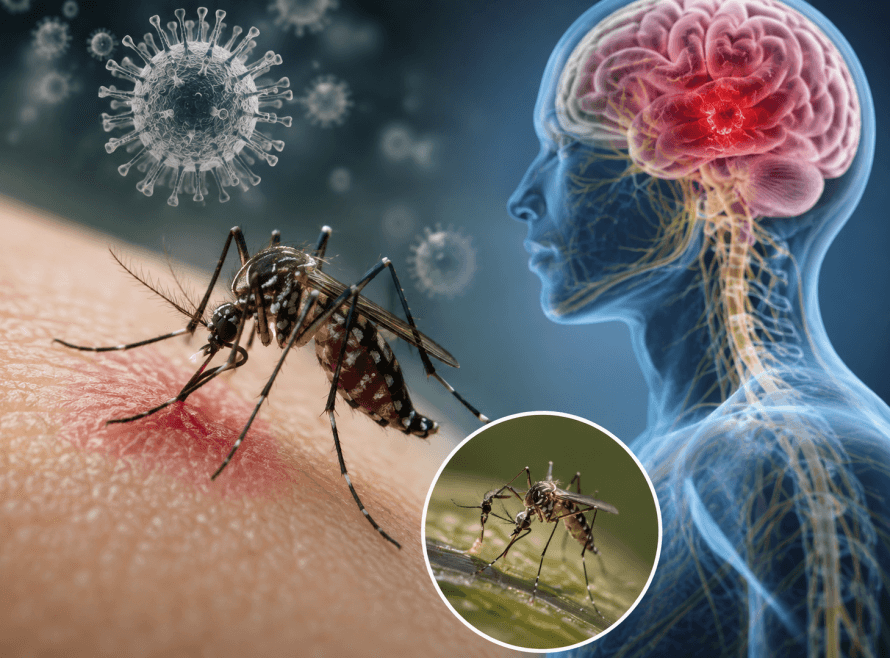
Image generated by AI
What is the West Nile virus?
The West Nile virus belongs to the Flavivirus family and is primarily transmitted by mosquitoes. Wild birds serve as the primary natural reservoir, among which the virus is transmitted via mosquitoes. Humans and horses can also become infected but are considered “accidental hosts.” This means they generally do not spread the virus further.
The virus was first identified in Uganda in 1937 and is now widespread in many regions of the world. In recent years, infected birds, horses, and, in isolated cases, humans have also been detected in several European countries—including Germany and Austria.
How is the virus transmitted?
Transmission occurs through the bite of an infected mosquito. The mosquito first picks up the virus while feeding on the blood of an infected bird and can then transmit it to other animals or humans. Direct person-to-person transmission is not possible under normal circumstances. Only in very rare cases can the virus be transmitted, for example, through blood transfusions, organ transplants, or during pregnancy.
Since mosquitoes are primarily active during the warmer months, infections occur mainly between summer and early fall.
What symptoms might occur?
About 80 percent of all infected people do not develop any symptoms. About one in five people affected develop mild, flu-like symptoms, a condition also known as West Nile fever.
Possible symptoms include:
- Fever
- Headache and body aches
- Fatigue
- Muscle aches
- Skin rash
- Swollen lymph nodes
- Nausea
Symptoms usually subside within a few days or weeks. In rare cases, the virus attacks the central nervous system and can cause meningitis, encephalitis, or inflammation of the spinal cord. Symptoms include severe headaches, neck stiffness, confusion, seizures, or paralysis.
Such complications constitute a medical emergency.
Who is at risk?
Severe cases of the disease are rare overall. However, older adults, people with weakened immune systems, and those with chronic conditions such as diabetes, cardiovascular disease, or kidney disease are at particularly high risk. For healthy adults and children, an infection is usually mild or even goes completely unnoticed.
How is an infection diagnosed and treated?
If an infection with the West Nile virus is suspected, a medical examination is conducted first. Special blood tests can detect antibodies or components of the virus. If involvement of the nervous system is suspected, a cerebrospinal fluid analysis may also be necessary.
There is currently no specific antiviral treatment for the West Nile virus. Treatment is therefore based on the symptoms. Mild cases are treated symptomatically, for example, with adequate fluid intake, rest, and fever-reducing or pain-relieving medications.
Severe cases usually require hospitalization. How can you protect yourself from the West Nile virus?
Recommendations include:
- Insect repellent on exposed skin
- long, light-colored clothing
- Window screens
- Mosquito nets in high-risk areas
- Avoiding standing water in the garden, as mosquitoes breed there
These protective measures should be consistently followed, especially in the evening and at night when many mosquitoes are active.
Conclusion: Mosquito protection remains the most important precaution
The West Nile virus has also reached Europe and is increasingly being detected during the summer months. Although most infections are mild, serious neurological complications can occur in rare cases. Those who consistently protect themselves against mosquito bites and seek medical advice if they experience persistent fever or neurological symptoms after a mosquito bite can significantly reduce the risk of severe illness. Staying vigilant rather than panicking is the best protection.
Share this article
Verified expertise
Recommended specialists
7 specialists
7 results

GASSMANN MEDICAL
Münstertal (Black Forest)


Dr. med. Regina Becker
Munich





News
Read next
- News
TAVI – When Heart Valve Replacement Is Possible Without Open Surgery
Oct 28, 2026
Why Modern Heart Valve Treatments Are Becoming Increasingly Minimally Invasive
Read more - News
Scabies: A contagious skin disease that is easily treatable
Oct 26, 2026
Severe itching and minor skin changes should be taken seriously
Read more - News
Heat Rash: What's Behind the Itchy Blisters
Oct 23, 2026
Heat Rash: Heat and Sweat Can Disrupt the Skin's Balance
Read more