After hip replacement surgery, there are a few guidelines to follow. These ensure that the hip prosthesis integrates properly and that the wounds heal well. They also help preserve the new joint for as long as possible and prevent the need for early replacement.
Here you’ll find further information as well as a selection of specialists and centers for post-operative care following hip surgery.
Immediately after the implantation of the artificial hip joint until discharge
With the minimally invasive surgical technique, there is no need for any restrictive positioning aids. Therefore, the patient is able to begin assisting with their rehabilitation as early as the first hour after hip surgery. Physical therapists and nursing staff will guide them through this process.
On the first day after surgery, the patient can already begin an intensive rehabilitation program.
After the compression bandage is removed, the patient is given a light wound dressing and anti-thrombosis stockings. The first standing exercises then begin, and once the patient feels confident, gait training starts.
Over the next few days, the patient’s condition will improve rapidly. The wound will no longer be oozing, so the patient can shower without any problems. With the help of a physical therapist, the patient learns to climb stairs. The patient performs exercises together with other patients in hip and knee groups.
After three to five days, the position of the artificial hip joint is checked again via X-ray.
After five to seven days, younger patients in particular can be discharged from the hospital. They no longer require full weight-bearing support on their forearms (walking aids). If necessary, the hospital stay is extended.
External wound healing is complete after 10 to 14 days. If absorbable sutures are used, suture removal is no longer necessary. Once the wound has healed and is dry, a bandage is no longer needed. Any bruising will gradually subside.
Are there any assistive devices for living with an artificial hip joint?
There are various assistive devices, such as
- crutches,
- sock aids,
- gripping tongs,
- toilet seat risers, etc.
to make life easier with an artificial hip joint. According to the Medical Aids and Devices Regulation, many of these are eligible for coverage by health insurance companies, which means the insurance company covers the costs.
Patients should contact their treating physician regarding a prescription.
Rehabilitation After Discharge from the Hospital
There are various forms of rehabilitation available for patients who have received an artificial hip joint. The final choice depends on the options offered by the respective insurance provider and the patient’s preferences.
Essentially, these are
- therapeutic treatment,
- outpatient rehabilitation, and
- follow-up treatment.
Before being admitted to the hospital, the patient should
- their health insurance provider or
- their pension insurance provider
to find out what options are available to them.
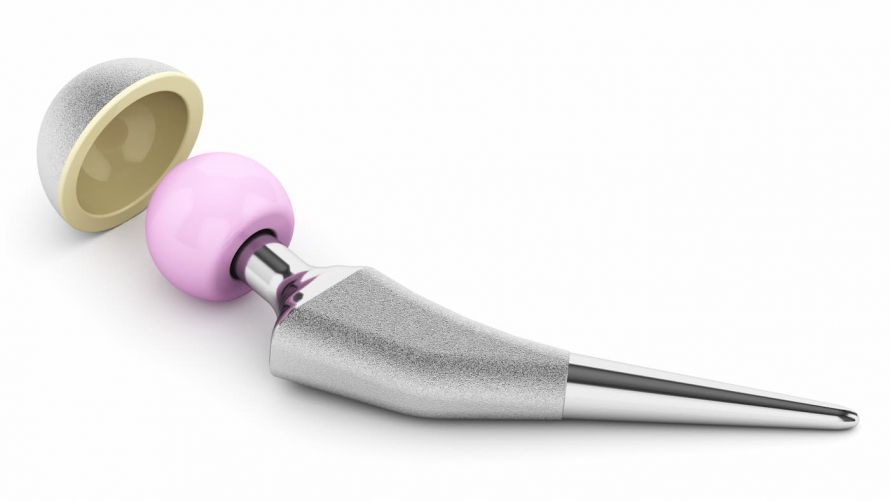
The first few months after the implantation of an artificial hip joint
The purpose of an artificial hip joint is to enable the patient to return to a pain-free life.
However, there are also some guidelines to follow so that the body can adjust to the new joint and it heals properly.
Long-term guidelines, even after complete healing
- Sleep on your back whenever possible. If you sleep on your side with the operated leg on top, get into the habit of placing a large pillow or blanket between your knees.
- Do not bend the operated hip beyond 90° over the long term.
- Do not cross your knees or feet—neither while sitting nor while standing.
- Put on and take off socks and shoes only while sitting and exclusively with a dressing aid. Washing your feet is also recommended only with aids (such as a long-handled brush) in the long term. Have a caregiver perform foot care and nail trimming.
- The patient should also use raised toilets whenever possible, even in the long term. This is particularly important for taller patients. As a rule of thumb—just as when sitting—the toilet seat should not be lower than knee height.
- Sitting with legs extended and the upper body leaning forward sharply to reach the feet with the hands must be avoided at all costs.
- Walk only in closed, sturdy shoes with non-slip soles.
- When bending over, bring the healthy leg forward in a slight bend and place the operated leg straight behind you.
- Especially with lower car seats, be sure to use a thick seat riser.
The first three months (until internal wound healing is complete)
- Full weight-bearing is generally permitted (the patient will be informed by the treating physician if there are any exceptions).
- Sleep on your back for 14 days; after that, sleeping on your side is also possible. However, please follow the instructions above! It is best for the artificial joint if patients sleep only on their backs for the first three months.
- Get in and out of bed only on the side of the surgery.
- Use forearm crutches for a cross-step gait only until you can walk independently and confidently. Using only one walking aid usually leads to an asymmetrical gait.
- Avoid twisting the upper body while keeping the legs “fixed” (e.g., when turning over, closing doors, or turning in a chair).
- Do not rotate the operated leg inward or outward (depending on the surgical approach) and always keep it slightly spread apart (wide-legged sitting position).
- The patient should always try to sit in an elevated position with two armrests for support. Rule of thumb: The seat height should correspond to the height of the knee. Sitting low in armchairs or on sofas must be avoided at all costs. If the patient is visiting someone, they should ask for a pillow or blanket to place under them if necessary.
- Use raised toilets whenever possible.
- Avoid bathing in the tub due to the risk of slipping and dislocation.
- Footwear: Only closed, sturdy shoes with non-slip soles.
- When climbing stairs, the patient should always keep one hand on the handrail. As long as they are still using forearm crutches, the following rule applies: Going up stairs: put the healthy leg forward first, then follow with the operated leg using the crutches. Going down stairs: put the operated leg forward first using the crutches, then follow with the healthy leg.
- Putting on and taking off socks and shoes: Only while seated and exclusively with a dressing aid.
- When swimming, the patient should not perform breaststroke movements (frog kick) with the legs. Move the legs only in a straight line, as in the crawl stroke.
- Driving is only permitted once full driving ability has been regained. The patient must then be able to walk safely without forearm crutches. Patients who have undergone right-sided joint replacement should not drive a car independently until six weeks have passed. By then, they should have sufficient muscle strength in the operated leg to brake quickly in an emergency. As a passenger, the patient may ride in a car from the time of hospital discharge, provided they follow the rules mentioned above.
- When using public transportation, the patient should board at the front. They should ask the driver not to start the vehicle until they are securely seated. As a general rule, do not ride the bus while standing during the first three months. When getting off, do not stand up or walk toward the exit door while the vehicle is still moving. Find a seat near the door or ask a fellow passenger to press the door-opening button. Sit facing only forward or backward, not to the side.
The surgical wound will be tightly closed after just 14 days. However, internal wound healing takes significantly longer. The formation of a firm “hip joint neocapsule” is not considered complete until three months after the end of connective tissue regeneration. Only then is the artificial hip joint considered to be integrated into the bone and stable.
Follow these guidelines to avoid delaying the healing process.
After 3 months
In general, the patient can resume their normal daily activities with minor restrictions starting at this point.
Please note: Falls must be avoided at all costs with an artificial hip joint. A bone fracture in the area of the artificial hip joint is extremely difficult to treat and requires a lengthy healing process. Therefore, do not put yourself in situations where there is an increased risk of falling!
- Do not rotate the operated leg inward or outward (depending on the surgical approach) and always keep it slightly spread apart (sitting with legs apart).
- Do not twist your upper body while your legs are “fixed” in place (e.g., when turning around, closing doors, or rotating in a chair).
- Be careful during sexual intercourse.
- You may now shower normally while standing, using a non-slip mat.
- Take baths in the tub using a non-slip mat as well. When getting into the tub, consciously keep your legs spread apart and position the operated leg toward the back.
After 6 months
- It is best to use grab bars and a bathtub seat.
- You can now climb stairs using an alternating step pattern without holding onto anything.
- Driving should now be possible without restriction. Continue to follow the instructions for getting into the car listed above.
- When using public transportation, the patient can now travel while standing. Lateral movements of the artificial joint are painful when the vehicle starts or brakes. Therefore, when sitting sideways across the direction of travel, make sure to sit with the operated side against a wall or support.
- Household and yard work are now possible again with certain restrictions. The patient should always follow the general guidelines for hip replacement patients. They should also use their assistive devices while working in the yard. At work, proceed slowly and carefully, and initially divide the work into short time intervals with rest breaks. Climbing ladders and scaffolding, as well as lifting heavy loads, should be avoided.
- When shopping, it’s better to take frequent short breaks. The patient should ideally carry their purchases in a backpack on their back or use a shopping cart.
What about exercise after hip replacement surgery?
With an artificial hip joint, you can exercise regularly. The following principle essentially applies: Avoid sports involving
- rapid changes in direction,
- the potential for physical contact,
- impact, or
- an increased risk of falling.
Below, we’ve listed a few sports that we consider safe:
- Golf: However, proper swing technique and a solid stance are absolutely essential.
- Power/Nordic walking: Unlike jogging, this does not cause impact on the joints.
- Strength training: Only controlled movements along a single axis. This requires the use of exercise equipment and avoiding free-weight training.
- Cycling: Cycling is an ideal sport when the seating position and saddle height are correct. The patient should first train on an exercise bike before riding on the road. They should adjust the saddle so that they can stand securely with both feet on the ground. A bike with a low step-through frame and no horizontal crossbar should be used. A special osteoarthritis/swivel saddle is also very helpful.
- Rowing: Rowing is safe as long as the 90° flexion rule is observed.
- Swimming: After one year, even the breaststroke is safe to perform.
- Cross-country skiing: Cross-country skiing on flat terrain—without using the skating stride—is safe. However, the patient should avoid overextending the swinging leg too far backward.
- Dancing: Dancing is possible as long as the patient avoids quick changes of direction and upper-body twists. It is best to stick to small-step turns.
- Alpine skiing and snowboarding: Alpine skiing and snowboarding are generally not recommended due to the risk of falls and the possibility of leg twisting. Only skilled skiers with strong muscles are able to safely return to alpine skiing.
- Tennis: The same applies to tennis as to alpine skiing.
About the medical author
Dr. med. Dirk Baumann
Medical writer