
An eyebrow lift, also known as a brow lift, can specifically lift sagging eyebrows and visibly open up the upper part of the face. This makes the eyes appear more alert, friendlier, and less tired. In addition to the aesthetic effect, a brow lift can also offer functional benefits if drooping eyebrows exert pressure on the upper eyelid or restrict the field of vision. A precise analysis of the entire eye region is crucial for a convincing result, as not every change originates solely from the eyelid.
What an Eyebrow Lift Can Do
An eyebrow lift, also known as a brow lift, is a procedure designed to raise sagging eyebrows. Many people are bothered not only by the fact that their face appears tired, stern, or constantly tense. There is often an additional functional problem: As the brows sag over time, more tissue presses down on the upper eye area. This can make the eyes appear heavy and, in some cases, may even impair peripheral vision. This is precisely why an eyebrow lift is not automatically considered purely cosmetic surgery; depending on the findings, it can also be medically beneficial.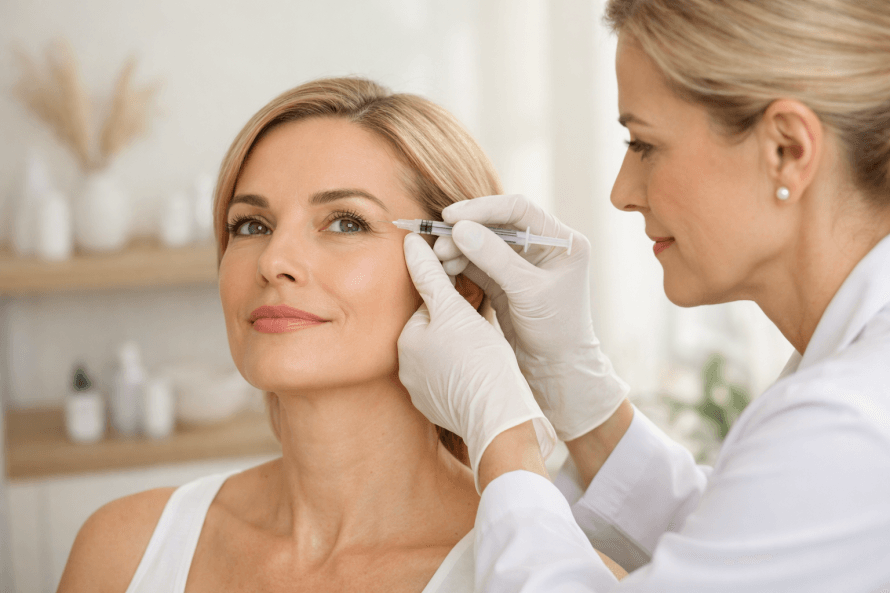
Brow Drooping or Ptosis: What Really Needs to Be Treated
First and foremost, an accurate diagnosis is crucial. Not every change perceived as a drooping eyelid actually originates from the upper eyelid. Often, the cause lies—at least in part—in a drooping brow. Anyone who focuses solely on the eyelid without considering the forehead, the position of the brows, and the entire eye area risks developing an incomplete treatment plan. To achieve a satisfactory result, it is therefore always necessary to determine whether an upper eyelid lift, a brow lift, or a combination of both procedures is appropriate. Ptosis or eyelid abnormalities such as ectropion and entropion must also be ruled out or taken into account in the diagnosis.
Which Methods Are Suitable for a Brow Lift
The goal of a brow lift is not to create an artificially surprised look, but rather to achieve a harmonious elevation of the brow that complements the shape of the face. This makes the eye area appear more open, alert, and often friendlier. At the same time, pressure on the upper eyelid can be reduced. The technique used depends on the patient’s anatomy, the extent of brow drooping, and the desired outcome. Options include minimally invasive procedures with a relatively limited duration of effect, as well as surgical corrections with lasting results. The direct eyebrow lift, in particular, allows for very precise shaping and lifting of the eyebrow, but requires careful planning because the scar line, eyebrow shape, and symmetry are crucial. Alternatively, the forehead-brow lift offers a surgical option for more complex situations in which both the forehead and the brows need to be lifted together.
Why Analysis and Planning Are More Important Than Maximum Lifting
Before undergoing treatment, patients should be aware that even small changes in the upper face affect facial expressions as a whole. Therefore, it is less about achieving the greatest possible lift and more about a thorough analysis and realistic goals. During the consultation, the following factors are assessed, among others: the position of the eyebrows at rest, forehead activity, skin quality, any asymmetry, and the condition of the eyelids. Only then can it be determined which procedure makes sense from both a functional and aesthetic standpoint. In cases of mild brow drooping, a non-surgical solution such as Botox treatment may be a good option to consider first.
What to Expect After a Surgical Brow Lift
After a surgical brow lift, temporary swelling, bruising, or a feeling of tightness in the treated area may occur. Good postoperative care, consistent cooling, and realistic expectations during the first few days after the procedure are crucial for the healing process. The final result is not immediately apparent but becomes visible once the swelling in the tissue subsides. This makes a precise technique all the more important, one that aims for a natural result without excessive lifting.
Eyebrow Lift: Planning for Functional and Aesthetic Benefits
Anyone interested in a brow lift, a direct brow lift, or a comprehensive evaluation of a drooping brow should consult a center with genuine expertise in ophthalmology and, in particular, functional eyelid surgery. The experts at Leading Medicine Guide specialize in conditions and surgical treatments involving the eyelids, the orbit, and adjacent structures. This is important for patients because, with a brow lift, it’s not just aesthetics that matter—function, eyelid position, and the harmony of the entire eye region are always key considerations as well. Additional information can be found under “Forehead Lift” and “Plastic and Aesthetic Eyelid Surgery.” You can schedule an appointment directly through the Leading Medicine Guide.

About the medical author
Prof. Dr. Dr. Ludwig Heindl
Medical Editor · Cologne