
Model fabrication is the first step in customizing an ocular prosthesis following the loss of an eye. It forms the foundation for a functional, aesthetically natural, and long-term stable restoration of the eye socket. Through precise fitting and skilled craftsmanship, it ensures that the prosthesis fits perfectly and can be worn comfortably in everyday life.
The process involves several important steps—from the initial assessment of the eye socket to the final design of the ocular prosthesis. Early and professional model preparation by specialized ocularists plays a crucial role in improving one’s appearance and sustainably enhancing quality of life.
In ocular prosthetics, the initial fabrication of an ocular prosthesis is referred to as “model treatment.” This term refers to the first customized fitting following surgery, when an eye has been removed or could no longer be saved. For those affected, this is often an emotional and, at the same time, very practical turning point: It is not only about restoring one’s outward appearance, but also about ensuring that the ocular prosthesis fits well, is comfortable to wear, and stabilizes the shape of the eye socket. A well-fitted prosthesis supports the eyelids, helps keep the eye socket open, and lays the foundation for an overall appearance that is as natural as possible.
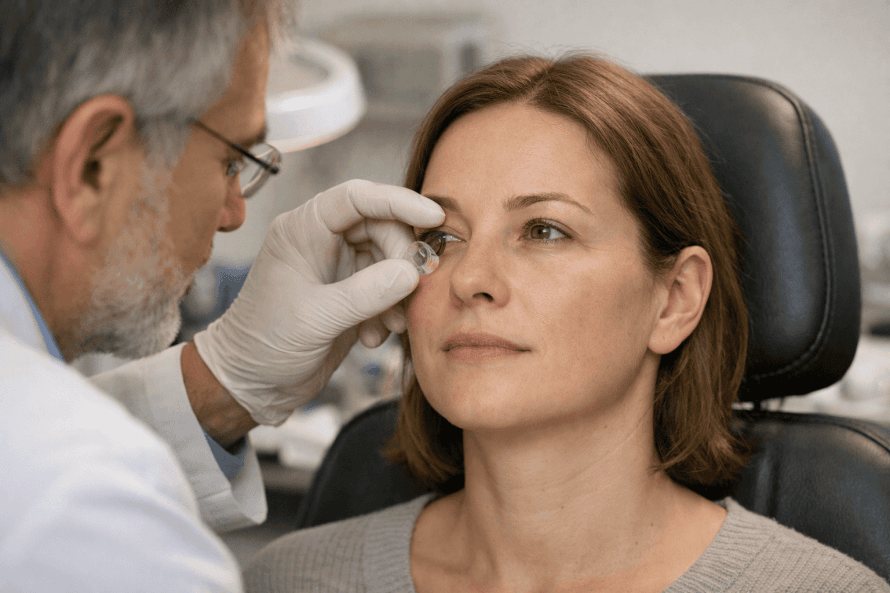
What “model treatment” means for an ocular prosthesis
Model fitting is the first custom-made solution following the loss of an eye. It marks the transition from surgery to individualized prosthetic care. The focus is not only on cosmetic restoration but also on function, stability, and comfort. The ocular prosthesis should blend harmoniously into the face, support the eyelids, and optimally maintain the anatomical structure of the eye socket.
Initial Consultation with the Ocularist Following Enucleation or Evisceration
The fitting process begins with a personal consultation with the ocularist. This consultation covers the patient’s medical history to date, the timing and type of surgery, as well as any symptoms, expectations, and questions regarding daily life. Especially during this initial phase, many patients need clear guidance: What is normal immediately after surgery, when is the first fitting possible, and what really matters during the fitting process? It is crucial that the eye socket has healed sufficiently. Often, the first fitting is possible about two to three weeks after surgery, but the exact timing always depends on the individual’s healing process.
Assessment of the Eye Socket as the Basis for the First Eye Prosthesis
The ocularist then assesses the shape of the eye socket, the position of the eyelids, and the space available for the future prosthesis. This is a prosthetic assessment for the fitting process, not an ophthalmological examination in the strict sense. Based on this assessment, an initial model prosthesis made of special glass is fitted. This serves as the starting point for the final, custom-made ocular prosthesis. Even at this stage, it becomes clear how important experience is: An ocular prosthesis must not only look right, but also have the correct shape, size, and thickness so that it sits securely in the eye socket, provides sufficient support for the eyelids, and blends harmoniously with the face.
Fitting the Model Prosthesis: Fit, Comfort, and Stability
In practice, several minor adjustments are often necessary. The model prosthesis is inserted, evaluated, and gradually adjusted until the fit, comfort, and position are satisfactory. It is important for patients to know that this insertion is generally not painful. The goal is a prosthesis that feels secure during everyday activities and does not feel like a foreign object with every eyelid movement. The more precise the fitting is during this phase, the better the comfort, mobility, and cosmetic appearance will be later on.
Handcrafted Custom Design of the Ocular Prosthesis
Only once the shape is correct does the individual design process begin. The ocularist uses the healthy eye as a guide and meticulously handcrafts the iris color, pupil size, scleral hue, and fine vascular patterns. It is precisely this part of the process that makes it clear why a custom-made ocular prosthesis cannot be equated with a standard product. Each prosthesis is one-of-a-kind, tailored to the patient’s anatomy and the natural opposite eye.
Completion of the Model Fitting: Check, Care, and Final Adjustment
At the conclusion of the model treatment, the finished ocular prosthesis is inserted and checked again. The ocularist verifies that it fits securely, provides good support for the eyelids, looks natural, and can be worn comfortably over an extended period. This is followed by instruction on handling and care. Patients learn how to insert and remove the prosthesis, how to clean it, and why regular follow-up appointments remain important. Especially in the first few weeks and months, the eye socket may still change, so minor readjustments may be advisable or necessary.
Why Model Treatment Is So Important for Patients
For patients, the model fitting is far more than a purely technical appointment. It marks the beginning of a treatment process that must combine function, aesthetics, and suitability for everyday life. Anyone seeking a custom ocular prosthesis following eye loss due to enucleation or evisceration can submit a direct inquiry to specialists in this field via the Leading Medicine Guide. Structured, experienced support is crucial, especially in the initial phase following surgery.

About the medical author
Jörg Schmidt
Medical Author · Cologne
