A "tear bag" refers to visible sagging of the area under the eyelids. Natural aging processes are often to blame. If bags under the eyes appear at an early age, poor lifestyle habits are usually the cause. Bags under the eyes can also be hereditary or caused by medical conditions. Depending on the cause, surgery may be the only way to get rid of them.
Below you will find further information as well as a selection of specialists in the removal of under-eye bags.
What Are Under-Eye Bags?
Many people believe that tears accumulate in under-eye bags. But that’s not true. The causes of under-eye bags are as varied as their appearances.
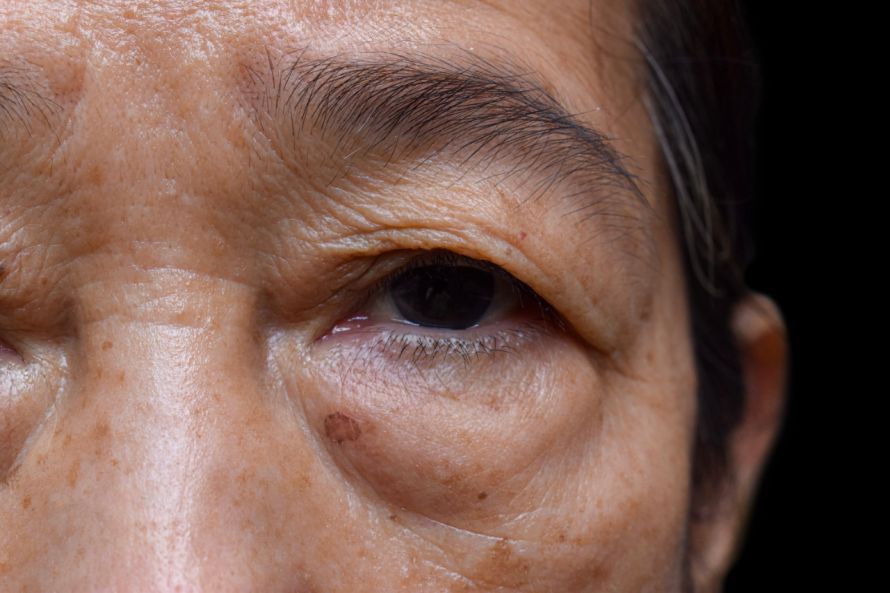
Both sagging and swelling in the area under the eyes are referred to as under-eye bags. In most cases, the swelling extends from the lower eyelid to the base of the cheekbone. In addition, the upper eyelid may also be affected and become increasingly saggy.
Under-eye bags occur in various forms. In particularly severe cases, in addition to swelling, there is also a fold of overhanging skin. This is usually caused by the increasing sagging of the skin.
The progressive weakening of the connective tissue causes the lower eyelid to be pulled further and further downward. As a result, the reddish inner edge of the eyelid becomes increasingly visible.
How do bags under the eyes develop?
Numerous different diseases and conditions can cause symptoms known as under-eye bags.
Older adults, in particular, often experience bags under the eyes that appear only in the morning. They subside as the day progresses. This is simply morning swelling of the lower eyelid. Weakened connective tissue leads to increased swelling of the eyelids due to elevated hydrostatic pressure when lying down.
Hydrostatic pressure refers to the pressure exerted by both water and blood in the body on the surrounding cells. When lying down, this pressure is significantly higher in the eye area, since the eyes are sometimes even located below the center of the body.
In most cases, however, under-eye bags develop as part of the natural aging process. In these cases, the onset of symptoms is linked to an inevitable weakening of the connective tissue that occurs with age.
Numerous factors, such as
- lack of sleep,
- drug use, or
- stress
can further contribute to the development of under-eye bags.
What procedures are available for removing under-eye bags?
Currently, numerous different methods for treating under-eye bags have become established in medicine. Under-eye bags are often treated by ophthalmologists or dermatologists.
If the bags under the eyes are caused by serious underlying medical conditions, these must be treated. Once the underlying cause is treated, the bags under the eyes will disappear as well.
In addition to ointments and creams, cortisone is frequently used to treat under-eye bags and their underlying causes.
If the cause of the under-eye bags is anatomical in nature, surgery is the only effective solution. This procedure is typically performed as part of plastic surgery, since it is a purely cosmetic treatment.
During the procedure, the surgeon completely removes the under-eye bags and then tightens the lower eyelids. Local anesthesia is typically used during the surgery, as even the slightest movements can interfere with the surgeon’s work.
The incision is made directly below the eyelashes and runs from the outer corner of the eye toward the inner corner. This ensures that the incision will no longer be visible once it has healed.
After removing all fat and swollen tissue, the wound is sutured with fine sutures. These can be removed after two days at the latest.
Share this article