Expert Interviews
Severe Knee Injuries: Surgical Expertise for Complex Cases — Expert Interview with Prof. Frosch

Alexandra Pfitzmann ·
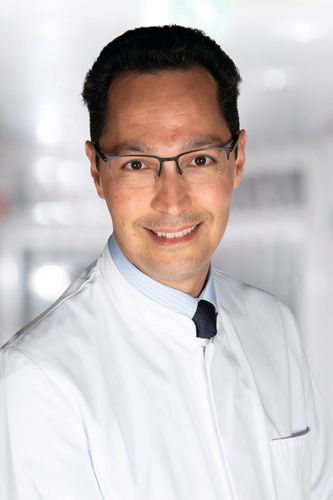
Prof. Dr. med. Karl-Heinz Frosch, one of Hamburg’s leading orthopedic surgeons and trauma surgeons, specializes in complex knee surgery and has made a name for himself as a renowned knee specialist. As Director of the Clinic and Polyclinic for Trauma Surgery and Orthopedics at the University Medical Center Hamburg-Eppendorf (UKE) and as Medical Director of the BG Trauma Hospital Hamburg, he offers outstanding expertise in the field of knee surgery, sports traumatology, and sports orthopedics. Around 600 fractures involving the knee joint alone are treated here, a figure that is certainly among the highest in Europe.
His focus is on the treatment of complex knee injuries, including cruciate ligament tears, meniscus injuries, knee osteoarthritis, and patellar dislocations, as well as severe injuries to the lower extremities. With a specialization in revision surgery, particularly involving the posterior cruciate ligament, he has extensive experience in managing challenging cases. Of particular note is his arthroscopic technique for treating injuries to the posterior oblique ligaments, which requires minimal incisions and allows for minimally invasive treatment.
His expertise also extends to the care of athletes and the treatment of sports-related knee injuries, with his goal always being to preserve the patient’s natural knee joint and minimize the need for knee replacement surgery. Thanks to his experience in sports traumatology, Prof. Dr. Frosch provides first-class care for competitive and elite athletes. His commitment to preserving the natural knee joint—even in cases of severe injuries and degenerative diseases—makes Prof. Dr. Frosch a highly sought-after specialist who focuses on his patients’ quality of life and advocates for innovative, minimally invasive treatment methods.
The editorial team of the Leading Medicine Guide spoke with Prof. Dr. Frosch about the most severe knee injuries and their treatment options.
The knee is a remarkably complex joint that provides both stability and mobility. It consists of various components, including bones, ligaments, cartilage, tendons, and muscles, which work together to ensure smooth functioning. The knee’s structure allows for a wide range of movements, from walking to jumping, while simultaneously supporting the body’s weight. The interaction of these various elements in the knee makes it a fascinating yet vulnerable part of the human body, prone to injuries and degenerative diseases. Severe knee injuries are often extensive and can result from various causes, such as sports accidents, workplace accidents, or other traumatic events. Such injuries affect the stable structures of the knee joint—including ligaments, menisci, cartilage, and bone—and can result in a significant limitation of mobility and quality of life. Surgical expertise in the treatment of severe knee injuries is essential for making an accurate diagnosis and developing appropriate treatment plans. With such injuries, the goal is not only to restore the functions of the knee joint but also to minimize long-term damage and restore patients’ mobility and quality of life. Surgical expertise in this field encompasses a wide range of procedures, ranging from arthroscopic repairs to complex reconstructions of ligaments, menisci, or bone structures.
Severe knee injuries can result from various causes.
“Severe knee injuries usually also involve cartilage damage and injuries to the cruciate ligaments. Common causes include workplace accidents and sports injuries—particularly in contact sports such as soccer, American football, or basketball—as well as falls or sudden twisting of the knee. The knee is also frequently affected in patients with multiple injuries, such as those who have been in a serious traffic accident,” explains Prof. Dr. Frosch at the beginning of our conversation.
The anterior cruciate ligament is one of the most commonly injured ligaments in the knee. Meniscus injuries are also common and can result from sudden twisting movements or contusions. In addition, injuries to the posterior cruciate ligament, the collateral ligaments, or even complex combinations of various ligaments and structures can occur, particularly in cases of severe trauma or accidents. Less common are more complex and severe injuries such as patellar dislocations (dislocation of the kneecap), osteochondral lesions (injuries to the bone-cartilage tissue), or fractures of the knee joint. These can result from severe trauma, accidents, or repetitive stress. Rare ligament injuries or combinations of multiple structures affected simultaneously are often more difficult to diagnose, requiring a comprehensive and precise diagnosis and treatment plan.
For severe knee injuries, various surgical techniques and options may be used, depending on the type of injury, its severity, and the patient’s individual circumstances.
“The knee is anatomically challenging anyway due to its complexity. Every surgeon needs years of training to be able to perform procedures safely, even when things get difficult. You definitely need at least five years of experience as a specialist to be able to treat patients successfully and with a high degree of confidence. You must not only understand the specific injury but also take into account each patient’s individual anatomy in order to choose the optimal treatment method. As an example, I’ll mention injuries to the anterior and posterior cruciate ligaments. In surgery, both are usually replaced with a tendon from the patient’s own body. In certain cases, however, it’s also possible to suture them using a highly tear-resistant suture, known as an ‘internal brace.’ Then there are compression fractures, typically in the outer, posterior part of the tibia, which often occur alongside an anterior cruciate ligament tear. In these cases, there is a higher risk of re-rupture—that is, of the anterior cruciate ligament tearing again—if the fracture is not treated as well. Another problem associated with an anterior cruciate ligament tear is a tibial plateau that slopes backward by more than 12° (this is the part of the tibia at the knee joint that essentially forms the joint socket). In young patients whose knee joint misalignment is not corrected, the re-tear rate following ACL surgery is nearly 80% within 20 years. Often, the medial ligaments of the knee joint must also be treated. This means that the surrounding structures must always be taken into account as well. “The simplest thing about the anterior cruciate ligament is the anterior cruciate ligament itself”—but a high degree of specialization is required when additional knee injuries must be treated concurrently in order to achieve truly good results and to reduce the risk of re-rupture. As the treating physician, you have to know exactly which treatment is best suited for the patient and be able to implement it effectively. In the clinics I direct, we perform approximately 600 cruciate ligament surgeries per year—that’s a huge number. Of course, the patient’s overall health always plays a role; that must not be forgotten,” Prof. Dr. Frosch emphasizes, and goes on to explain the additional complexity involved in posterior cruciate ligament injuries:
“Surgery on the posterior cruciate ligament poses a particular challenge, as it is injured less frequently than the anterior cruciate ligament. This is because it takes an extreme amount of force to damage it. One of the challenges in posterior cruciate ligament surgery is determining the exact location and extent of the ligament’s injury. Due to its anatomy and position within the knee, precisely positioning surgical techniques and implants can be difficult. The field of view is small, and the procedure also brings the surgeon close to arteries and nerves. While the anterior cruciate ligament is treated by hundreds of surgeons in Germany, the posterior cruciate ligament is treated by perhaps only one in ten or twenty surgeons. And when it comes to revision surgery in this area, there are only a few surgeons in Germany who have mastered it.”
In Germany, approximately 40,000 anterior cruciate ligament surgeries are performed each year. The ratio to posterior cruciate ligament surgeries is 20:1.
The complexity of these injuries also carries the risk of complications during and after surgery, such as infections or limited range of motion. To overcome these challenges, surgeons employ advanced techniques, including minimally invasive procedures and modern imaging methods. Collaboration with an interdisciplinary team of specialists and the development of individualized treatment plans are crucial to ensuring the best possible care. Postoperative follow-up care and rehabilitation are also of great importance. Structured care and support help minimize complications and promote the patient’s recovery. Ultimately, the goal is not only to treat the injury but also to restore normal knee function and enable the patient to enjoy the best possible quality of life.
The posterior cruciate ligament is stronger and thicker than the anterior cruciate ligament and plays an important role in the stability of the knee joint, particularly during extension and rotation.
Thanks to minimally invasive techniques, the duration of surgery has been significantly reduced. “Surgery on the posterior cruciate ligament is more complex, especially when there are additional injuries to the posterior oblique ligaments (popliteal complex). 95% of all patients have associated injuries on the outer side of the knee that must be addressed as well. In the case of such a combined injury, the procedure takes approximately 90–120 minutes, whereas anterior cruciate ligament surgery takes about 30–60 minutes. If the posterior cruciate ligament is affected, the patient typically stays in the hospital for about three days, whereas surgery on the anterior cruciate ligament can, in theory, be performed on an outpatient basis. “Following posterior cruciate ligament surgery, the patient typically needs a brace for an average of six weeks and crutches for six weeks, whereas anterior cruciate ligament surgery does not require a brace, and crutches are only needed for about three weeks,” explains Prof. Dr. Frosch.
Surgical Treatments for the Knee
Reconstructive surgery: For ligament tears such as an anterior cruciate ligament (ACL) tear or posterior cruciate ligament injuries, reconstruction of the torn ligament can be performed. In this procedure, the patient’s own tissue or artificial material is often used to replace the torn ligament.
Arthroscopy: Arthroscopic surgery allows for minimally invasive procedures in which a tiny incision is made to insert a camera and special instruments into the knee. This procedure is used to diagnose and treat meniscus injuries, cartilage damage, and small tears.
Corrective osteotomy: In cases of misalignment or instability in the knee, the bone is repositioned to distribute the load more evenly across the knee joint.
Cartilage Transplantation: In cases of severe cartilage damage, a cartilage transplant may be necessary, in which damaged cartilage is replaced with donor tissue or the body’s own cells.
Knee replacement: In advanced cases of osteoarthritis or severe knee injuries where other options are insufficient, the implantation of an artificial knee joint may be necessary.
Postoperative rehabilitation and physical therapy are crucial for the recovery of patients with severe knee injuries.
These programs aim to restore mobility, improve muscle strength, and optimize knee function. Strategies to accelerate recovery include targeted exercises tailored to the patient’s individual needs. Early mobility, as medically safe as possible, is often part of the rehabilitation plan to reduce stiffness and promote healing. “I treat many elite athletes, especially from the German Bundesliga, who are naturally at particularly high risk. After posterior cruciate ligament surgery, they need nearly twelve months to fully recover (i.e., to be back on the field and scoring goals); for the anterior cruciate ligament, it takes about nine months. The psychological factor must not be overlooked here. After all, the original athletic level must also be restored mentally. This requires a great deal of motivation and the ability to mentally detach from the knee. That’s why almost all of them also receive additional support from sports psychologists,” explains Prof. Dr. Frosch in a digression on the professional athletes he treats.
But of course, every patient needs a period of rehabilitation after knee surgery. “As a rule, the patient needs physical therapy and lymphatic drainage 2–3 times a week for the first six weeks. This is followed by a 3–4-week period during which, ideally, 2.5 hours of physical therapy should be provided 3–5 times a week. The time commitment is, of course, significant. If, for example, this isn’t possible due to work, the patient receives equipment-based physical therapy for about 8 weeks, during which they should train for 2–2.5 hours per day, 3–5 days a week, in the first half of that period. After 4 months, the patient can then begin independent training following instructions. Before the athletically ambitious patient can return to perhaps their favorite “stop-and-go” contact sports, they must complete a specific test. A “return to activity” typically occurs after about 4–5 months, a “return to play” after about 6 months, and a “return to competition” after 7–9 months. At that point, it must be assessed whether coordination and strength are functioning properly. “At least 90% must be achieved to significantly reduce the risk of re-rupture,” explains Prof. Dr. Frosch.
Targeted exercises strengthen the muscles around the knee, which contributes to the joint’s stability. In addition to the exercises, various techniques such as cold therapy, manual therapy, and electrotherapy can be used to reduce swelling, relieve pain, and support healing. Physical therapy may also include specific methods such as gait training, balance exercises, and functional activities to facilitate a return to normal daily activities. Adherence to the rehabilitation plan is crucial to the overall success of the treatment. Close collaboration between the patient and the therapist ensures that the rehabilitation plan is tailored to the patient’s individual needs and progress in order to achieve the best possible results.
Revision knee surgery is particularly challenging because it is performed on patients who have already undergone one or more previous knee surgeries.
This type of procedure may be necessary due to various circumstances, such as a failed previous surgery, infections, loosening or failure of implants, recurrent injuries, or complications following prior procedures. “The challenges of revision surgery are manifold. One of them is the presence of scar tissue resulting from previous procedures. This scar tissue can alter the normal anatomy and obstruct the surgeon’s view, making the operation technically more difficult. There are also patients in whom surgical incisions were not placed correctly but must be reused. Or implants may not have been placed properly and must be removed and replaced. Another factor is the possible wear and tear or deterioration of the surrounding tissue or bone due to previous surgeries. The expertise required for revision surgery must be assessed quite differently than for primary surgery. If one wants to achieve an 85% success rate, a high level of experience is necessary. “This is likely why there are so few publications on this topic—precisely because that 85% success rate is rarely achieved,” Prof. Dr. Frosch notes critically.
Professor Dr. Frosch takes the opportunity to explain what still needs to be improved: “We definitely need even more refined diagnostic methods to detect subtle instabilities and objectively assess them digitally. We also need more ‘augmented reality’ for fracture management, which makes it possible to integrate digital information and virtual objects into the real world and blend them with the physical environment. We also need significantly simplified robotics—I’m certain that this will continue to develop,” and concludes the conversation with a recommendation for prevention: “First of all, I recommend that anyone who wants to learn more take a look at the website of the German Knee Society, which lists excellent prevention programs and exercises such as ‘Stop X.’ In addition, I also advise against, for example, going on a ski vacation without being in shape. It’s absolutely essential to be trained and prepared for this. Of course, everyone should generally take care of their health, avoid being overweight, and exercise regularly (the World Health Organization recommends 2.5 hours per week).”
Dear Professor Dr. Frosch, thank you very much for such an open and informative conversation!
Share this article
About the medical author
Alexandra Pfitzmann
Editor
Alexandra Pfitzmann – medical author: expert knowledge, professional articles and medical insights in the Leading Medicine Guide.
More about the medical author →Expert Interviews
Read next
- Expert interview
Cardiogeriatrics: Significance and benefits in the context of hospital reform
Sep 21, 2026
Cardiogeriatrics: Significance and benefits in the context of hospital reform
Read more - Expert interview
Expert Interview with Professor Dr. Amadeus Hornemann, MPH
Sep 18, 2026
Prof. Amadeus Hornemann on Precision Medicine in Gynecology: Modern Surgery, New Techniques, Better Quality of Life
Read more - Expert interview
Expert Interview with Professor Dr. Konstantinos Anagnostakos
Sep 15, 2026
Prof. Anagnostakos on Painful Knee Replacements
Read more