Expert Interviews
Surgical Gynecology: Expert Interview with Prof. Hornemann

Alexandra Pfitzmann ·
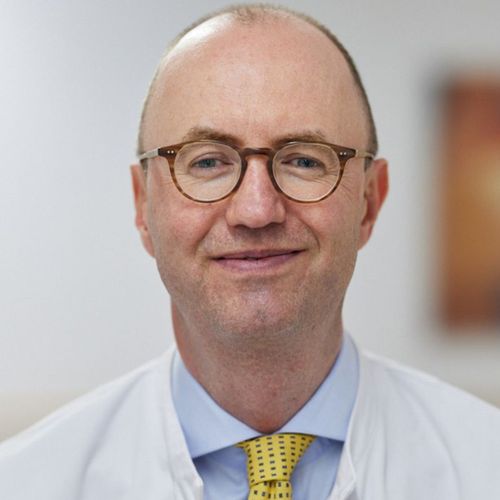
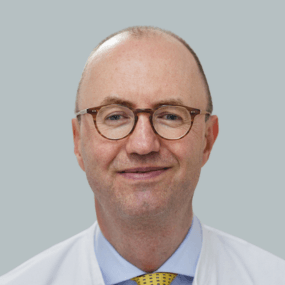
Professor Amadeus Hornemann, M.D., is a highly regarded specialist in gynecology who assumed the directorship of the newly established Department of Surgical Gynecology at the Bürgerhospital in Frankfurt am Main in October 2024. With his extensive expertise in gynecologic oncology and minimally invasive surgery, he is a significant asset to the Bürgerhospital, which is known for its high level of specialization in gynecology and obstetrics.
Prof. Dr. Hornemann has earned an outstanding reputation, particularly in the treatment of endometriosis, fibroids, and other gynecological conditions. After completing his medical degree and residency training, he gained valuable experience in various leadership positions, including as a senior physician at the university hospitals in Lübeck and Mannheim. His academic work as an adjunct professor at the University of Heidelberg further attests to his scientific expertise.
Under the leadership of Prof. Dr. Hornemann, the new Department of Surgical Gynecology will place a special emphasis on minimally invasive surgical techniques, which allow for less invasive procedures and a faster recovery for patients. The department specializes in treating a wide range of gynecological conditions, including uterine and vaginal prolapse as well as endometriosis.
An outstanding example of his innovative thinking is the method he developed for treating uterine prolapse, which utilizes the body’s own tissue. His pioneering work in laparoscopic gynecological surgery—particularly the introduction of 3-D laparoscopy—has significantly improved the precision and safety of surgical procedures.
The editorial team at Leading Medicine Guide had the opportunity to speak with Prof. Dr. Hornemann to learn more about surgical gynecology.
Surgical gynecology is a specialized branch of gynecology that deals with the surgical treatment of diseases of the female reproductive system. It encompasses a wide range of procedures, ranging from minimally invasive techniques to complex surgeries. The goal of operative gynecology is to effectively treat conditions such as endometriosis, fibroids, uterine and vaginal prolapse, and malignant tumors, while simultaneously improving patients’ quality of life. Thanks to state-of-the-art technologies and ongoing scientific advances, surgical gynecology enables more precise and less invasive procedures, resulting in faster recovery and fewer postoperative complications. Through individualized treatment approaches and a holistic care concept, the focus is placed on women’s needs in order to achieve the best possible treatment outcomes.
In recent years, gynecological surgery has made significant strides through innovative techniques that substantially improve both patient safety and recovery.
“There have been significant advances, particularly through minimally invasive surgery, which has become increasingly gentle. There are fewer injuries, fewer complications, and smaller scars—a major benefit for patients. In addition, there is now a more cautious approach to surgery overall, as doctors first explore other treatment options. Take hysterectomy, for example. Just a few years ago, approximately 200,000 hysterectomies were performed annually in Germany alone; today, that number has been cut in half. This is because today we can also treat bleeding disorders with hormones or other methods, which can spare women from having to undergo surgery. And when it comes to removing fibroids, it is now possible to perform surgery that preserves the uterus and removes only the endometrium. “Here at the Bürgerhospital, we carefully assess whether surgery is truly necessary, and if it is, we always aim for the least invasive option possible,” said Prof. Dr. Hornemann regarding general developments in gynecology.
3-D laparoscopy has established itself as an innovative advance in gynecological surgery.
“Laparoscopy, or abdominal endoscopy, was highly controversial in its early days. When a colleague from Kiel, Professor Dr. Kurt Semm, performed the first surgeries using this method, there was no celebration, and it took many years for it to be truly accepted. One argument against it was that you only see in two dimensions—you can simulate this by covering one eye. We humans see in three dimensions with two eyes, and when you’re working in only two dimensions during surgery, it’s significantly more difficult. In 2012, I introduced 3D laparoscopy in Germany, which makes this missing third dimension visible and displays the structures with even greater precision. The clearer the view, the more precisely one can operate. Back then, I held many observation sessions where fellow doctors from other hospitals tried out this new technique. I often heard them say, “Well, anyone can do that now,” because the 3D view significantly improved visibility. Today, 3D laparoscopy is used by many surgeons and has become standard practice, particularly in robotic surgery (for example, with da Vinci systems). Strangely enough, however, there are still colleagues who think they can do without it, even though the advantages are obvious. “This technique makes the entire operation less stressful, since you don’t have to constantly visualize the third dimension,” explains Prof. Dr. Hornemann.
Laparoscopic surgery began with procedures on organs such as the appendix (colloquially known as the “blind intestine”) and the gallbladder. In 1983, the Kiel-based gynecologist Prof. Dr. Kurt Semm performed the world’s first laparoscopic removal of the appendix (appendectomy). Four years later, in 1987, Dr. Mouret in Lyon became the first to successfully remove a gallbladder using laparoscopy (cholecystectomy). In Switzerland, Dr. Ch. Klaiber from Aarberg performed the first laparoscopic gallbladder removal in 1989.
The more precise visualization of anatomical structures also has a direct impact on operating times and complication rates. By identifying and managing complex tissue structures more quickly, surgeons can perform procedures more efficiently. This not only leads to shorter operating times but also reduces the risk of intraoperative complications, as unexpected anatomical challenges can be more easily overcome. In procedures such as the removal of fibroids or the reconstruction of organs following endometriosis treatment, the improved visualization allows for a gentler approach that causes less damage to surrounding tissue. This can be crucial for minimizing postoperative pain and complications and shortening recovery time.
The focus on minimally invasive techniques in gynecology has a profound impact on patients’ postoperative recovery and quality of life.
“Of course, it depends first and foremost on the type of surgery to be performed. There are various approaches for accessing the abdominal cavity. For example, a transverse incision can be made, as is typically done during a cesarean section, which provides good access to the organs in the pelvis. For significant findings, such as large tumors, a longitudinal incision is made. Although these incisions are wounds that the body can heal, scar tissue is nowhere near as strong as the original tissue. Therefore, it is a major advantage to avoid such incisions whenever possible. In addition, an open abdomen offers only a limited view. However, if it is inflated with carbon dioxide gas—as is done during a laparoscopy—one obtains a comprehensive view of the entire abdominal cavity and can precisely identify all structures,” explains Prof. Dr. Hornemann.
The smaller scars resulting from minimally invasive techniques are also cosmetically superior to those from conventional procedures. Furthermore, studies show that minimally invasive procedures are often associated with lower complication rates. Fewer postoperative problems mean lower medical costs and less stress for patients, which in turn has a positive effect on their mental health.
Prof. Dr. Hornemann illustrates this with a concrete example: “In an open hysterectomy, the incision is about 15 cm long, whereas the minimally invasive technique requires several small incisions of only 5–10 mm. Wound healing is correspondingly faster and proceeds much more smoothly. A large abdominal incision must be immobilized to heal properly—similar to a broken bone that is placed in a cast to heal. The length of stay in the hospital is significantly shorter for minimally invasive procedures, and many procedures can now be performed on an outpatient basis. In the past, women stayed in the hospital for several weeks after a hysterectomy.”
Endometriosis: When the “silent disease” demands attention.
“Endometriosis is a widespread condition that causes significant discomfort in many women. The increase in this condition can be attributed to the fact that nature intended women of childbearing age to either be pregnant or breastfeeding. In both situations, women do not menstruate, which is believed to be the cause of endometriosis. Today, however, pregnancies are either planned or deliberately prevented, for example, by taking the birth control pill. As the number of menstrual cycles increases, so does the risk that endometrial tissue—which is central to endometriosis—will implant itself in the abdominal cavity. This thickening of tissue usually occurs near the uterus but can also affect other areas. The problem is that this endometrial tissue cannot “bleed out” monthly as it does from the uterus, which is why typical menstrual symptoms arise. To alleviate these symptoms, it is crucial to surgically remove the tissue. Subsequently, continuous hormonal therapy—without a monthly break—is recommended to prevent further menstrual bleeding. These hormones should then be taken until menopause or until a planned pregnancy,” explains Prof. Dr. Hornemann regarding the issue of endometriosis.
The treatment of uterine prolapse presents specialists with several specific challenges, both anatomical and patient-related.
One of the greatest challenges is the individual variability in anatomy and the severity of the prolapse. This requires precise diagnosis and a tailored treatment approach. In addition, many patients are often concerned about the impact of treatment on their quality of life, particularly with regard to sexuality and bladder function.
“Just as with endometriosis, there has been an increase in uterine prolapse because women today are significantly older at the time of their first birth than they used to be. Aging also involves changes in connective tissue, which can be seen, for example, in the formation of wrinkles on the face or other parts of the body. However, even at an advanced age, many women strongly desire a natural, i.e., vaginal, birth, which places significant strain on the connective tissue. If prolapse occurs, women initially experience an uncomfortable sensation of a foreign body in the vaginal area. Often, women also report problems with urination and bowel movements. Surgical correction aims to reinforce the weakened structures or replace them. Many of the techniques developed were unsuccessful. Consequently, attempts were eventually made to reinforce the weakened tissue using synthetic materials (synthetic mesh), which in principle works well. However, after several years, an increasing number of complications were observed that had not been previously recognized. When attempting to remove the synthetic meshes, it became clear just how strongly the meshes had fused with the tissue, making removal virtually impossible. “I did this myself for many years because there simply was no alternative,” says Prof. Dr. Hornemann regarding the challenges of the treatment. He then describes how he came up with the idea of using the patient’s own tendons:
“I saw a friend of mine, a trauma surgeon, take a tendon from a patient’s thigh to replace a torn cruciate ligament in the knee. I was impressed that my colleague was able to harvest a tendon from the already injured leg without causing the patient any additional harm. And then I thought that if so little of the tendon tissue is actually needed, I could use it too. And in fact, the tendon works very well. It can be used to pull the uterus back into place or, if the uterus has been removed, to secure the vagina. The major advantage is that you’re working with the body’s own tissue rather than foreign material. As for the method, I simply combined two established procedures, which is why this method could be implemented immediately. Six hospitals in Germany are now using it, along with one hospital each in Switzerland and Austria. The results at all of them are encouraging, and demand from patients is growing rapidly.”
The new Clinic for Surgical Gynecology at the Bürgerhospital in Frankfurt am Main takes an integrative approach to incorporate the latest research findings and technologies into the treatment of women with urogynecological conditions.
The new Clinic for Surgical Gynecology at the Bürgerhospital expands the range of gynecological treatments, offering a broad spectrum of services as well as specialized, minimally invasive procedures. In particular, women with uterine conditions, endometriosis, or benign tumors such as fibroids will find modern and individually tailored treatment options here. Special attention is given to the treatment of uterine prolapse, which is one of the most common conditions among women aged 50 and older, but can also affect younger women following pregnancy or due to other physical stresses. With the establishment of the clinic, the Bürgerhospital is strengthening its leading role in gynecology, complemented by its already well-established obstetrics department, which—with well over 4,000 births per year—has been the hospital with the highest number of births in Germany for many years.
“Hospital reform is currently underway, and it’s beneficial for hospitals to bring in expertise. And here at the Bürgerhospital, it was simply a great fit. After all, it’s the hospital with the largest obstetrics department in Germany, handling the most births. At the same time, the focus here hasn’t been so much on gynecological surgeries until now, which is what I’ve now taken on. In that respect, we complement each other very well. I’m delighted to be able to work here with a truly wonderful team. And I’m already very familiar with many of the staff members because we’ve been working together for several years now. “The Bürgerhospital is a very special hospital with a centuries-long tradition and specialized departments, which is why my department fits well into the overall concept here,” emphasizes Prof. Dr. Hornemann at the end of our conversation.
Thank you very much, Prof. Dr. Hornemann, for this helpful information!
Share this article
Expert Interviews
Read next
- Expert interview
Expert interview with Professor Dr Elmar Herbst, PhD
Oct 15, 2026
Patient-centred and personalised knee surgery
Read more - Expert interview
Cardiogeriatrics: Significance and benefits in the context of hospital reform
Sep 21, 2026
Cardiogeriatrics: Significance and benefits in the context of hospital reform
Read more - Expert interview
Expert Interview with Professor Dr. Amadeus Hornemann, MPH
Sep 18, 2026
Prof. Amadeus Hornemann on Precision Medicine in Gynecology: Modern Surgery, New Techniques, Better Quality of Life
Read more