News
Diet for osteoporosis: categorising supplements

Sabine Schneider ·
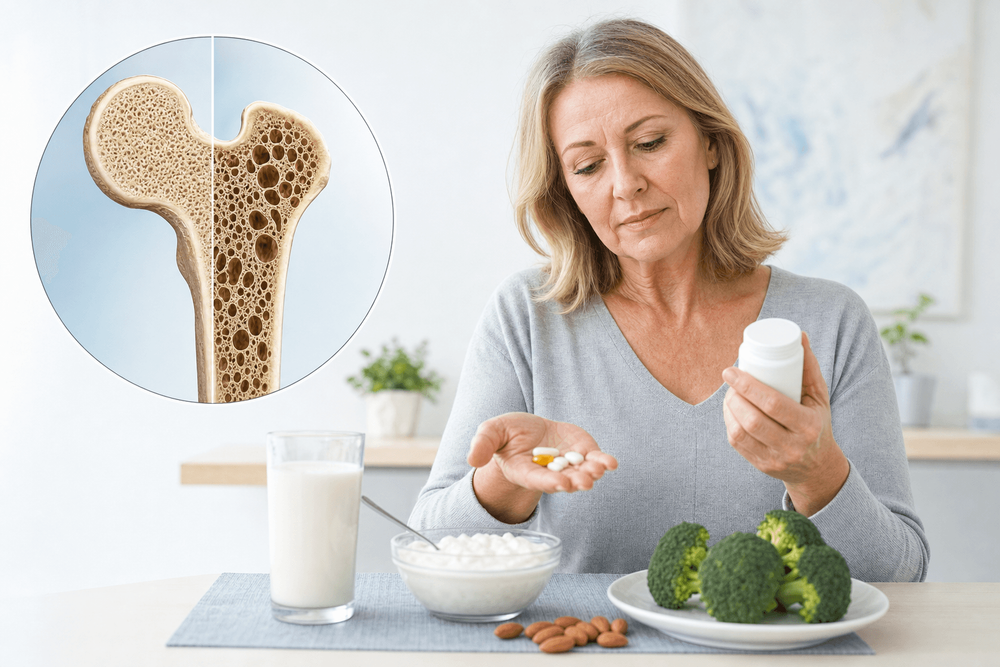
With regard to osteoporosis, a Finnish study shows that additional vitamin D3 did not reduce the risk of bone fractures in a study group of older adults who were, for the most part, already receiving sufficient amounts. For older adults, including many post-menopausal women, this finding argues against blanket supplementation. However, it does not allow any conclusions to be drawn regarding additional calcium intake.
You should therefore not stop taking prescribed supplements on your own initiative. The key factors are your individual vitamin D status, any potential risk of deficiency and your overall osteoporosis treatment.
Key points at a glance
- Study findings: Vitamin D3 did not protect participants – the majority of whom had adequate levels – from bone fractures.
- Intake rather than a one-size-fits-all prescription: The guideline recommends an adequate intake of calcium and vitamin D, but not automatically two supplements.
- Do not change your prescription yourself: Anyone taking calcium or vitamin D on medical advice should discuss any changes with their GP.
- Take a broader approach to treatment: Where osteoporosis has been diagnosed, exercise and bone-protecting medication may form part of the treatment, depending on the risk.
- Supplements carry risks: In a review of studies, the combined use of calcium and vitamin D was associated with an increased risk of kidney stones.
What is osteoporosis?
Osteoporosis is a condition in which bone density decreases more rapidly than would be expected with normal ageing. Bone formation cannot keep pace with bone loss, meaning that bones gradually lose their stability. This bone loss can go unnoticed for a long time, as the condition often causes no noticeable symptoms at first. However, low bone density alone does not fully describe an individual’s risk of fracture.
When making an assessment, the doctor considers the measurement alongside other risk factors and the patient’s general state of health. Age and personal medical history are also taken into account. A bone density scan is therefore part of the diagnostic process and not a standalone answer to all questions.
What did the Finnish vitamin D study investigate?
The Finnish vitamin D study involved 2,495 people, including men aged 60 and over and women aged 65 and over. Women and men were randomly assigned to different groups and monitored over a period of 5 years. This random allocation ensures that any differences between the groups can be attributed as reliably as possible to the treatment under investigation.
The study compared supplementary vitamin D3 with a placebo, i.e. a preparation containing none of the active ingredient under investigation. Supplementary calcium, or the combined intake of calcium and vitamin D, was not the subject of the study. Headlines regarding the effects of a combined intake therefore go beyond the scope of the question under investigation.
Vitamin D3 did not reduce the risk of bone fractures in the study group. However, most participants already had adequate vitamin D levels. The result cannot therefore be readily extrapolated to people with a deficiency or a significantly increased risk of deficiency.
The potential benefits of taking them together for certain at-risk groups therefore remain unclear. Above all, the study shows that, where vitamin D levels are sufficient, taking additional vitamin D does not provide general protection against fractures. Anyone taking dietary supplements should consult a doctor to assess their personal reasons for doing so.
Who should continue to take calcium and vitamin D?
You should only change a doctor’s prescription after consulting your GP’s practice. Ask your doctor why calcium or vitamin D was recommended and whether this reason still applies. This applies particularly if you have been diagnosed with osteoporosis, have a suspected deficiency or are currently on medication.
The osteoporosis guidelines recommend an adequate intake of calcium and vitamin D. This does not mean that everyone should take both nutrients daily in tablet form. The key factor is whether your diet and other individual sources already meet your requirements.
Vitamin D influences how much calcium the body absorbs from food. It promotes the absorption of this mineral from the gut into the body. Conditions that impair this absorption in the gut may therefore be relevant to a medical assessment.
Both nutrients are functionally linked, but fulfil different roles. An adequate calcium intake is no substitute for vitamin D. Conversely, additional vitamin D does not automatically compensate for an insufficient intake of calcium.
A medical assessment is particularly advisable in the following situations:
- Risk of deficiency: Vitamin D supplements may then be advisable.
- Retirement or care homes: Calcium and vitamin D can reduce the risk of bone fractures.
- Existing prescription: Discuss any changes with your GP’s practice.
- Unclear intake: Assess diet, state of health and personal risks together.
Calcium and vitamin D supplements are not inherently risk-free. A review of studies found that taking them together was associated with an increased risk of kidney stones. Dietary supplements should therefore serve a clear purpose and should not be taken as a precautionary measure without individual assessment.
Which warning signs should be investigated?
New-onset severe back pain should be investigated by a doctor, particularly in cases of known osteoporosis. The condition itself often goes unnoticed at first. Even a vertebral fracture may cause hardly any symptoms, whilst in other patients it triggers severe pain.
A bone density result is always assessed in conjunction with other risk factors and the patient’s general state of health. Whether a test is advisable and what the implications of the result are depends on the individual’s circumstances. In older people, an inadequate intake of vitamin D can increase the risk of fracture, particularly in those with existing osteoporosis.
How is osteoporosis treated?
The treatment of osteoporosis involves more than just calcium and vitamin D. The aim of treatment is to prevent further fractures and to protect the bones. The appropriate measures depend on an individual’s personal risk, state of health and physical capacity.
The key building blocks fulfil different functions:
| Component | Significance for treatment | Points to bear in mind |
|---|---|---|
| Medicines | They can reduce the risk of bone fractures in osteoporosis. Bisphosphonates are usually used; this is a group of medicines used to prevent osteoporosis-related fractures. | The choice of medication depends on the individual’s risk and state of health. |
| Targeted exercise | Targeted exercise is recommended for the treatment of osteoporosis. | Suitable exercises depend on your personal circumstances. In the event of vertebral fractures, pain or a lack of confidence, the exercise programme should be adapted by a specialist. |
| Calcium and vitamin D | Ensuring an adequate intake remains an integral part of the treatment plan. | These nutrients are not a substitute for necessary medication and do not automatically need to be taken as supplements. |
Is there such a thing as the ‘right’ diet?
When it comes to nutrition for bone health, ensuring an adequate intake is the priority. Rather than automatically taking supplements, it is worth first taking a look at what you regularly eat or drink. Vegetables can form part of a varied diet. There is no one-size-fits-all diet for everyone affected.
Milk and dairy products such as yoghurt and cheese are among the calcium-rich foods. Anyone who drinks milk, eats yoghurt or chooses cheese on a daily basis can obtain this mineral from these sources. However, dairy products differ in their composition, so it is the overall diet that counts.
Calcium-rich plant-based foods can also contribute, such as kale. The amount of this mineral per portion depends on the specific product and how it is prepared. Kale can add variety to your diet; however, it is the overall selection that matters.
Almonds can also form part of the selection. With almonds, the composition and nutritional value depend on the specific product and the portion size.
Oily fish is one of the natural sources of vitamin D3. Whether fish is on the menu every day says little on its own about an individual’s status. Meat and fish differ in their nutritional composition. Whether meat is eaten does not, on its own, determine whether the diet is bone-friendly. If a deficiency is suspected, the matter should be referred to a doctor for assessment.
What matters for assessment is the total amount of food consumed each day and over a longer period. Some breakfast cereals, as well as soya and oat drinks, may be fortified with calcium. You can see whether they contain calcium and how much from the nutritional information on the packaging. Even products within the same food group can vary.
Different types of vegetables can contain varying amounts of calcium. When it comes to fortified foods, pay closer attention to the information printed on the packaging rather than relying on general assumptions about calcium intake. However, the packaging does not show how much calcium you are consuming from your diet as a whole.
If you are unsure, you can discuss your choice of foods with your GP or a qualified nutritionist. This will help clarify whether your diet contains sufficient calcium or whether a supplement should be considered. A specific dosage should be determined by a doctor.
Regular exercise complements a balanced diet. Targeted exercise is part of the treatment, but must be tailored to your individual fitness level. The level of strain placed on the bones also depends on your physical condition. People experiencing pain, with a history of fractures or limited mobility should select suitable exercises in consultation with their treatment team.
In everyday life, the following guidelines can help:
- Check your intake: Do not automatically take calcium and vitamin D as a combined supplement.
- Read the packaging: Check the calcium content on fortified foods.
- Stick to your prescription: Only change supplements after consulting your doctor.
- Exercise appropriately: Choose exercises based on your state of health and physical capacity.
- Assess the risks: Do not regard dietary supplements as a substitute for necessary treatment.
Frequently asked questions about osteoporosis, calcium and vitamin D
Does vitamin D really help prevent bone fractures?
In the Finnish study, additional vitamin D3 did not reduce the risk of bone fractures in older people who were, for the most part, already getting sufficient amounts. No general conclusions can be drawn from this for people with a deficiency or an increased risk of deficiency.
Did the study also examine calcium tablets?
No. The study compared vitamin D3 with a placebo; additional calcium was not tested in a randomised manner. The study therefore does not allow any conclusions to be drawn about the effectiveness of a combined calcium-vitamin D regimen.
Should I stop taking my prescribed supplements now?
Do not stop taking prescribed supplements on your own initiative simply because of a headline. Discuss with your doctor why they were prescribed and whether the reason for taking them still applies.
Who may still need vitamin D?
Supplements may be advisable for those at increased risk of vitamin D deficiency. In older people, an inadequate intake can increase the risk of bone fractures, particularly if they already have osteoporosis.
Are calcium and vitamin D sufficient for osteoporosis?
No, not in every case. Medicines can reduce the risk of bone fractures; bisphosphonates are usually used for this purpose. An exercise programme tailored to the individual’s situation is also part of the treatment.
Can calcium and vitamin D supplements be harmful?
Supplements can have side effects. A review of studies found an increased incidence of kidney stones when taken in combination. Whether the expected benefits outweigh the personal risks should be assessed on a case-by-case basis.
How do I know if I have osteoporosis?
Osteoporosis often causes no noticeable symptoms at first. Even a vertebral fracture can go almost unnoticed, but it can also cause severe pain.
Which foods provide extra calcium?
Calcium-fortified foods can help boost your intake. You can tell whether a particular product contains calcium by checking the information on the packaging.
Share this article
About the medical author
Sabine Schneider
Editor-in-Chief
Sabine Schneider – medical author: Explore expert articles and medical expertise in the Leading Medicine Guide.
More about the medical author →Verified expertise
Recommended specialists
13 specialists
13 results

Asst Lect. Dr Ralf Decking
Leverkusen





Dr René Malzkorn
Founder and Practice Proprietor


PD Dr. med. Friedrich Kutscha-Lissberg
Gelsenkirchen







1 / 2
News
Read next
- News
Kidney Stones – Modern Treatments, from Shock Waves to Lasers
Oct 7, 2026
Why Sudden, Severe Flank Pain Can Be a Warning Sign
Read more - News
Retinal Detachment: Flashes of Light Can Jeopardize Vision
Oct 5, 2026
Retinal Detachment: Quick Action Can Save Your Eyesight
Read more - News
The waiting period for a semen analysis prior to planned fertility treatment
Oct 5, 2026
Semen analysis: The effects of short waiting periods
Read more