News
New Study on Obesity: Diet Plays a Ten Times Greater Role Than Exercise

Sabine Schneider ·
Until now, nutrition science has assumed that body weight increases when a person consumes more calories than they burn. However, a new international study shows that this alone does not explain the causes of overweight and obesity. Does exercise help prevent obesity?
Why do people become overweight: because they don’t get enough exercise or because they eat too much?
A research group from the United States wanted to determine the extent to which diet and physical activity contribute to the development of obesity. Which factor has the greater influence?
To answer this, the scientists examined total energy expenditure, basal metabolic rate, physical activity, body fat percentage, and body mass index in 4,213 adults from 34 populations across six continents. The participants’ lifestyles differed significantly in some cases: they included hunter-gatherers, herders, farmers, and residents of industrialized nations.
Similar energy expenditure despite different lifestyles
Surprisingly, the study found that the energy expenditure of members of an East African hunter-gatherer group is nearly identical to that of an industrialized nation such as the United States. Two completely different lifestyles—one involving significantly more physical activity than the other—and yet daily energy expenditure is roughly the same, or even slightly higher in the case of a person from the industrialized population. Why is that?
This is due to the generally very consistent total energy expenditure of a person over a 24-hour period, says PD Dr. Tim Hollstein of the Institute for Diabetology and Clinical Metabolic Research at the University Medical Center Schleswig-Holstein. Through increased physical activity, the body conserves energy in other areas, such as respiration, organ function, or brain activity. Conversely, people who are less active can use more energy for their basal metabolic rate. Exercise only increases energy expenditure in the short term; in the long term, it remains the same.
This means that reduced physical activity among populations in industrialized nations can hardly be the decisive factor in the rise of obesity. In contrast, the higher body fat percentages among study participants from industrialized nations indicated a link between economic development and overweight. According to the research group that analyzed all the data, overeating contributes about ten times more to the rise in obesity than insufficient physical activity.
The scientists compared the diets of the individual population groups and observed a link between high body fat percentage and the highly processed foods and high carbohydrate consumption typical of industrialized nations.
Study author Amanda McGrosky of Elon University in North Carolina summarized it this way: “Keep an eye on the calories you consume, not the ones you burn. It’s much harder to try to burn more calories than to consume fewer.”
Does exercise help with weight loss and in the fight against obesity?
The new study findings thus also support the long-established fact that exercise alone has little long-term impact on weight loss in obese patients. A lasting change in diet—shifting toward smaller, fewer meals with balanced and fresh foods and a reduced carbohydrate content—is far more effective.
Conversely, this does not mean that obese patients and people of normal weight should now forgo regular exercise. On the contrary, exercise boosts metabolism, protects against cardiovascular disease, and is also an important factor in improving mental health.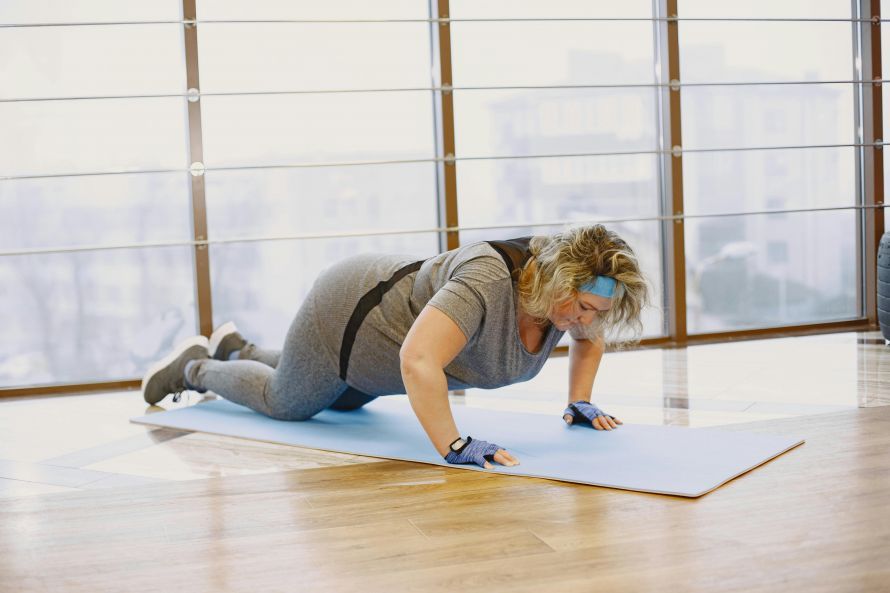
Conclusion
The study results suggest that overeating—and likely also the often highly processed foods common in industrialized nations—are primarily responsible for the development of obesity. A lack of physical activity has little impact on this.
Leading Medicine Guide supports patients with obesity in finding centers and specialists for bariatric procedures such as gastric sleeve, gastric banding, or gastric bypass.
Specialized physicians and nutritionists can also advise you on switching to a low-calorie diet and incorporate plans for supportive exercise routines.
Sources
- https://www.br.de/nachrichten/wissen/studie-ernaehrung-beeinflusst-adipositas-staerker-als-sport,UrffmnQ
- https://www.pnas.org/doi/10.1073/pnas.2420902122
- https://www.tagesschau.de/wissen/gesundheit/ernaehrung-sport-bewegung-stoffwechsel-100.html
- https://www.uksh.de/diabetologie-kiel/Wir+About+Us/News/Announcements/2024/Tim+Hollstein+Receives+the+Research+Award+from+the+German+Obesity+Society.html
Share this article
Verified expertise
Recommended specialists
13 specialists
13 results


Dr. med. Anke Richter
Berlin





Dr. med. Jörg Celesnik
Bottrop



PD Dr. med. habil. Hinrich Koehler
Headof the Thyroid Centre and the Obesity Centre. Deputy Head of the Bowel CancerCentre, Senior Consultant of the Department of Surgery
Braunschweig




Prof. Robert Rosenberg FACS, EMBA
Chief Physician, Department of Intestinal Surgery and Oncological Surgery
Liestal

1 / 2
News
Read next
- News
Scabies: A contagious skin disease that is easily treatable
Oct 26, 2026
Severe itching and minor skin changes should be taken seriously
Read more - News
Heat Rash: What's Behind the Itchy Blisters
Oct 23, 2026
Heat Rash: Heat and Sweat Can Disrupt the Skin's Balance
Read more - News
Enlarged Prostate – When Medication Is Sufficient and When Surgery Is Recommended
Oct 21, 2026
Why Many Men Ignore Urinary Problems for Too Long
Read more