A certified center for bariatric and metabolic surgery specializes in the surgical treatment of patients with morbid obesity. It has demonstrated its extensive experience and high standards of care in this field as part of a certification process. The certification is offered jointly by the German Society for General and Visceral Surgery (DGAV) and the Surgical Working Group for Obesity Therapy and Metabolic Surgery (CAADIP). During the certification process, hospitals and specialized departments must demonstrate their treatment expertise, experience, and specific equipment.
Here you will find further information as well as a selection of certified obesity centers.
Background Information on Obesity
Obesity is also known as fat addiction or being overweight. It refers to an accumulation of body fat that exceeds normal levels.
The medical assessment and classification of obesity is based on the Body Mass Index (BMI). It is calculated as the ratio of body weight (kg) to the square of body height (m²).
- Overweight (pre-obesity): BMI 25–29.9
- Class 1 obesity: BMI 30–34.9
- Class 2 obesity: BMI 35–39.9
- Class 3 obesity (morbid obesity): BMI ≥ 40
As a result of severe obesity, people with morbid obesity often develop comorbidities such as
- type 2 diabetes mellitus,
- high blood pressure,
- lipid metabolism disorders, and
- cardiovascular diseases.
In addition, they have an increased risk of stroke, joint diseases, and certain types of cancer.
The treatment of obesity aims to achieve a lasting reduction in body weight. To this end, a range of conservative measures are initially available, such as
- nutritional counseling,
- exercise therapy, and
- psychological support through behavioral therapy
are available.
Surgical intervention is generally considered only after all conservative therapies have been exhausted without success. The range of surgical therapies used in certified obesity centers includes, in particular,
- gastric band and gastric balloon implants,
- gastric bypass and sleeve gastrectomy surgeries, as well as
- gastric plication and the Endobarrier.
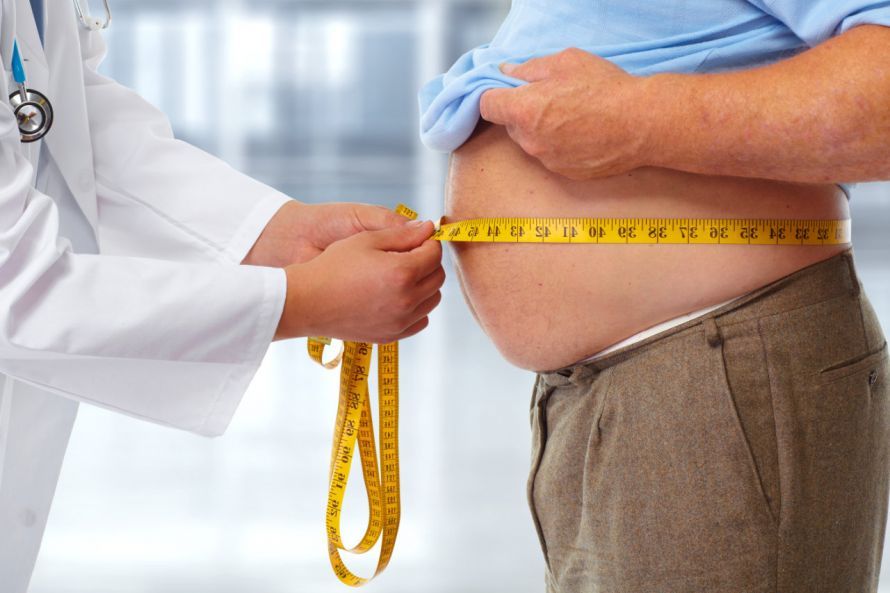
Obesity requires an interdisciplinary approach © Kurhan | AdobeStock
What is a certified obesity center?
Only surgical clinics and specialized departments that
- meet the certification criteria and quality requirements defined by the DGAV and CAADIP and
- have successfully completed the certification process.
The list of requirements for certified obesity centers includes, among other things,
- minimum procedure volumes in the field of bariatric surgery,
- quality criteria for the treating physicians,
- the existence of interdisciplinary collaborations with other medical departments,
- the implementation of quality assurance measures,
- regular participation in continuing education, as well as
- requirements for equipment and departmental organization.
These criteria for certified obesity centers can be met to a greater or lesser extent. Surgical clinics or specialized departments can therefore obtain certification as
- center of excellence,
- a reference center, or
- Center of Excellence
for bariatric and metabolic surgery.
Which medical specialties are involved in certified obesity centers?
An important criterion for certification is interdisciplinary collaboration. The medical specialties involved in the competent diagnosis and treatment of obesity include
- visceral surgery
- internal medicine,
- laboratory medicine,
- radiology,
- interventional endoscopy,
- Intensive Care Medicine, and
- physical therapy.
The management of a certified obesity center is generally the responsibility of the obesity surgery department within the field of visceral surgery. Within the framework of an obesity center, this department cooperates in particular with the departments listed above. Close collaboration and direct communication among these departments are of the utmost importance.
Social and psychological support for obesity patients—beyond mere treatment—is also an integral part of an obesity center. Therefore, certified obesity centers must also have cooperation agreements with
- a nutrition counseling service,
- a psychologist or psychosomatic specialist, and
- a self-help group
.
Through interdisciplinary collaboration in certified obesity centers, patients with obesity are to receive comprehensive care. An obesity center must be able to ensure therapies that are individually tailored to each patient.
Goals of Certified Obesity Centers
The goal of certification as an obesity center is to improve the quality of treatment while ensuring transparency.
The DGAV and CAADIP define the certification criteria based on scientific guidelines and clinical experience. If a specialized department meets these criteria, it can be assumed that it adheres to the highest quality standards in the treatment of morbidly obese patients.
Certification Process for Obesity Centers
The certification process for obesity centers is organized on behalf of the DGAV and the CAADIP. It is carried out by the Servicegesellschaft für Allgemein- und Viszeralchirurgie SAVC GmbH.
In the first step, the SAVC conducts a formal review of the certification application submitted by a surgical clinic or department. The application may be for certification as a Center of Competence, a Reference Center, or a Center of Excellence for bariatric and metabolic surgery.
If the surgical clinic or department seeking certification formally meets the criteria, the next step is an on-site audit. This audit verifies whether the information provided regarding the quality of the obesity center seeking certification is accurate and whether the facility actually meets all certification criteria.
After evaluating the on-site audit, a final decision is made. If the bariatric center seeking certification meets all quality requirements and criteria, it receives certification as a Center of Competence, Reference Center, or Center of Excellence for bariatric and metabolic surgery.
Criteria for Certified Obesity Centers
The quality requirements and criteria for certification as a center for bariatric and metabolic surgery are:
Qualifications of Physicians
The surgeons in charge must be visceral surgeons with specialized experience in bariatric surgery.
Specifically, they must have been practicing bariatric surgery for at least 5 years. In addition, they must have personally performed at least 100 bariatric surgery procedures.
Department Organization
Bariatric centers must offer specialized bariatric consultation hours at least once a week. During these consultation hours, surgical indications are determined, and postoperative care is provided for patients who have undergone surgery.
The workflows for
- determining indications,
- preoperative diagnostics and preparation,
- patient information,
- anesthesia,
- surgical procedures,
- complication management, and
- postoperative care
must be documented in writing.
Facilities
Obesity centers must have the following equipment and facilities:
- at least one operating table with a weight capacity of at least 225 kg
- a complete laparoscopic unit
- instruments and materials adapted to the needs of bariatric surgery
- Equipment adapted to the needs of morbidly obese patients, e.g.,
- special beds,
- special chairs,
- wheelchairs, and
- examination tables with a weight capacity of up to 200 kg,
- special scales,
- accessible showers, as well as
- nightgowns and underwear in special sizes
Interdisciplinary collaborations
Obesity centers must demonstrate collaboration with the departments
- Internal Medicine,
- Clinical Laboratory Medicine,
- Radiology,
- Interventional Endoscopy,
- Intensive Care Medicine,
- Physical Therapy,
- Nutrition Counseling,
- Psychology and Psychosomatics, as well as
- self-help groups
work together. In addition, access to conservative treatment programs should be available.
Minimum case volumes
Obesity centers must perform at least
- 50 (Center of Excellence),
- 100 (Reference Center), or
- 200 (Center of Excellence)
bariatric surgeries per year. These must include, among other things,
- one gastric band surgery,
- one gastric bypass surgery,
- a sleeve gastrectomy, and
- the implantation of a gastric pacemaker
.
Quality Assurance
For quality assurance purposes, obesity centers must, among other things, comprehensively document all bariatric surgical procedures. Data on the procedures and follow-up examinations must be entered into the CAADIP database.
Follow-up care must be documented for at least 75 percent of patients who have undergone surgery.
Continuing Education
Staff members at obesity centers must have access to the latest literature on bariatric surgery. The surgeons in charge must regularly participate in continuing education events, such as
- CAADIP meetings,
- conferences or symposia recommended by CAADIP,
- DGAV workshops on bariatric surgery.
The “Center for Bariatric and Metabolic Surgery” certificate is valid for three years following initial certification. Recertification may take place after three years. To do so, the certified bariatric center must undergo a new certification process administered by the DGAV and CAADIP.