In specialized ENT clinics and plastic surgery centers, modern, minimally invasive techniques and microsurgical procedures are used to treat the gland as gently as possible. Surgery for salivary gland tumors is performed with particular care, as important facial nerves—such as the facial nerve—must be protected.
Precise diagnostics using ultrasound, MRI, or CT scans help identify the location and nature of the condition at an early stage. In many cases, surgery can permanently relieve symptoms and prevent complications. Thanks to intraoperative neuromonitoring, nerve damage can be minimized, thereby preserving function and ensuring a good cosmetic outcome.
Salivary Gland Surgery – Roles and Options in Modern Treatment
Salivary gland surgery involves surgical procedures on major and minor salivary glands, including the parotid gland, submandibular gland, and minor salivary glands in the head and neck region. It is particularly necessary when salivary gland tumors, salivary stones, or chronic inflammation cause symptoms. Modern surgical techniques at the ENT Clinic or Helios Klinikum enable minimally invasive procedures with high precision. The goal is always to preserve the gland’s function and minimize complications.
Many salivary gland disorders result from recurrent inflammation, benign adenomas, or salivary stones that block the flow of saliva. In other cases, malignant tumors of the parotid gland or the major salivary glands exhibit infiltrative growth, necessitating surgical removal. Microsurgical techniques and intraoperative neuromonitoring help protect nerve branches—particularly the facial nerve. This significantly reduces the risk of paralysis or impairment of the facial muscles.
For complex salivary gland disorders, the Department of Plastic Surgery, the ENT Clinic, and the Department of Head and Neck Surgery often collaborate in an interdisciplinary manner. This is particularly important for salivary gland tumors, which require comprehensive diagnostic testing, including MRI or CT scans. Surgical removal can be performed using minimally invasive or conventional techniques—depending on the location, size, and type of the condition. Following a successful procedure, the mobility of the facial nerve is carefully monitored to ensure optimal healing.
Salivary Glands—Structure, Function, and Common Disorders
The salivary glands consist of the major salivary glands, such as the parotid and submandibular glands, as well as many small glands in the mouth and throat. They produce important secretions daily that moisten the mucous membranes, facilitate the initial stages of digestion, and protect against infections. If these glands are disrupted by inflammation, salivary stones, or tumors, swelling and pain result. Salivary gland disorders frequently occur in the parotid gland.
A common cause of symptoms is salivary stones, which block the flow of saliva and trigger acute pain. Recurrent inflammation leads to swelling, a sensation of pressure, and functional limitations that require diagnostic evaluation. Benign tumors, such as pleomorphic adenomas, grow slowly but should be surgically removed, as they can undergo changes over time. Malignant tumors require prompt treatment, often involving microsurgical precision.
Chronic or recurrent symptoms may result from anatomical abnormalities, infections, or systemic diseases. In such cases, comprehensive diagnostic evaluation using ultrasound, CT, or MRI is necessary. Evaluation by experienced physicians at the ENT clinic or the plastic surgery department ensures a targeted treatment decision. Modern treatment methods can often provide long-term relief from symptoms and preserve salivary gland function.
Common Surgeries for Salivary Gland Disorders
Among the most common surgeries are the removal of salivary stones, tumors of the parotid gland, and procedures on the submandibular gland. Surgical removal is often performed under general anesthesia and is carried out with particular care to avoid damaging facial nerves or nerve branches. Modern, minimally invasive methods make it possible to remove many salivary stones without large incisions. This results in smaller scars and faster healing.
In the case of malignant tumors of the salivary glands, a more extensive surgical procedure is necessary to safely remove all diseased tissue. Intraoperative neuromonitoring plays a crucial role here to ensure that the facial nerve and its branches remain protected. Tumors of the parotid gland or the minor salivary glands may require a high level of expertise depending on their location, which is why treatment at specialized clinics is recommended. Long-term facial mobility and facial expressions depend largely on the preservation of the facial nerve.
Recurrent or particularly persistent salivary gland disorders may require microsurgical reconstruction. In some cases, complete surgical removal of the affected gland is even necessary, particularly in the case of malignant tumors. Salivary gland surgery utilizes state-of-the-art microscopes and monitoring techniques for this purpose. The goal is to minimize complications and achieve lasting relief from symptoms.
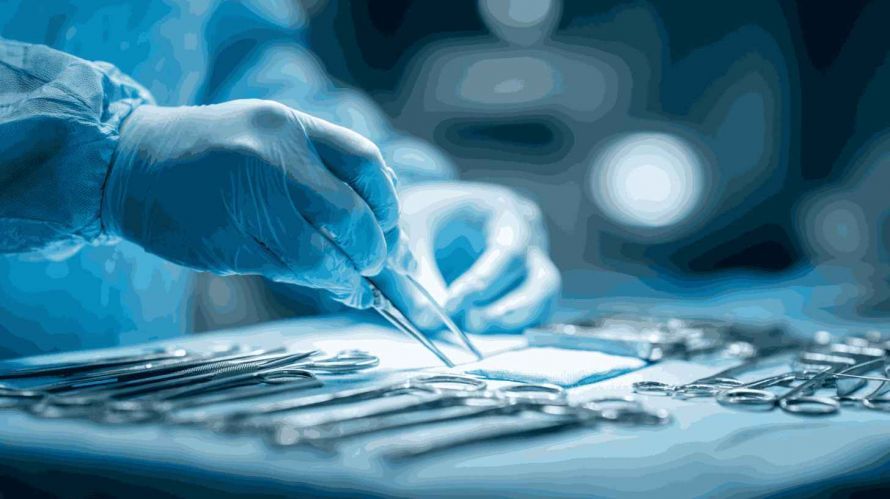
Microsurgical preparation in salivary gland surgery—gentle treatment in the sensitive head and neck region.
Salivary Gland Disorders – Causes, Symptoms, and Course
Salivary gland disorders range from acute inflammation to salivary stones and tumors. Typical symptoms include swelling, pain, redness, or a palpable hardening in the head and neck region. Symptoms often occur while eating, when the glands produce particularly large amounts of saliva. At such times, a salivary stone may cause severe pain.
Benign tumors usually cause painless swelling, while malignant tumors grow more rapidly and can invade neighboring tissues. In cases of more aggressive findings, prompt intervention is necessary to prevent malignant transformation or further spread. Inflammation is often caused by bacteria or saliva congestion and tends to recur. Early diagnosis helps prevent severe progression of the disease.
Chronic salivary gland disorders should always be evaluated at a specialized clinic. These facilities offer ultrasound, MRI, CT scans, and functional tests. Thanks to modern techniques, doctors can precisely determine the location and nature of the disease. This forms the basis for personalized treatment that can provide lasting relief from symptoms.
Diagnosis of Salivary Gland Disorders and Salivary Stones
Diagnostics – Modern Methods for Evaluating Salivary Gland Disorders
Diagnosis often begins with an ultrasound, as it can easily detect salivary stones, inflammation, or tumors. CT or MRI scans are used as supplementary tests if the location is unclear or if deeper tissue may be affected. At the ENT clinic or hospital, the diagnostic evaluation is conducted in collaboration with experienced radiologists. The goal is to precisely determine the location, extent, and nature of the condition.
If the findings are unclear, a salivary duct endoscopy can help visualize narrowings, stones, or damage to the mucous membrane. This minimally invasive method sometimes even allows for the direct removal of stones. Tumors of the salivary glands are additionally examined via fine-needle aspiration or biopsy to distinguish between benign and malignant findings. Diagnostic certainty is crucial for selecting the appropriate treatment.
In specialized centers, diagnosis is often conducted on an interdisciplinary basis. Close collaboration between ENT specialists, plastic surgeons, and radiologists provides a comprehensive view of the clinical picture. This allows for better assessment of risks and targeted planning of surgical procedures. An accurate diagnosis helps avoid unnecessary procedures and find minimally invasive solutions.
Salivary Stones – Causes, Symptoms, and Modern Treatment
Salivary stones form due to a thickening or calcification of saliva, often in the submandibular gland. They cause painful swelling, especially while eating, when saliva flow increases. Recurrent pain and acute inflammatory episodes are typical. In some cases, the salivary stone causes few symptoms and is discovered by chance.
Treatment depends on the stone’s location and size. Small stones can be dislodged using manual techniques, ultrasound devices, or massage. Larger stones require surgical removal or minimally invasive salivary duct endoscopy. Modern procedures are gentle and preserve gland function.
If a salivary stone is left untreated, it can lead to chronic inflammation, scarring, and loss of gland function. Early treatment prevents such long-term complications. Salivary stones often recur, which is why good follow-up care is important. The goal is to provide long-term relief from symptoms.
Modern Treatment of Salivary Gland Tumors—Surgical, Microsurgical, Safe
Salivary gland tumors range from benign adenomas to malignant tumors that grow invasively. Treatment usually involves surgical removal, as even benign tumors can become malignant over time. The parotid gland is particularly commonly affected. A precise diagnostic evaluation is therefore essential.
Modern surgical procedures rely on microsurgical precision and continuous neuromonitoring of the facial nerve. This minimizes the risk of paralysis, even though the nerve branches run close to the parotid gland. In cases of malignant tumors, additional procedures such as lymph node removal may be necessary. The surgery is planned on an individual basis, depending on the type, size, and location of the tumor.
Surgical removal of tumors is followed by careful postoperative care. This serves to detect recurrences early and monitor the mobility of the facial nerve. Thanks to minimally invasive techniques, cosmetic outcomes are usually very good. In experienced clinics, complications are specifically minimized and the healing process is closely monitored.
FAQ
How can I tell if swelling around the salivary glands indicates a more serious condition?
Many cases of swelling are caused by salivary stones or inflammation, but they do not always go away on their own. If symptoms such as a feeling of pressure, pain, or a palpable hardening persist, a medical evaluation should be conducted. Recurring episodes are also an indication that the salivary gland should be examined. Imaging techniques such as ultrasound or MRI can detect changes at an early stage.
What are the risks associated with parotid gland surgery?
The most important consideration is protecting the facial nerve, as its branches run through the salivary gland tissue. Modern microsurgical techniques and neuromonitoring significantly reduce the risk of paralysis. Nevertheless, nerve irritation or temporary sensory disturbances may rarely occur. A specialized clinic significantly reduces this risk.
When do salivary stones need to be surgically removed?
Surgery is necessary if the stones are large, deeply embedded, or repeatedly cause acute inflammation. Smaller stones can often be dislodged manually or through minimally invasive procedures, while larger ones are surgically removed. Chronic symptoms should not be ignored, as they can permanently impair the gland’s function. Early diagnosis facilitates treatment.
Are salivary gland tumors always malignant?
Most tumors are benign, but even these should be removed because they can grow and change. Malignant tumors are less common but require prompt action and precise surgery. The distinction is made using imaging techniques and histological analysis. Specialized treatment significantly improves the prognosis.

About the medical author
Sabine Schneider
Editor-in-Chief
Sabine Schneider – medical author: Explore expert articles and medical expertise in the Leading Medicine Guide.
More about the medical author →