The hip joint is one of the most stable joints in the human body, held in place by a strong joint capsule and powerful muscles. If the ball-shaped head of the femur nevertheless pops out of the socket, this is referred to as a hip dislocation. This is a serious emergency that requires immediate action. It is essential to make a clear distinction: Is this a traumatic hip dislocation caused by a severe accident in adulthood, or is it a congenital malformation in a newborn? While traumatic dislocation is often accompanied by a massive impact, the congenital form often develops gradually from a developmental disorder known as hip dysplasia. Both forms require a precise diagnosis and specific treatment, whether it be reduction under anesthesia or correction using splints.
Hip Dysplasia and Hip Dislocation: Prevalence and Causes
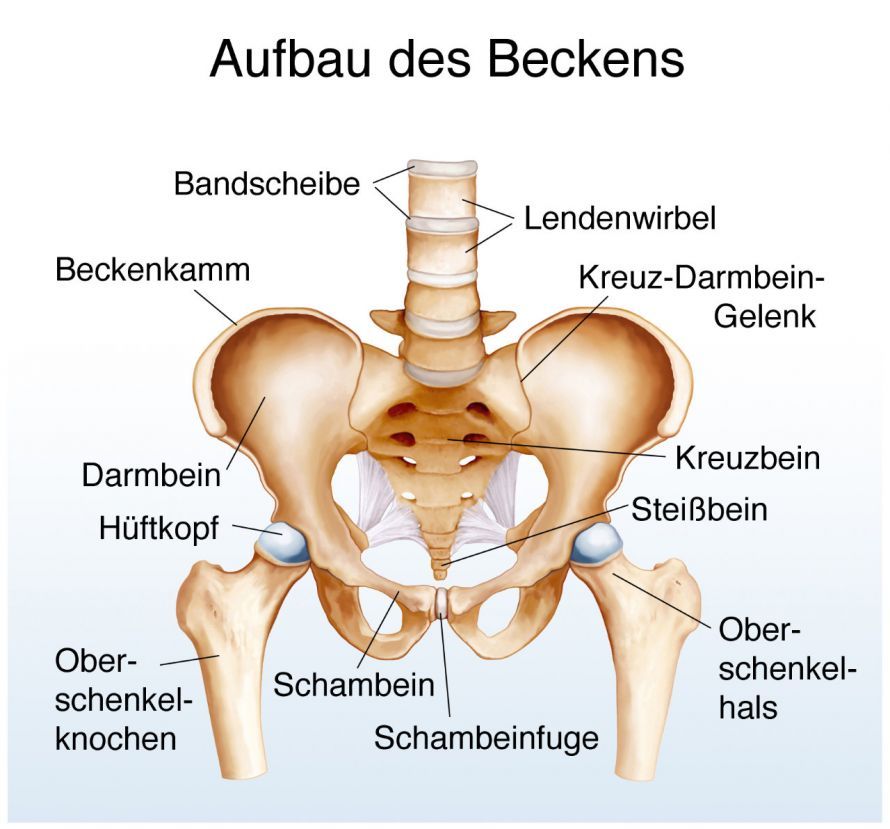
The terms hip dysplasia and hip dislocation are closely related, especially in pediatric orthopedics. Hip dysplasia refers to a developmental disorder of the hip socket. The acetabulum is still cartilaginous and not sufficiently ossified, resulting in a lack of coverage over the femoral head. If the femoral head cannot find a secure fit, it can slip out of the socket.
The prevalence of congenital hip dysplasia varies geographically, but it is the most common congenital skeletal malformation. Girls are affected significantly more often than boys. Risk factors include a breech presentation during pregnancy or a family history of the condition. If hip dysplasia is left untreated, a dislocation may develop, leading to premature joint wear later in life. You can find more information on joint disorders in our Orthopedics and Trauma Surgery section.
Congenital Hip Dislocation: Symptoms of Hip Dislocation in Infants
In newborns, hip dislocation rarely causes pain, which is why it is so insidious. Symptoms of hip dislocation are often subtle. A classic sign is limited abduction: the affected leg cannot be spread outward as easily when changing a diaper. Asymmetry in the buttock creases or an apparent shortening of the leg may also indicate hip dislocation.
Clinically, doctors test the stability of the joint in newborns (Barlow and Ortolani tests) to provoke a “snapping” sensation in the joint. Since this examination can be uncomfortable, imaging diagnostics are crucial. If dysplasia or dislocation is overlooked during infancy, it can lead to a waddling gait and a swayback in older children.
Diagnosis of hip dislocation: Ultrasound and X-ray
Hip dislocation in infants is typically diagnosed using an ultrasound examination as part of the U3 well-baby checkup during the 4th to 5th week of life. Ultrasound is radiation-free and provides an excellent view of the cartilaginous structures of the acetabulum and the position of the femoral head. It allows for classification by severity (e.g., according to Graf).
In older children or adults, when the bone nuclei have already formed, an X-ray (pelvic overview) is the method of choice. This allows for an assessment of the bony structure of the femur and acetabulum, as well as any malalignment or osteoarthritis.
Treatment of hip dislocation: Conservative treatment using bandages
The treatment of hip dislocation in infancy aims to reposition the femoral head into the acetabulum and keep it there (retention) so that the joint can continue to mature. This is usually done manually or with the help of braces.
In mild cases of dysplasia, “wide swaddling” is often sufficient. For an unstable hip or dislocation, abduction pants or the Pavlik harness are used. Treatment of hip dysplasia and hip dislocation using braces or devices keeps the legs in a flexed and abducted position. This centers the femoral head deep within the acetabulum. Only if conservative therapy fails is surgical treatment or closed reduction under anesthesia, followed by immobilization in a cast, necessary. Treatment is considered complete once the acetabulum has reached full skeletal maturity.
Traumatic hip dislocation: Dislocation of the hip due to an accident
The situation is quite different in the case of a traumatic hip dislocation. The hip joint is extremely stable due to its strong ligaments and joint capsule. It takes a massive force, such as that experienced in traffic accidents (dashboard injury, when the knee strikes the dashboard) or falls from a great height, for the femoral head to pop out of the acetabulum.
In traumatic hip dislocation, the joint capsule tears, and often the ligamentum capitis femoris as well. The most common type is posterior dislocation (luxatio iliaca), in which the femoral head dislocates backward and upward. The leg is typically shortened, flexed, and internally rotated. Anterior dislocation is often accompanied by external rotation. Severe pain is always present.
Diagnosis and Reduction of a Posterior Dislocation
In cases of trauma, the diagnosis is usually clinically obvious due to the malposition, but is confirmed by an X-ray to rule out fractures of the acetabulum or femoral head.
Treatment is an emergency. The hip must be reduced as quickly as possible to restore blood flow to the femoral head and prevent nerve damage. Closed reduction is usually performed under general anesthesia and with muscle relaxation. The physician pulls on the leg to lever the femoral head back into the acetabulum. If this is not successful because tissue has been displaced, open reduction must be performed surgically. Special techniques for reducing a posterior dislocation are well described in the medical literature (e.g., Arch Orthop Trauma Surg).
For more information on emergency care, see Traumatology.
Complications and Prognosis: Avascular Necrosis of the Femoral Head and Associated Injuries
Both the congenital and traumatic forms can have serious consequences. A feared complication is avascular necrosis of the femoral head. In this condition, the bone tissue of the femoral head dies because the blood vessels supplying it were torn or compressed during the dislocation. The longer the femoral head remains dislocated, the higher the risk. You can read more about this in our article on avascular necrosis of the femoral head.
Other associated injuries in traumatic hip dislocation include fractures of the hip socket (acetabular fracture) or damage to the sciatic nerve, which can lead to paralysis in the foot. Cartilage damage is also common. The prognosis depends on how quickly the hip was reduced and whether there are any associated injuries. In the long term, there is an increased risk of secondary osteoarthritis (joint wear).
Treatment of a hip dislocation: Surgery and follow-up care
If closed reduction is not possible or if bone fragments are present in the joint space, open surgical intervention is necessary. During this procedure, soft tissues are removed, the joint capsule is sutured, and any bone fractures are stabilized with screws or plates.
After reduction or surgery, the hip joint must be rested to allow the joint capsule to heal. Physical therapy is essential for restoring mobility and rebuilding muscle strength. In cases of congenital dislocation, regular checkups until the end of growth are important to detect residual dysplasia at an early stage.
FAQ: The 8 Most Important Questions About Hip Dislocation
What is the difference between hip dysplasia and hip dislocation?
Hip dysplasia is a malformation (developmental disorder) of the hip socket, which is too shallow. Hip dislocation is a condition in which the femoral head actually pops out of this too-shallow socket. Dysplasia is therefore often the cause of dislocation in infants.
How can I tell if my baby has hip dislocation?
Symptoms may include legs of different lengths, asymmetrical creases on the thigh or buttocks, and limited abduction when changing diapers. Babies rarely experience pain. The most reliable diagnosis is provided by an ultrasound during the U3 checkup.
How is a traumatic hip dislocation treated?
It is a medical emergency. The joint must be reduced (repositioned) under anesthesia as quickly as possible. This is followed by rest and physical therapy. Surgery is often necessary if there are accompanying fractures.
What are the long-term consequences?
The most serious long-term consequence is avascular necrosis of the femoral head (bone death) due to impaired blood flow. In addition, osteoarthritis (joint wear and tear) often develops years later, which may require a hip replacement.
How long does treatment take in infants?
That depends on the age at diagnosis and the severity of the condition. If treatment begins early in the first year of life, a brace is often sufficient for several weeks to months. If diagnosed later, treatment may be more prolonged and require surgery.
Is hip dislocation painful?
Traumatic dislocation in adults is extremely painful and results in an inability to move the leg. Congenital dislocation in newborns, on the other hand, usually does not cause acute pain.
What is the Pavlik harness?
The Pavlik harness is a special device made of straps that is used in infants. It holds the legs in a flexed and abducted position, which presses the femoral head deep into the acetabulum and stimulates the joint’s maturation.
Can hip dislocation be prevented?
The congenital form cannot be directly prevented, but hip maturation can be supported by “wide swaddling” and carrying the baby in a sling. The traumatic form results from an accident and can only be prevented through general accident prevention measures.
Share this article