Here you will find medical specialists in the field of trauma. All of the doctors listed are specialists in their field and have been handpicked for you according to the strict Leading Medicine Guide guidelines. The experts look forward to hearing from you.
Basics of Accident-Related Injuries
Accident-related injuries are among the most common health problems in Germany and result from unintentional injuries in everyday life, in traffic, or during sports. Accident-related injuries are particularly prevalent among children and adolescents, as data from KiGGS Wave 2 and the RKI show.
These data provide an important overview of accident patterns in Germany, including the distribution of various injury types and their health consequences. Studies such as the “Survey on Health in Germany Today” also help to better understand the situation in Germany.
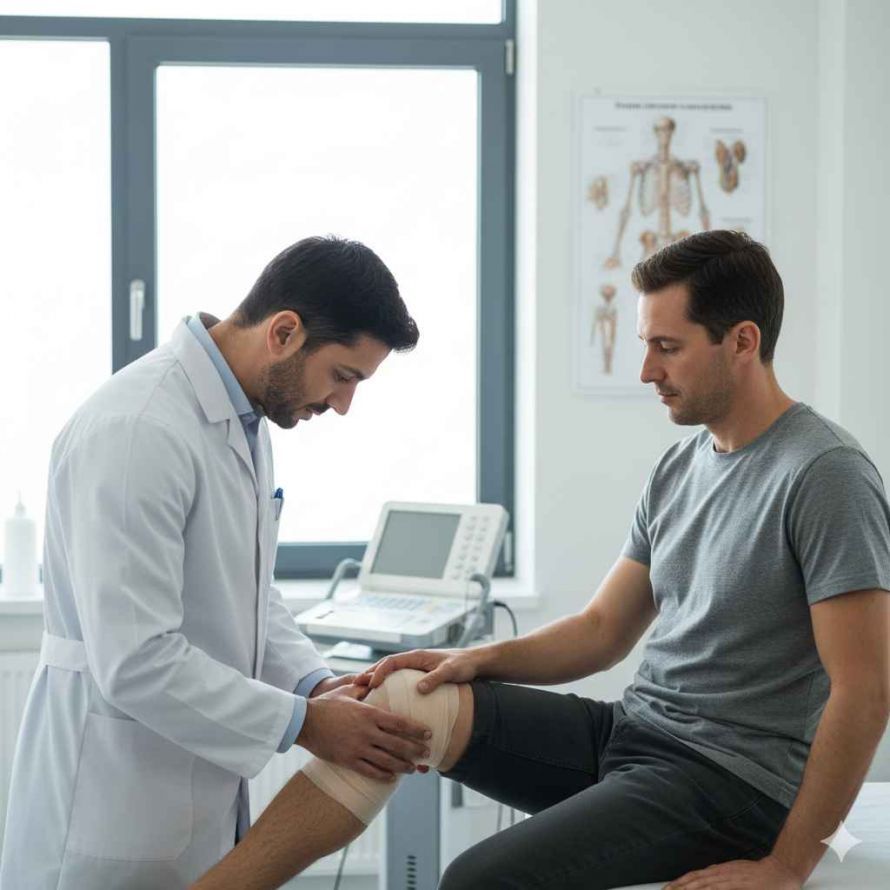
Rapid diagnosis is crucial: In cases of accidental injuries, a thorough clinical examination by specialists sets the course for further, optimal treatment.
Symptoms in Patients
Symptoms range from bruises, swelling, and limited mobility to severe injuries requiring surgical intervention. Depending on the affected area, symptoms can occur in various parts of the body—such as the arm, leg, spine, or hand, where hand and reconstructive surgery is performed.
Many injuries manifest as pain, functional limitations, or neurological deficits. Clinical diagnosis is often performed using imaging techniques such as MRI, CT, or X-ray and relies on the collaboration of various medical specialists.
Diagnosis
The diagnosis of traumatic injuries always begins with a thorough clinical examination, during which physicians first assess the visible extent of the injury and check for acute dangers such as severe bleeding, fractures, or neurological deficits. To obtain precise information about the injury patterns, imaging techniques such as X-rays, CT scans, or MRI are then used. These help to accurately visualize injuries resulting from falls, traffic accidents, or household accidents and to detect complications at an early stage.
Another important part of the diagnostic process is the evaluation of the affected body regions, as certain areas—such as the spine, chest, head, or hand—must be examined with particular care. Modern diagnostics not only provide a basis for the correct treatment but also offer a valuable overview of the specific circumstances of each individual accident.
Therapy and Treatment of Accident Injuries in Children, Adolescents, and Adults
Possible Treatment Approaches
Treatment depends on the type and severity of the accident-related injury. Minor injuries are treated conservatively, while more complex injuries require surgical intervention by trauma surgeons. In specialized facilities, such as a trauma center, acute care is provided to preserve the function of the affected structures. The goal of every treatment is to reduce the risk of long-term complications and promote healing. For injuries in children and adolescents in Germany—as described in the cross-sectional findings from KiGGS—particularly careful follow-up care is essential. Professional societies such as the German Society for Trauma Surgery provide support through guidelines and research.
Accident-Related Injuries in Children and Adolescents
Accidents are among the most common health problems at a young age, and accident-related injuries are among the primary reasons for seeking medical care. Children are particularly at risk in traffic accidents because they are less able to assess dangers. The study on children’s health clearly demonstrates how relevant this issue is to public health. Such events can also have a long-term negative impact on the overall health of children and adolescents.
Current scientific analyses, including the “Adolescents in Germany” cross-sectional study, provide a nuanced picture of the types and frequency of injuries. These data reflect how the causes of accidents evolve with age and which factors contribute to higher risks. The cross-sectional results are particularly valuable in this context, as they clearly highlight trends and typical accident patterns. This demonstrates the impact that targeted prevention efforts can have.
After an accident, immediate medical care is crucial to prevent further injury and to stabilize the patient quickly. At the same time, accident prevention plays a central role in reducing risks proactively and making children safer. Programs for traffic education or safe routes to school help reduce the number of serious traffic accidents. Overall, this highlights how important comprehensive protection and sustainable measures are for the health of the younger generation.
FAQ on Accident Injuries
What exactly does accident research examine?
Accident research systematically analyzes how and why injuries occur in accidents. It considers both technical and human factors to develop safety measures. The goal is to identify risks early and develop effective prevention strategies. This helps reduce serious injuries and fatalities in the long term.
Accidents in Germany—what are the most common causes?
Statistics on accidents in Germany show that human error, distraction, and poor decision-making in traffic are the primary causes. In the home and during leisure activities, however, falls play a major role. A lack of supervision of children is also a significant factor. The exact classification always depends on the specific circumstances of the accident and the age group involved.
How many people are killed or seriously injured in accidents each year?
Every year, thousands of people in Germany are killed or seriously injured in accidents, particularly in traffic. Injuries resulting from falls, workplace accidents, or recreational accidents also account for a significant proportion. These figures underscore the importance of preventive measures. A better understanding of the causes can prevent many of these incidents.
Which accident and treatment locations are relevant for those affected?
Depending on the severity of the incident, medical professionals distinguish between typical accident and treatment locations, such as at home, in traffic, on playgrounds, or during sports. In the case of acute injuries, initial care is often provided directly at the scene of the accident by emergency medical services. Hospitals or specialized centers then take over further treatment. Reports provide an important overview of the situation in Germany in this regard.
Share this article