Expert Interviews
Everything Flows: An Interview with Vascular Surgeon Wail Al Ahmad

Alexandra Pfitzmann ·
Our entire body is crisscrossed by blood vessels in a vast network of veins and arteries. Every minute, thanks to the power of our heart, all the blood in our body is pumped through these vessels. If all these vessels were laid end to end, they would stretch for about a thousand kilometers—more than twice the circumference of the Earth. Without our vascular system—our blood circulation—our organs, bones, and skin could not function. However, as soon as disruptions occur within this system in the form of wear and tear or calcification, this vital supply is jeopardized. The risk of heart attack and stroke increases. However, deposits or calcifications in the blood vessels can also be repaired. That’s when it’s time to consult a specialist who is familiar with all areas of the field and has mastered the art of performing surgery inside the vessels themselves—a specialist like Wail Al Ahmad from the Kitzinger Land Clinic.
Panta Rhei—everything flows! A Closer Look at Vascular Surgery
Vascular and endovascular surgeon Wail Al Ahmad has been the new section head and senior attending physician for vascular surgery since July 2019 at the renowned Kitzinger Land Clinic near the historic university city of Würzburg —in the Lower Franconia region, where he also grew up. The editorial team of the Leading Medicine Guide had the opportunity to speak with the vascular specialist about the intricate system of our blood vessels. True to the motto “everything flows” …
Fundamentally, blood vessels differ in the direction in which they flow. Veins carry oxygen-poor blood from organs, muscles, and tissues toward the heart, while arteries transport oxygen-rich blood away from the heart. Veins have valves to ensure that the blood reaches the heart and does not flow back in the opposite direction. The more elastic arteries do not require valves, as the blood is already directed accordingly by the heart’s pumping action.
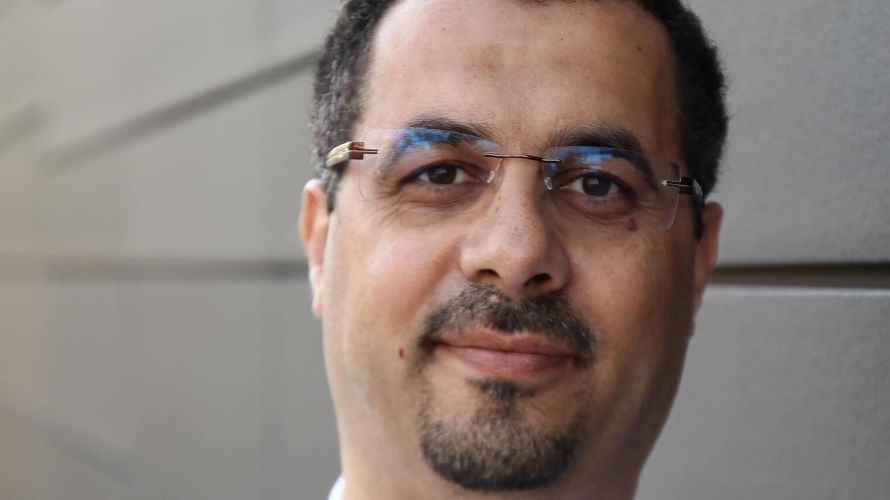
“Generally speaking, it is my personal goal to avoid surgery whenever possible,” explains Wail Al Ahmad right at the start of the conversation. “When a patient comes to me with symptoms, I first determine exactly where the problem lies—whether in the arteries, veins, or lymphatic system. Varicose veins or spider veins are, of course, visible signs of poor blood circulation. The clinical analysis is then conducted using imaging techniques such as ultrasound, often combined with vascular imaging via X-ray (angiography) or computed tomography (CT), as well as through physical examinations,” explains Al Ahmad.
Contrary to the common belief that varicose veins—knotty, dilated veins on the legs—occur primarily in heavy smokers, it should be noted that varicose veins are purely hereditary and constitute an incurable condition. Wail Al Ahmad also removes varicose veins, and patients often enjoy a good ten years of relief afterward. He knows the best approach—because it’s crucial to expose the side branches of the varicose veins; otherwise, the varicose veins will return more quickly. Wearing compression stockings regularly can also slow down the process somewhat.
Peripheral Arterial Disease (PAD)
One of the most common vascular diseases is peripheral arterial occlusive disease (PAOD), also known as intermittent claudication. It involves blockages or aneurysms in one or more arteries, which can cause severe pain, forcing those affected to stop frequently while walking. Out of embarrassment, many patients stop in front of store windows to conceal their problem.
These blockages are often caused by thrombi—blood clots in the vessels. “The goal here is to clear these blockages,” says Al Ahmad. “Many procedures can be performed using minimally invasive techniques—that is, without open surgery, prolonged rehabilitation, or scarring. Of course, this gentle treatment method also eliminates the need for general anesthesia,” he reassures patients.
Vascular blockages can also result from atherosclerosis (calcium deposits in the blood vessels that lead to narrowing), coronary heart disease (CHD), and following surgeries and heart attacks. “High blood pressure is also a widespread problem in our society. It poses a high risk to normal blood flow and must be treated urgently,” recommends Wail Al Ahmad. This is because when arteries are subjected to persistently high blood pressure, they can become damaged, which can lead to the formation of aneurysms—that is, bulges. Specifically, this means that the arterial wall can no longer withstand the increased pressure.
With or without surgery—there are several options
In his treatments, however, Wail Al Ahmad always tries to avoid surgery. “If blood vessels are already severely narrowed by calcium deposits, they can be treated with a catheter-based dilation procedure,” he explains, adding: “A major risk associated with calcium deposits is that they can lead to inflammation of the arterial wall, causing it to become inelastic and brittle. This increases the likelihood of a blood clot, or thrombus, forming.”
Surgery cannot always be avoided. “I am happy to perform combined procedures, known as hybrid procedures—that is, a combination of open surgery and endovascular surgery.” Endovascular means ‘from the inside out.’ This means that the affected vessel is punctured at an easily accessible site, such as the groin, and dilated from the inside out using a balloon via a catheter,” Al Ahmad reports positively.
He recalls a particularly successful treatment: “A very young woman who had a long-segment occlusion in the pelvic region was my patient. We aimed to perform a puncture—that is, treatment without open surgery—which was a delicate undertaking in this case. But our persistence paid off. During the procedure, we were able to use both straight and curved guidewires, and we succeeded in reopening the vessel! The patient was able to go home the very next day. She was spared an incision in her lower abdomen as well as a difficult rehabilitation process,” Al Ahmad says enthusiastically.
The Special Gift
The specialist has developed his own unique tradition for his patients, intended to serve as food for thought: “After treatment—whether conservative or surgical—my patients receive a memento from me to take home. After treatment, I give the patient the removed deposits in a tube filled with formalin. Then the patient can consider whether, for example, quitting smoking might not be the better option to protect their blood vessels in the future,” he says with a smile. “There have been many patients who were even more motivated as a result to change their lifestyle for the sake of their health!”
“Eliminate the risk factors!”
Unfortunately, vascular diseases are widespread; they are caused not only by genetic predispositions but also by an unhealthy lifestyle. “Of course, the best thing is to eliminate all risk factors,” Al Ahmad cautions, referring, of course, to the classics such as smoking, excessive alcohol consumption, a high-fat diet, and lack of exercise.
“A new study from Wiesbaden has shown that even a single cigarette a day can lead to changes in blood flow. Incidentally, women are at a disadvantage here compared to men and suffer more harm from cigarette smoking,” he explains. “For example, anyone who decides to quit smoking will return to normal levels after just one year,” says the vascular specialist, who also encourages people to eat a healthier diet: “Avoid animal fats as much as possible! High cholesterol levels also have a negative effect on blood circulation. Deposits can form, and the blood can no longer flow freely,” Al Ahmad continues.
In principle, the same rule applies here: everything in moderation. The so-called Mediterranean diet—with plenty of cold-pressed and extra virgin olive oil, little meat, lots of vegetables, and fish and fruit from time to time—has proven to be the healthy middle ground. In other words: You don’t have to give up everything, but you also don’t need to eat meat every day. Whole milk with a fat content of 3.5% also counts as an animal fat, and when it comes to eggs, it’s primarily the yolk that, when in doubt, has a negative impact on cholesterol levels. But opinions are actually divided on this point.
Regular exercise, however, definitely supports blood circulation and keeps you fit. Go for regular walks or go swimming—the main thing is that you stay physically active!
A Vision for the Future
If it were up to Wail Al Ahmad, who has always aspired to be a doctor, this technology should be researched further and integrated into everyday clinical practice. “I hope to see even more progress in robot-assisted surgery. With robotic technology, complex findings can be digitally calculated, and vascular navigation would be possible,” Al Ahmad says, looking toward the future. “But people remain the focus,” he concludes with satisfaction, and his patients are grateful to him for it. And we thank him for this interesting conversation!
If you’d like to learn more about Wail Al Ahmad, visit the profile of vascular surgery specialist Wail Al Ahmad and contact him with any questions about vascular surgery!
Share this article
About the medical author
Alexandra Pfitzmann
Editor
Alexandra Pfitzmann – medical author: expert knowledge, professional articles and medical insights in the Leading Medicine Guide.
More about the medical author →Expert Interviews
Read next
- Expert interview
Cardiogeriatrics: Significance and benefits in the context of hospital reform
Sep 21, 2026
Cardiogeriatrics: Significance and benefits in the context of hospital reform
Read more - Expert interview
Expert Interview with Professor Dr. Amadeus Hornemann, MPH
Sep 18, 2026
Prof. Amadeus Hornemann on Precision Medicine in Gynecology: Modern Surgery, New Techniques, Better Quality of Life
Read more - Expert interview
Expert Interview with Professor Dr. Konstantinos Anagnostakos
Sep 15, 2026
Prof. Anagnostakos on Painful Knee Replacements
Read more