Expert Interviews
Spotlight on Spinal Surgery - Expert Interview with Dr. Hedayat

Alexandra Pfitzmann ·
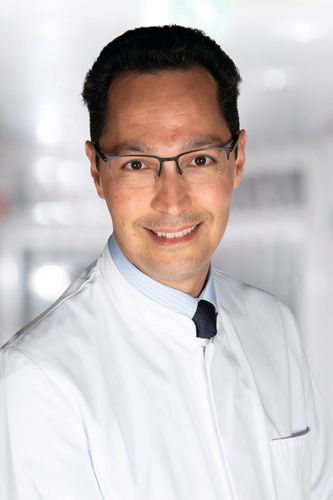
Dr. Farman Hedayat, M.D., a board-certified neurosurgeon, has been practicing at the Neurosurgery Practice at the Grafenberg Back Center since January 2021, where he offers his comprehensive range of services to patients with both private and public health insurance. His many years of experience and high level of expertise make him a leading specialist in the fields of spinal surgery, pain management, and minimally invasive surgical techniques in the region. Dr. Hedayat has made a name for himself through his dedication to his patients’ well-being and his excellent medical care.
His range of services includes conservative pain management, microtherapy, and the full spectrum of spinal surgery. He uses state-of-the-art endoscopic and minimally invasive techniques to provide his patients with the best possible treatment. Dr. Hedayat is known for his holistic approach, which encompasses conservative pain management, microtherapy, and the full range of spinal surgery procedures. His treatment specialties include, among others, cervical and lumbar herniated discs, lumbar spinal stenosis, spondylolisthesis, endoscopic disc surgery, and robot-assisted spinal surgery.
As a board-certified neurosurgeon, Dr. Hedayat strives to avoid surgery through effective conservative therapy. Should surgery nevertheless be necessary, he has extensive experience across the entire field of neurosurgery and in procedures involving the entire spine, performed according to the latest knowledge and standards. His Master’s certification from the German Spine Society and the Eurospine Society attests to his extensive training and expertise in the field of spinal surgery and conservative therapy. The spine is a central element of the human body that not only provides stability but also enables mobility. Diseases or injuries to the spine can lead to significant limitations in quality of life.
The editorial team of the Leading Medicine Guide spoke with Dr. Hedayat in an interview to discuss the specifics of spinal surgery.
Spinal surgery encompasses a wide range of procedures aimed at relieving pain, improving functional impairments, and restoring the patient’s mobility. From minimally invasive techniques to complex surgical procedures, spinal surgery offers innovative solutions for a wide range of spinal conditions.
“The most common spinal conditions primarily include wear-and-tear disorders—that is, degenerative diseases—followed by tumors and infectious diseases. Then there are deformities, known as scoliosis, which can also result from wear and tear. However, I’ve also noticed that patients come to my new practice “just” with back pain. And here it is very important—even according to current guidelines—to distinguish between specific and nonspecific lower back pain. This is because approximately 90% of patients who see a doctor for lower back pain have no specific cause. “About 10% of patients have a specific cause for their back pain, and in these cases, the entire treatment approach is different from that for nonspecific back pain,” Dr. Hedayat makes clear at the beginning of our conversation.
Another common spinal condition is a herniated disc, in which the fibrous ring of the disc ruptures, causing the gel-like nucleus to protrude and press on adjacent nerve roots. This can lead to pain, numbness, and muscle weakness. “A herniated disc diagnosed in the traditional way is often a case of degeneration or a degenerative change in the spine. But here, one has to be a little careful. Sometimes a patient will say, ‘I have four herniated discs,’ but this cannot be defined as a herniated disc in the classic sense—it is more accurately described as wear and tear. Clinically, the patient also shows none of the classic symptoms of a herniated disc. Even if someone has chronic poor posture or work-related forced postures, this ultimately leads to back pain. Imaging diagnostics are essential and very helpful, but they alone do not constitute a diagnosis. This means that we do not treat images—we treat people. Imaging is used to determine whether there is a cause for the symptoms the patient is complaining of.
A classic herniated disc—involving the protrusion of the nucleus pulposus and the resulting compression of a nerve—affects a wide variety of patient groups. The youngest patient I’ve treated for a herniated disc was 16 years old, though at 160 kilograms, he was severely overweight. Although he had lost a tremendous amount of weight, he had developed foot-lift paralysis due to his herniated disc, so he had to undergo surgery quickly. The oldest patient I’ve operated on for a symptomatic herniated disc was 90 years old. In that respect, the range of variation is wide. You generally have to be careful here. Not every herniated disc diagnosed by imaging is actually the cause of the patient’s symptoms, and not every symptomatic herniated disc requires surgery.”
Another common condition is spinal stenosis, in which the spinal canal narrows, putting pressure on the spinal cord and nerve roots. This can lead to pain, numbness, paralysis, and gait disturbances. Spondylarthrosis, a degenerative disease of the facet joints, as well as scoliosis, osteoporosis, and spondylolisthesis, are also among the common spinal disorders.
For patients with degenerative spinal disorders, there are numerous non-surgical treatment options available that can be considered before surgery. These treatments aim to alleviate symptoms, improve spinal function, and maintain or enhance the patient’s quality of life.
Dr. Hedayat comments: “I don’t want to demonize so-called disc surgery or spinal surgery in general—it has a very valid place—but there are, of course, conservative treatment methods. For example, short-term use of nonsteroidal anti-inflammatory drugs (such as ibuprofen or diclofenac) or opioids to combat the initial pain and monitor how the pain progresses. Depending on the situation, this may be followed by targeted injection therapy with cortisone and a local anesthetic. The symptoms often subside. This is because when the nerve swells down after repeated injections, the pain also improves. There is also what is known as traction therapy, which is performed on a traction table. This is useful, for example, when there is a narrowing at the point where the nerve exits the spine. In this case, the nerve can be relieved by gently pulling it apart. In general, the conservative approach is tailored to the individual. One patient may feel better with movement, while another may feel better when lying still. In addition, there are other traditional therapies such as physical therapy, rehabilitation, and exercise. Here, it is important to distinguish between specific and nonspecific lower back pain. For nonspecific symptoms—that is, when there is no clear cause—measures such as weight loss for those who are overweight, as well as exercise and sports, acupuncture, chiropractic adjustments, and osteopathic manipulations can help. These are examples of therapies aimed at improving blood circulation, relieving tension, and promoting the natural alignment of the spine. Complementary measures such as heat or cold therapy can also help relieve pain by relaxing the muscles and promoting blood circulation. In addition, certain aids such as orthopedic supports or special mattresses and pillows can be used to relieve pressure on the spine and promote proper positioning during sleep. However, in the case of specific lower back pain, targeted treatment of the underlying cause should be pursued. “After approximately six weeks of conservative treatment for specific lower back pain, it is necessary to reassess whether the chosen therapy is successful or not, to what extent the treatment strategy needs to be adjusted, or whether surgical treatment should be considered after all.”
Spondylolysis and spondylolisthesis can be closely related, but they are nevertheless two distinct spinal conditions.
Spondylolysis refers to a defect or pathological bone disruption in the vertebral arch, which can be either congenital or acquired. This defect can lead to instability in the affected area of the spine but is not necessarily associated with spondylolisthesis. Spondylolisthesis occurs when a vertebra slips forward relative to the vertebra below it. This often occurs in conjunction with spondylolysis, when the defect in the vertebral arch leads to instability and causes the vertebra to slip forward. However, spondylolisthesis can also be caused by degeneration. Spinal slippage can involve varying degrees of displacement, ranging from mild to severe, and is classified accordingly. While spondylolysis describes the defect or bony disruption in the vertebral arch, spinal slippage refers to the actual displacement of one vertebra relative to another. Spondylolysis can be a cause of spondylolisthesis, but not all people with spondylolysis necessarily develop spondylolisthesis.
“In recent years, an increasing number of cases of spondylolisthesis have been observed, particularly among younger patients. In these cases, spondylolysis was often diagnosed, which may have caused the spondylolisthesis. One can strongly suspect that the cause lies in the higher intensity of sports today, where a minor injury has resulted in a hairline fracture in a vertebral arch. A hairline fracture cannot be diagnosed initially—it is simply not visible, and often no further diagnostic testing is necessary following a minor sports injury. In some cases, however, this hairline fracture does not heal, which can lead to spondylolysis, which in turn can result in spondylolisthesis. This displacement of the two vertebrae causes a narrowing of the nerve exit points or spinal canal stenosis, which can in turn lead to leg pain. “In such cases, conservative therapies should be used initially, but if symptoms are resistant to treatment or neurological deficits are present, stabilization or fusion surgery should be considered,” explains Dr. Hedayat.
General Diagnostics
Imaging techniques: X-rays (taken while standing so that the femoral heads are visible), computed tomography (CT), and magnetic resonance imaging (MRI) are commonly used imaging techniques.
Magnetic Resonance Imaging (MRI): MRI is particularly useful for visualizing soft tissue structures such as ligaments, nerves, and intervertebral discs.
Scintigraphy: Scintigraphy can be used to identify inflammatory or degenerative processes in the spine. It can also help detect areas of increased bone metabolism, which may indicate a fracture or hairline crack.
If conservative measures are insufficient and neurological complications are present, surgical treatment may be necessary.
The surgery can take various forms, depending on the location and severity of the spondylolysis. These include procedures such as vertebral body augmentation with cement (kyphoplasty or vertebroplasty) for vertebral fractures, and vertebral fusion via minimally invasive spinal surgery. Of course, the prospect of spinal surgery can make patients nervous. But Dr. Hedayat reassures them:
“I recommend that patients also seek a second opinion before undergoing spinal surgery. However, if surgery is necessary, patients are generally well-prepared and informed, and they don’t have major concerns. This is because, in most cases, we’ve known the patients for quite some time. Of course, patients do have some concerns, and that’s understandable.”
After spinal surgery, various complications can arise, ranging from mild to serious problems.
“Every surgical procedure carries the risk of complications. But in spinal surgery in particular, there are all sorts of horror stories circulating. The classic fear is that of paralysis or paraplegia, combined with the need for a wheelchair. This fear is understandable—after all, we’re operating in a very sensitive area. The most common complications that can occur are postoperative bleeding or infection. In the case of very rare postoperative bleeding, paralysis and pain can result. Postoperative bleeding has nothing to do with a surgeon’s experience—you can minimize the risk somewhat, but ultimately, you have no control over it. Personally, I always insert a drain so that wound fluid can drain during the first postoperative phase. Postoperative bleeding is one of the most dramatic complications of this type of surgery. That is why patients also require postoperative monitoring. In addition, there are other complications, such as a potential wound healing disorder or nerve injury, which can lead to cerebrospinal fluid leakage syndrome or the formation of a cerebrospinal fluid fistula. “In this case, a lumbar drain must be inserted so that the cerebrospinal fluid can drain and the damaged nerve sheath can heal,” explains Dr. Hedayat, emphasizing: “I have personally never encountered a deliberate nerve injury, nor have any of my colleagues.”
In some cases, additional surgery may be necessary to correct the problem of cerebrospinal fluid leakage. Careful monitoring and follow-up by the medical team are therefore crucial for detecting complications early and treating them appropriately.
Spinal disorders, particularly those in the cervical region (neck), are often associated with “dizziness” and can affect the vestibular system.
One such condition is cervical spondylosis, or cervical osteoarthritis, which is characterized by wear and tear of the intervertebral discs and joints in the neck region. Nerve irritation or muscular problems in the neck region can cause balance disorders as well as dizziness. Herniated discs in the cervical spine can also cause dizziness, among other symptoms. The effects of these conditions on the vestibular system can be varied. Compression of neural structures, such as the spinal cord, can disrupt signal transmission to the brain, which often leads to gait disturbances and dizziness. Furthermore, it can affect muscles and ligaments in the neck, which can also impact balance.
One might wonder how a patient experiencing dizziness would think to see a spine surgeon. Dr. Hedayat explains: “There are many different forms of dizziness. There is dizziness caused by cardiac issues, neurological causes, or even ear, nose, and throat (ENT) conditions. In cases of cervical spine disorders, dizziness is often a symptom as well—for example, due to spinal canal stenosis and the resulting myelopathy. This also manifests as gait disturbances (characteristic of a spinal disorder, because signal transmission to the cerebellum and the cerebrum—and vice versa—is disrupted), frequent falls, or fine motor skill impairments. First, an MRI of the skull must be performed to rule out a cerebral cause; an MRI of the cervical spine is also urgently needed. This is followed by X-rays and, sometimes, CT scans. Interdisciplinary collaboration with ENT and cardiology specialists is also necessary. “The classic conditions associated with dizziness are very diverse.”
The treatment of spinal disorders that are associated with dizziness, among other symptoms, depends on the underlying cause. Conservative measures such as physical therapy, medications for pain relief and anti-inflammation, as well as targeted exercises to strengthen the neck muscles can help. In some cases, however—such as with myelopathy—surgery may be necessary to address the underlying cause.
Since January 2021, Dr. Farman Hedayat has been practicing at the Neurosurgical Practice at the Grafenberg Back Center, offering a wide range of services for both privately and publicly insured patients.
“I offer traditional treatment for spinal disorders, whether conservative or surgical. Together with my team, I strive to alleviate symptoms using the measures available to us. This begins with prescribing medications and recommending rehabilitation measures. We perform image-guided injections along the entire spine as well as on the peripheral nerves to manage pain. In addition, we offer cold therapy, which is particularly effective for chronic pain caused by conditions such as osteoarthritis or rheumatic diseases like ankylosing spondylitis. At the same time, cold therapy strengthens the immune system and metabolism, and it is also beneficial for frequent headaches, depression, or sleep disorders. Furthermore, we offer traction therapy. After six weeks of conservative therapy, we should assess the extent to which we have been able to help the patient. This is also very important from an economic perspective to prevent unnecessary absences from work on the patient’s part. One must ask whether the treatment strategy needs to be changed or not. And that’s when one sometimes reaches the point of having to consider surgical treatment as well,” explains Dr. Hedayat.
In periradicular therapy (PRT), a fine injection needle is advanced to the irritated nerve root in the spinal region, whereas in facet joint infiltration (FGI), the needle reaches the irritated facet joints. Both procedures are performed under fluoroscopic guidance to ensure precise needle placement. Highly effective medications are administered through these needles, which have local anesthetic, anti-inflammatory, and pain-relieving effects. Since inflammation and pain are often limited to a small area, the precise guidance and accurate administration of the medications via fluoroscopy allow for a low dosage.
“Of course, I also perform surgery—I carry out 160–250 surgeries per year and offer the full range of spinal surgery. The surgeries take place at two clinics: the Evangelisches Klinikum Köln Weyertal and the Praxisklinik 360° in Südpark, Solingen. For the future, I hope to see high-quality training for the next generation. There is currently a discussion here about whether there will be a subspecialty designation for spinal surgery in the future. Of course, medicine and technology will continue to evolve. Personally, I’m a strong advocate of endoscopic spinal surgery and perform it when indicated. “In my opinion, it will continue to gain acceptance, just as robotics and the use of AI (artificial intelligence) will continue to advance,” says Dr. Hedayat, concluding the interview with these thoughts.
Thank you very much, Dr. Hedayat, for this insightful conversation!
Share this article
About the medical author
Alexandra Pfitzmann
Editor
Alexandra Pfitzmann – medical author: expert knowledge, professional articles and medical insights in the Leading Medicine Guide.
More about the medical author →Expert Interviews
Read next
- Expert interview
Cardiogeriatrics: Significance and benefits in the context of hospital reform
Sep 21, 2026
Cardiogeriatrics: Significance and benefits in the context of hospital reform
Read more - Expert interview
Expert Interview with Professor Dr. Amadeus Hornemann, MPH
Sep 18, 2026
Prof. Amadeus Hornemann on Precision Medicine in Gynecology: Modern Surgery, New Techniques, Better Quality of Life
Read more - Expert interview
Expert Interview with Professor Dr. Konstantinos Anagnostakos
Sep 15, 2026
Prof. Anagnostakos on Painful Knee Replacements
Read more