Expert Interviews
Expert Interview with Dr. Zinser on Hip Surgeries That Preserve Joint Function

Alexandra Pfitzmann ·
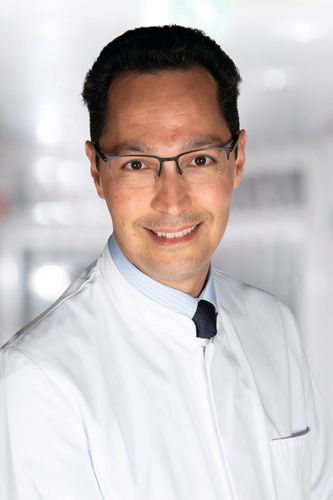
Dr. med. Wolfgang Zinser, retired chief physician (DE), is a highly respected specialist in orthopedics and traumatology who focuses on orthopedic and trauma-related issues and conditions. His international expertise extends in particular to joint-preserving hip surgery, hip arthroscopy—including labral and cartilage reconstruction— pelvic corrections for hip dysplasia via minimally invasive PAO (periacetabular osteotomy), and corrective osteotomies of the femur (thigh bone).
With over 2,000 cartilage cell transplantation procedures performed on the knee, hip, and ankle, he is among the most experienced orthopedic surgeons worldwide. At his modern practice, OrthoExpert Ordination, Dr. Zinser offers comprehensive diagnostics and treatment at the highest scientific level in accordance with current guidelines. He performs surgical procedures at the well-equipped Graz Ragnitz Private Clinic, where patients can enjoy first-class inpatient care. His primary goal is to provide his patients with holistic care that enables a quick return to their normal activities, and he specializes in preserving joints whenever possible.
For two decades, he has been actively involved nationally and internationally as an instructor, speaker, and advisor to both patients and colleagues in the field of joint and cartilage regeneration. From April 2007 to January 2022, Dr. Zinser served as Chief Physician at St. Vinzenz Hospital in Dinslaken, where he treated approximately 1,000 patients annually with joint-preserving surgeries. Since July 1, 2022, Dr. Zinser has made Styria, Austria, his professional and personal home and founded a Center for Joint-Preserving Orthopedics. As president of the Society for Cartilage Regeneration and Joint Preservation (QKG), he ensures his patients receive the best possible treatment thanks to his extensive experience and expertise in orthopedics and sports medicine.
Dr. Zinser has a personal background in sports as a former national team athlete in the triple jump, which gives him a special understanding of the needs and challenges faced by injured athletes. In addition to his surgical specialties, he offers a wide range of modern conservative therapies, including hyaluronic acid injections, PRP (platelet-rich plasma) injections, and cartilage-protective physical therapy. The editorial team at Leading Medicine Guide had the opportunity to speak with PD Dr. Zinser about hip joint-preserving treatments to explore the various options.

The significance of hip joint-preserving treatment lies in the ability to maintain or restore natural joint function without having to replace the joint with an endoprosthesis (artificial hip joint). Joint-preserving conservative and non-surgical measures are of great importance for suitable patients, as they can help alleviate pain and restrict mobility in patients with hip problems. These include conservative therapies such as physical therapy, weight management, and medication-based therapies that modulate the joint environment, as well as pain management. These approaches aim to strengthen the muscles, stabilize the joints, and reduce inflammation.
“When a patient suffers from hip pain and limited mobility, targeted physical therapy is often an effective way to exercise the hip joint. The World Health Organization recommends 150 minutes of exercise per week. This is because even non-specific muscle activity leads to the release of substances that have anti-inflammatory effects, especially when it comes to exercises designed to relieve pressure on the joints. Wearing orthoses also helps relieve pressure, especially for people with knock-knees or bowlegs,” Dr. Zinser begins in our conversation. In addition, non-invasive treatments such as injections of hyaluronic acid or platelet-rich plasma (PRP), which is derived from the patient’s own blood, play an important role. PRP has increasingly replaced repeated cortisone injections, as PRP produces effects similar to cortisone on the joint but does not have the negative side effects of cortisone. A combination of hyaluronic acid and PRP is increasingly being used, which further improves treatment outcomes. These therapies can improve joint function and temporarily relieve pain. Such therapies are particularly important in the early stages of joint wear, osteoarthritis, or other degenerative joint diseases.
“Dietary supplements and so-called ‘slow-acting drugs for osteoarthritis’ (SYSADOAs), containing vitamin D, chondroitin, glucosamine, and antioxidants, also support cartilage and bone metabolism and can help improve the joint environment. In this context, I often recommend combination supplements, such as those from the Orthomol brand, which manufactures and distributes a wide range of dietary supplements and vitamin preparations. These products are designed to integrate additional vitamins, minerals, and other nutrients into people’s diets to compensate for any deficiencies or support specific health goals. Certain amino acids and proteins also play an important role. “The products on the market are available in various forms and compositions, including multivitamin supplements, protein supplements, supplements to strengthen the immune system, dietary supplements for athletes, and other specialized formulations,” recommends Dr. Zinser.
“Treatment using platelet-rich plasma (PRP) injections is very effective. For this procedure, blood is drawn from the patient and then centrifuged to separate the plasma and concentrated platelets, which have anti-inflammatory and healing effects. These are then combined, for example, with a special form of hyaluronic acid and reinjected into the patient’s joints. Stem cell therapy is also an option, even though current studies have not yet demonstrated its superior efficacy compared to PRP. In this procedure, progenitor stem cells are extracted from human adipose tissue, processed, and then injected into the joint. “Clinical experience shows that this therapy, when combined with arthroscopic joint lavage and ‘joint cleaning,’ is more effective,” notes Dr. Zinser.
Overall, conservative joint-preserving treatment of the hip is a holistic approach that aims to maintain patients’ mobility and quality of life and minimize pain without requiring invasive procedures. The selection of appropriate measures is made in close consultation between the patient and the orthopedic surgeon to take individual needs and goals into account.
Hip arthroscopy plays a crucial role in preserving the hip joints, particularly for patients with certain hip conditions. This minimally invasive procedure allows orthopedic surgeons who have mastered this challenging surgical technique to examine, diagnose, and treat the hip joint through tiny incisions.
Therapeutic hip arthroscopy is used when clinical examination and careful analysis of the necessary X-rays and specialized MRI images reveal causes of pain that can be effectively treated with hip arthroscopy. It is particularly useful in treating damage to the labrum (articular rim) or articular cartilage, and especially in cases of so-called hip impingement. During the procedure, orthopedic surgeons can correct hip deformities that lead to premature wear, repair or remove damaged tissue, and alleviate inflammation, thereby enabling long-term improvement in joint function. Today, hip arthroscopy allows for the highly successful, minimally invasive treatment of various hip joint conditions that, just a few years ago, required surgery involving large open incisions. In particular, structural abnormalities and changes in the hip—which, if left untreated, can lead to premature osteoarthritis (joint wear)—must be detected early and treated surgically so that the patient’s own joint can remain functional and resilient in the long term. This is especially important for younger patients who will need to rely on their hip joint for many years to come.
Hip arthroscopy is a minimally invasive surgical procedure in which an arthroscope (a type of thin, rigid tubular instrument with a camera and light source) is inserted into the hip joint to perform a detailed examination and, if necessary, repair or treatment using specialized additional instruments.
Compared to traditional open hip surgery, the recovery time after hip arthroscopy is generally much shorter. Patients can regain mobility more quickly and resume their normal activities. “Hip arthroscopy is often the preferred option for younger patients suffering from hip conditions such as labral tears, femoroacetabular impingement (FAI), or synovitis. Athletes with hip injuries or problems have also been shown to benefit long-term from hip arthroscopy, as it can restore joint function and maintain athletic performance. Athletes in sports such as soccer, ice hockey, or martial arts are particularly affected and should be treated early,” says Dr. Zinser. The earlier hip problems are diagnosed, the better the chances of success with hip arthroscopy. It can help prevent or slow joint wear and tear and halt the progression of the disease.
Periazetabular pelvic osteotomy (PAO) is a surgical procedure used in orthopedic surgery to preserve the hip joint in cases of hip dysplasia.
“This surgery is particularly important and necessary when the patient suffers from hip dysplasia, a malformation of the hip joint in which the acetabulum does not adequately cover the femoral head. This leads to uneven, excessive stress on the joint and premature joint wear. In the past, hip joint malformations were more common. Thanks to the early detection method developed by Prof. Reinhard Graf (Austria)—which involves infant ultrasound screening—and appropriate therapy, such as abduction pants, the incidence has been reduced to about one-fifth in many European countries. “The downside today, however, is that as a result, many physicians have lost the ability to recognize and treat dysplasia,” explains Dr. Zinser.
The PAO procedure involves several steps. First, the patient is prepared and anesthetized under general anesthesia. The surgeon makes an incision in the groin area to access the hip joint. Next, an osteotomy is performed, during which the surgeon detaches the acetabulum from the pelvic bone and repositions it to correct the anatomy of the hip joint. This allows for better weight distribution and protects the articular cartilage. The repositioned bone fragments are then fixed in the correct position using screws. After fixation, the incision is closed. “Personally, I perform surgery using the minimally invasive method developed by the Danish surgeon Kjeld Soballe, in which the acetabulum is gently rotated into the correct position and secured with screws through an incision of approximately 8 cm, without detaching any muscles or tendons. This allows the patient to get back on their feet much faster and gives them a good chance of never needing a prosthesis. However, patients must seek treatment early on. Because once the cartilage is damaged or even destroyed, the surgery won’t last as long as usual!” explains Dr. Zinser.
Cartilage regeneration in the knee, hip, and ankle joints involves various methods and technologies aimed at repairing damaged cartilage and improving joint function.
“It’s important to know that joint cartilage consists of 80% water, has no blood vessels or nerves, and is nourished solely by synovial fluid. Cartilage cells make up only 4–8% of the cartilage. Localized, limited cartilage damage in the knee is often the result of an accident or misalignment (e.g., bowlegs/knock-knees). In the hip joint, localized cartilage damage is often the result of impingement. Impingement, also known as femoroacetabular impingement (FAI), is a condition in which abnormalities in the shape of the hip joint lead to abnormal contactor collisions between the bony structures of the femoral head (femur) and the hip socket (acetabulum). These unnatural collisions can lead to damage to the surrounding structures, including the articular cartilage. Impingement can occur in various forms, including “cam impingement” and “pincer impingement.” In the case of cam impingement, the femoral head is not round but rather flattened or even excessively protruding, causing it to rub irregularly against the hip joint. This repeated contact can place excessive strain on the articular cartilage and lead to cartilage damage over time. Pincer impingement, on the other hand, is characterized by increased coverage of the femoral head by the acetabulum or an excessive depth of the acetabulum (acetabulum), which can also cause the articular cartilage at the rim of the acetabulum to wear down and damage the labrum,” explains Dr. Zinser.
Cartilage can be regenerated in various ways.
“In matrix-associated bone marrow stimulation (mBMS, from the English term ‘bone marrow stimulation’), a membrane, such as a mesh made of collagen or hyaluronic acid, is inserted into the damaged area along with blood from the bone marrow (which may contain stem cells). This promotes cartilage regeneration and can be effective for medium-sized defects (a defect size of 1.5–3 cm²). For defect sizes of 2.5–3 cm² or larger, matrix-associated autologous cartilage cell transplantation (mACI) is considered the international gold standard and the most promising long-term treatment of choice. This is an orthopedic procedure for treating cartilage damage in joints, particularly in the knee and hip. In this technique, small pieces of healthy cartilage are harvested from a healthy area of the affected joint and sent to a certified laboratory. There, the cartilage cells are isolated from the cartilage fragments and then cultured over a period of 3–6 weeks. These cultured cartilage cells are then transplanted into the damaged area of the cartilage during a second surgical procedure. It is important for the patient to undergo daily physical therapy using a motorized splint. Only in this way can the cells form pressure-relieving cartilage. Unfortunately, this highly successful method—which has been proven effective for 25 years—is used far too rarely due to misguided health policy incentives. “We were recently able to show in a large study that, if applied correctly and in a timely manner, this method could prevent approximately 21% of knee replacements,” said Dr. Zinser regarding modern cartilage therapies.
Advances in regenerative medicine are exploring the use of stem cells and growth factors to promote cartilage regeneration. This is a promising but still experimental field.
Recovery and rehabilitation play a crucial role in joint preservation for the hip and knee. After surgery or other joint-preserving measures, it is crucial to achieve the best possible outcomes, and this is where rehabilitation comes into play.
Restoring joint function is a central goal of rehabilitation. This involves the gradual restoration of normal range of motion and stability in the affected joint. “The muscles surrounding the joint play a crucial role in supporting and relieving stress on the joint. That is why targeted exercises to strengthen the muscles are of great importance. I recommend what is known as assessment- and phase-based physical therapy. In this approach, certain objective parameters—such as muscle circumference, skin temperature, joint swelling, and strength—are measured at regular intervals… Once these parameters reach the desired range, the patient moves on to the next phase of exercise. Since the load must be limited at the beginning of cartilage therapy to protect the regenerating cartilage, we use what’s known as blood flow restriction training for some exercises. In this method, the thigh is constricted, thereby reducing blood flow to the thigh during the exercise, which is performed with very low loads and weights. However, due to the reduced blood flow, the muscle responds with the same growth response as if heavy weights were being used. “Electrical muscle stimulation is also used for muscle building and faster recovery of muscle function,” explains Dr. Zinser.
According to current scientific knowledge, the long-term success and quality of life for patients who opt for hip and knee joint preservation are very promising. The goal of joint preservation is to maintain the natural joints for as long as possible. This is particularly important for younger patients with high expectations regarding mobility and quality of life.
Although joint replacement surgery is successful in many cases for older patients when properly indicated, it is still associated with certain risks and the limited durability of the implants. By preserving the joints for as long as possible, joint replacement surgeries—with their associated risks—and, above all, revision surgeries, which carry significantly higher risks, can be avoided or significantly delayed. This has a direct impact on the quality of life of a population with high life expectancy and the desire to remain mobile well into old age, as pain can significantly impair daily life and participation in activities.
“One of the central components of joint preservation is maintaining mobility. Good mobility enables people to preserve their independence and quality of life, as it allows them to manage daily tasks and participate in activities. Furthermore, joint preservation can improve joint function and activity levels. This can include the ability to participate in sports and recreational activities, which significantly enhances quality of life. The current level of knowledge and expertise regarding joint preservation is not yet where it should be. Therefore, here at the OrthoExpert practice and through the professional association QKG (Society for Cartilage Regeneration and Joint Preservation, www.qkg-ev.de), of which I am the chairman of the board, we offer continuing education courses and workshops so that many colleagues can learn these therapeutic methods. Our core message is: Joint-preserving surgery is effective. We must not forget that cartilage damage is a ticking time bomb. After all, cartilage doesn’t hurt because the tissue lacks nerves. But untreated cartilage damage often leads to osteoarthritis, which is simply incurable. That is why early detection is so important: timely treatment—no later than three years after the cartilage damage occurs—can halt or delay the onset of premature osteoarthritis—the sooner, the better! The complications associated with cartilage therapy are very minimal. And if it isn’t successful the first time, I can repeat the procedure, and the joint remains intact. This is not the case with joint replacement—there’s no going back! “We are therefore working in various forums—among fellow specialists, in health policy circles, and with patients—to raise awareness of the importance of joint preservation,” Dr. Zinser emphasizes, bringing our conversation to a close.
Dr. Zinser—thank you very much for this focused insight into joint-preserving therapies!
Share this article
About the medical author
Alexandra Pfitzmann
Editor
Alexandra Pfitzmann – medical author: expert knowledge, professional articles and medical insights in the Leading Medicine Guide.
More about the medical author →Expert Interviews
Read next
- Expert interview
Cardiogeriatrics: Significance and benefits in the context of hospital reform
Sep 21, 2026
Cardiogeriatrics: Significance and benefits in the context of hospital reform
Read more - Expert interview
Expert Interview with Professor Dr. Amadeus Hornemann, MPH
Sep 18, 2026
Prof. Amadeus Hornemann on Precision Medicine in Gynecology: Modern Surgery, New Techniques, Better Quality of Life
Read more - Expert interview
Expert Interview with Professor Dr. Konstantinos Anagnostakos
Sep 15, 2026
Prof. Anagnostakos on Painful Knee Replacements
Read more