Expert Interviews
Lumps on the Body: Dr. Fackeldey on Hernia Surgery

Alexandra Pfitzmann ·
When the Mainfranken Hernia Center was recognized in 2013 as only the second clinic in Germany to be designated a Center of Excellence for Hernia Surgery, experts were certain: This was an award for a hospital department that had achieved outstanding results and absolutely deserved this status. The Hernia Center in Kitzingen, Franconia, has since further expanded this status—thanks not only to a team of experienced doctors and nurses but, above all, to its director: Dr. Volker Fackeldey. The editorial team of the Leading Medicine Guide spoke with specialist Dr. Fackeldey about the fascinating phenomenon of hernia formation.
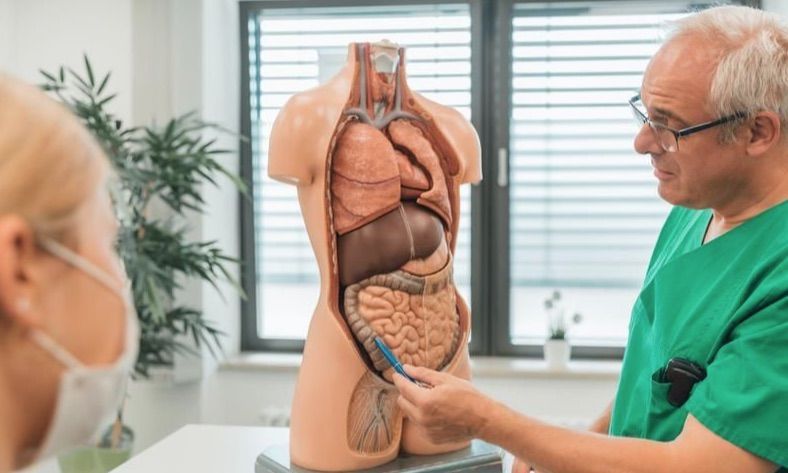
It looks a bit like a button on the skin: the hernia. The Greek word “ernos,” meaning “bud,” aptly describes the appearance of a hernia—the ancient Greeks certainly knew what they were doing. The Latin origin of the word is “hernia,” which better describes its nature—since that means “rupture” in German.
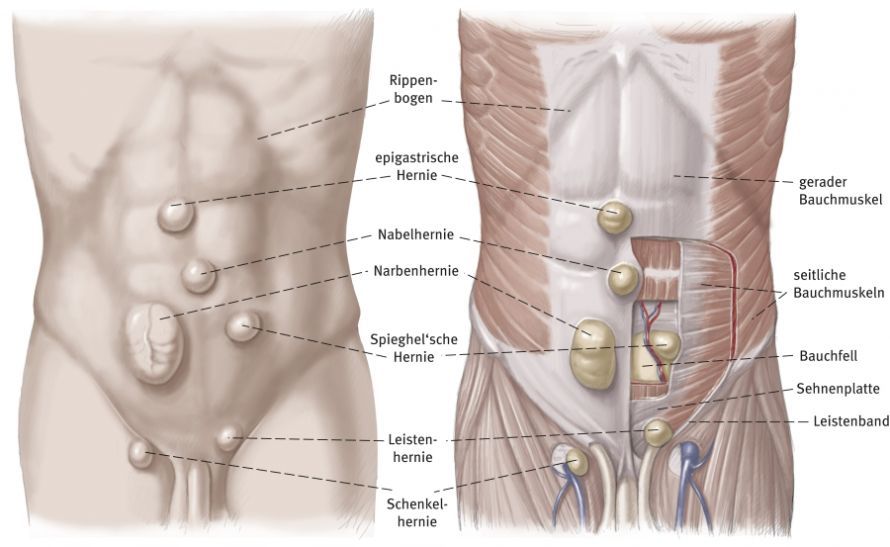
A hernia is the protrusion of internal organs from the abdominal cavity. That sounds more dramatic than it is, since the herniated tissue is simply pushed outward and is enclosed by layers of skin and tissue. For example, if you notice someone on the beach with an unusually shaped belly button, you’ve probably seen an abdominal hernia. There are various types of hernias—abdominal wall hernias, inguinal hernias, incisional hernias, diaphragmatic hernias, and umbilical hernias.
Women are often affected by umbilical hernias after pregnancy, as there is continuous pressure on the navel during pregnancy.
Does a hernia actually hurt?
“Hernias don’t necessarily cause discomfort. Often, they start out as soft swellings that can sometimes be easily pushed back into place by the person affected,” explains visceral surgeon and hernia specialist Dr. Volker Fackeldey. A hernia usually becomes noticeable when coughing, climbing stairs, or carrying heavy objects.
But how does a hernia actually develop? “Hernias are ultimately the visible result of severe weakness in the connective tissue. There are weak spots in the body—in men, for example, in the groin area, where the spermatic cord is located, which is why men are more prone to inguinal hernias than women,” explains Dr. Fackeldey. “Our connective tissue is made up of collagen. You have to imagine connective tissue as a mesh structure: People with fewer cross-strands in this mesh have weaker connective tissue than those with many cross-strands. If the weaker connective tissue is then subjected to too much strain, it can tear. And that is exactly what happens when a hernia forms.”
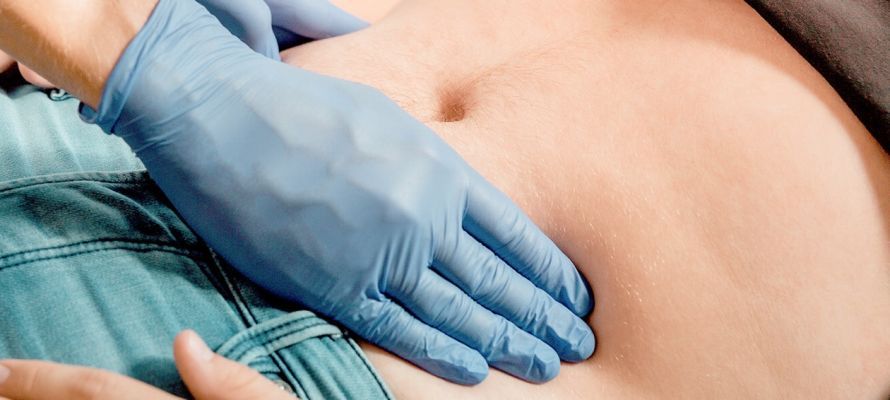
“There’s no ‘red alert’ when it comes to hernias—unless parts of the intestines are trapped. In that case, however, surgery must be performed immediately. If there are no symptoms, surgery can be planned well in advance. I often have patients who come to see me in March, for example, but who aren’t operated on until October,” explains Dr. Fackeldey. Factors such as coughing, obesity, wound infection, diabetes, and emergency surgeries increase the risk of developing an incisional hernia. Hernias also develop in 10 to 15 percent of cases a few months after abdominal surgery, such as bowel surgery.
There are also congenital abdominal wall hernias. However, the causes are most often chronic constipation, malnutrition, and the constant lifting of heavy loads.
Sophisticated Surgical Techniques
At the Mainfranken Hernia Center in the idyllic Kitzinger Land region, patients have access to state-of-the-art laparoscopic surgery using 3D technology. In this innovative “keyhole technique,” an endoscopic instrument equipped with a light source and camera is inserted into the abdominal cavity. During these extremely minimally invasive procedures, tiny tissue samples can be taken, and even surgeries can be performed this way. The result: tiny, barely visible scars.
With over 350,000 surgeries performed in Germany, hernias rank among the most common surgical indications in purely quantitative terms. (Source: Ärzteblatt)
“We use a variety of techniques. In the case of an abdominal wall hernia, we can perform the procedure with or without a mesh,” reports Dr. Fackeldey, who prefers to use a mesh made of biocompatible PVDF. This is a biologically more compatible plastic than the polypropylene that is otherwise often used.
In the past, abdominal wall hernias were simply sutured closed: “The surgical site is stabilized, the hernia is pulled back into the body, and a synthetic mesh is inserted. Typically, the synthetic meshes measure seventeen by twelve centimeters; they remain in the body and gradually fuse with the tissue,” explains hernia specialist Dr. Fackeldey. The duration of the surgery always depends on the type and size of the hernia.
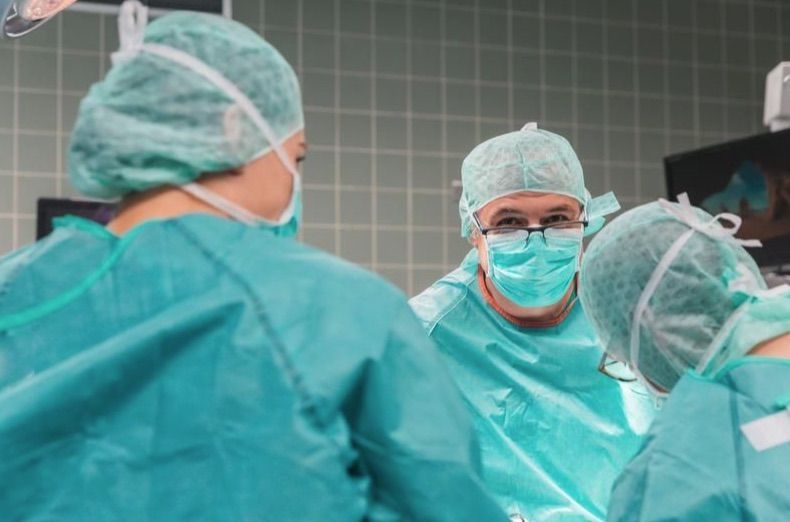
“For abdominal wall hernias, I generally use meshes measuring thirty by twenty centimeters, and in these cases the surgery can take as long as three or four hours, since the surgical area is larger,” says Dr. Fackeldey. However, patients can rest assured that even with an abdominal wall hernia, they can leave the hospital after just five to ten days and expect a recovery period of four to six weeks. Inguinal hernias can even be treated on an outpatient basis. The patient only needs to take it easy for two or three weeks; as a rule, they’ll then be able to resume full physical activity. Of course, people who do physically demanding work may need a slightly longer recovery period if necessary.
The Crux of Reflux
If there is a weakness in the connective tissue between the esophagus and the diaphragm, a gap forms, weakening the sphincter function at the entrance to the stomach and often causing the very unpleasant sensation of heartburn. The unintended backflow of fluids or food residue is also a symptom of what is known as reflux disease, which is often caused by a hiatal hernia.
“A hiatal hernia is an anatomical condition,” explains Dr. Volker Fackeldey, “and reflux occurs when the lower esophageal sphincter no longer functions properly. In some cases, the stomach can even migrate into the chest cavity. Heartburn can be treated with acid-blocking medications, while a hiatal hernia is treated using a keyhole technique in a one- to two-hour surgery. The goal here is to repair the sphincter mechanism.”
As with all surgeries, Dr. Fackeldey follows the so-called “tailored approach”—that is, a customized approach for each individual patient. “This is the only way we can achieve our numerous surgical successes,” explains the hernia specialist, who comes from a family of doctors and grew up in the beautiful Rhineland. “At Kitzingen Hospital, I enjoy the fantastic collaboration with my team and the excellent facilities equipped with state-of-the-art technology,” Dr. Fackeldey concludes happily. It is no coincidence that the Hernia Center has been a sought-after training center for hernia surgery throughout the German-speaking world since 2010.
Would you like to learn more about Prof. Fackeldey’s range of medical services at the Mainfranken Hernia Center? Visit his expert profile to contact him directly!
Share this article
About the medical author
Alexandra Pfitzmann
Editor
Alexandra Pfitzmann – medical author: expert knowledge, professional articles and medical insights in the Leading Medicine Guide.
More about the medical author →Kitzinger Land Clinic
ProfileExpert Interviews
Read next
- Expert interview
Cardiogeriatrics: Significance and benefits in the context of hospital reform
Sep 21, 2026
Cardiogeriatrics: Significance and benefits in the context of hospital reform
Read more - Expert interview
Expert Interview with Professor Dr. Amadeus Hornemann, MPH
Sep 18, 2026
Prof. Amadeus Hornemann on Precision Medicine in Gynecology: Modern Surgery, New Techniques, Better Quality of Life
Read more - Expert interview
Expert Interview with Professor Dr. Konstantinos Anagnostakos
Sep 15, 2026
Prof. Anagnostakos on Painful Knee Replacements
Read more