News
Why Many Women Underestimate Early Symptoms for a Long Time

Melanie Al Tikriti, BSc · September 15, 2026
A feeling of pressure in the pelvis, the sensation that “something is pulling downward,” or discomfort when walking or lifting—many women are familiar with these symptoms but are reluctant to talk about them. These symptoms are often attributed to pregnancy, aging, or menopause. But behind these signs may lie a uterine prolapse. It is one of the most common pelvic floor disorders and can significantly impair quality of life.
The good news is that uterine prolapse can be successfully treated in many cases today—whether through pelvic floor exercises, pessary therapy, or minimally invasive surgical procedures. However, it is important to take these symptoms seriously early on and have them evaluated by a doctor. The earlier a prolapse is detected, the greater the chances of alleviating symptoms and preventing the condition from progressing.
What is uterine prolapse?
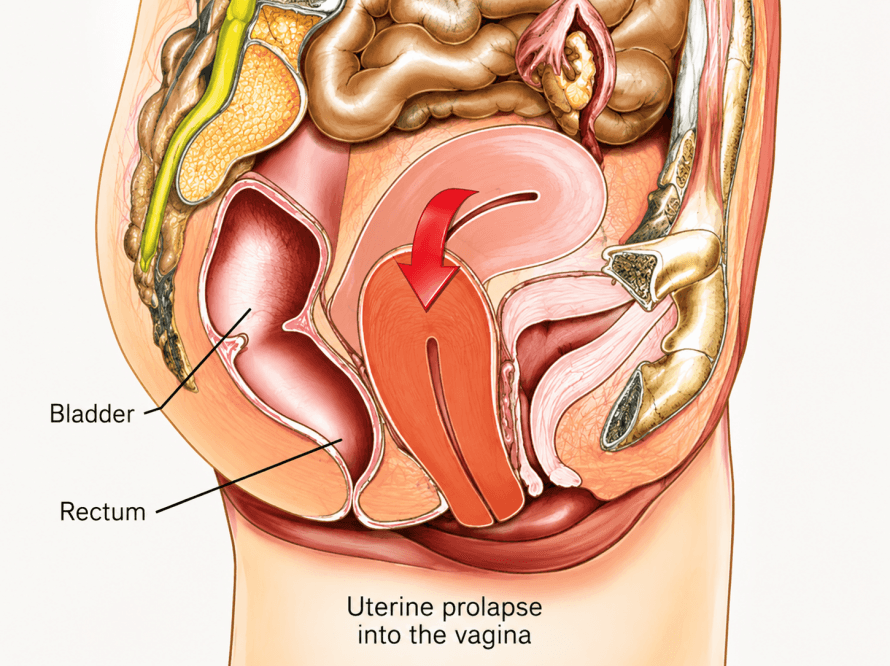
The uterus is normally held in its natural position by the muscles, ligaments, and connective tissue of the pelvic floor. However, if these supporting structures weaken, the uterus can slowly descend. This condition is referred to as uterine prolapse. In severe cases, the uterus may even protrude completely from the vaginal opening. Often, not only the uterus but also the bladder or rectum are affected. As a result, difficulties with urination or bowel movements are not uncommon.
Uterine prolapse usually develops gradually over many years. Symptoms often worsen with physical exertion.
What factors contribute to uterine prolapse?
Uterine prolapse is usually caused by a combination of factors. Very often, the pelvic floor is put under significant strain by pregnancies and vaginal births. However, hormonal changes during menopause also play an important role, as the tissue loses elasticity.
The most important risk factors include:
- Pregnancies and vaginal births
- advancing age
- Menopause
- Congenital connective tissue weakness
- Being overweight
- Chronic cough
- Frequent heavy lifting
- Chronic constipation
What are the typical symptoms?
Symptoms vary depending on the severity of the prolapse. Mild cases cause few symptoms, while advanced prolapses significantly limit daily activities.
Those affected often report:
- A feeling of pressure or a foreign body in the vagina
- Lower back pain
- Discomfort when walking or standing for long periods
- Difficulty urinating
- Recurrent urinary tract infections
- Involuntary urine leakage
- Difficulty with bowel movements
- Pain during sexual intercourse
How is the diagnosis made?
The diagnosis can usually be made during a gynecological exam. During the exam, the doctor assesses the position of the uterus as well as any possible prolapse of the bladder or rectum. The patient is often asked to cough or strain so that the doctor can better assess the stress on the pelvic floor.
Ultrasound exams or specialized bladder function tests may also be used, especially if the patient experiences additional symptoms when urinating.
What treatment options are available?
Not every case of uterine prolapse requires immediate surgery. For mild symptoms, conservative treatment options are the first line of defense. Targeted pelvic floor physical therapy can strengthen the muscles and significantly alleviate symptoms. Pessaries are often used as a supportive measure. These are small silicone devices that are inserted into the vagina to support the uterus.
If these measures are no longer sufficient or if there is severe prolapse, surgery may be advisable. The goal of the procedure is to restore the normal anatomy of the pelvic floor and permanently stabilize the organs.
What modern surgical procedures are available?
In many cases, the procedure is performed through the vagina, so no visible abdominal incisions are required. During the procedure, weakened ligaments and pelvic floor tissue are tightened and stabilized. For women who wish to preserve their uterus, uterus-preserving surgical techniques are used.
Alternatively, the uterus can be repositioned in its original position using special ligaments or meshes. In many cases, this is done using a minimally invasive laparoscopic approach. This method is often associated with smaller incisions, less pain, and a faster recovery.
Can uterine prolapse be prevented?
Not all causes can be prevented, but a well-trained pelvic floor can significantly reduce the risk. Regular pelvic floor exercises—especially after pregnancy—are considered one of the most important preventive measures.
Maintaining a healthy weight, getting enough exercise, and avoiding prolonged heavy lifting also help relieve pressure on the pelvic floor.
Conclusion: Early treatment can significantly alleviate symptoms
Uterine prolapse is a common condition that many women are reluctant to discuss. Yet numerous effective treatment options are available today. Depending on the severity, pelvic floor exercises, pessaries, or modern surgical procedures can significantly alleviate symptoms and improve quality of life. Anyone who notices a persistent feeling of pressure in the pelvis, problems with urination, or a sensation of prolapse should have these symptoms evaluated by a gynecologist as soon as possible. A timely diagnosis offers the best chance for personalized and successful treatment.
Share this article
About the medical author
Melanie Al Tikriti, BSc
Editor
Melanie Al-Tikriti, BSc – author: Explore expert medical articles in the Leading Medicine Guide.
More about the medical author →Verified expertise
Recommended specialists
6 specialists
6 results

Ass. Prof. Dr. Resmiye Ermis
Frankfurt am Main


University Hospital, Tubingen
Tuebingen


Prof. Dr. med. Amadeus Hornemann
Frankfurt am Main


Prof. Mag. Dr. med. Andreas Widschwendter
Senior Surgical Gynaecology Consultant Private Practice
Innsbruck

News
Read next
- News
Heel Spurs: Why Every Step Can Be a Strain
Sep 11, 2026
Heel Spurs: Why Every Step Can Be a Strain
Read more - News
Endometriosis: Why Period Pain Isn't Always Normal
Sep 9, 2026
Endometriosis: Severe symptoms may indicate a chronic condition
Read more