Sports orthopedics deals with the effects of sports on the musculoskeletal system. On the one hand, this includes the positive effects that sports and strength training have on bones, joints, muscles, and ligaments. On the other hand, however, sports orthopedics also addresses common sports injuries. The focus here is on treating injuries and rehabilitating athletes and recreational sports participants. In addition, sports orthopedists conduct research on how to prevent sports injuries.
What is sports orthopedics?
Sports orthopedics is a branch of sports medicine and orthopedics, both of which are part of human medicine. In both fields, sports orthopedics does not have clearly defined boundaries and is not considered a separate, independent field.
The scope of practice for sports orthopedists is diverse:
- Diagnosis and treatment of sports injuries and degenerative conditions
- Prevention
- Care for elite athletes and ambitious amateurs
The scope of practice for sports orthopedists
It doesn’t always have to be a broken bone, a meniscus tear, or a torn cruciate ligament: Tense muscles in the shoulders and neck, contusions, tennis elbow, or sprains also fall within the scope of sports orthopedics.
While sports orthopedics often deals with large joints such as the shoulder, knee, ankle, or elbow,
However, it’s not just about bones and joints—it also involves tendons, muscles, and ligaments.
In Germany, the most common sports injuries occur in soccer, but orthopedists also treat injuries from jogging, tennis, and other ball sports.
This is because certain sports often lead to specific injuries and ailments:
- Soccer: Knee and ankle injuries caused by twists and contusions
- Jogging: Runner’s knee and ankle injuries
- Cyclists: Back pain and neck pain
- Skiing: Bruises, fractures, “skier’s thumb”
- Tennis: tennis elbow, tendonitis, knee and ankle injuries
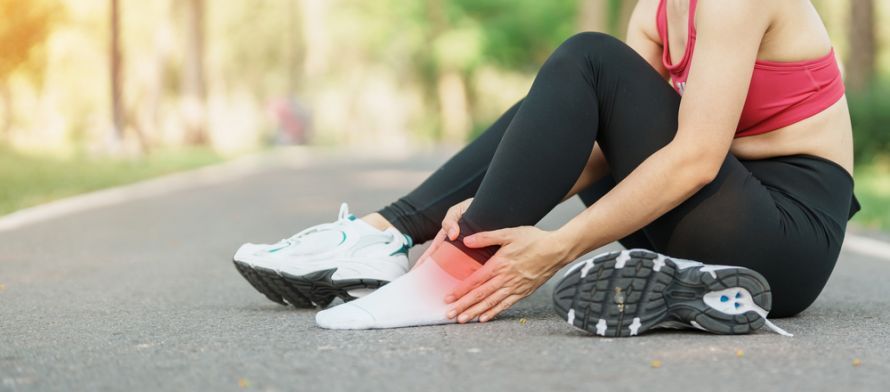 An ankle injury often occurs when joggers twist their ankle while running @ Jo Panuwat D /AdobeStock
The Range of Therapeutic Services in Sports Orthopedics
The treatments are just as diverse as the injuries and conditions that orthopedic surgeons treat. The RICE rule has become established as an effective first-aid measure:
- Rest
- Ice
- Compression, and
- Elevation
These measures help minimize damage in cases of muscle and joint injuries. Sports orthopedists also treat patients with pain-relieving medications in the form of ointments, injections, or tablets.
Occasionally, other medications are also used, such as in the context of infiltration therapy. Through injection therapy, sports orthopedists support the regeneration and healing of muscles or cartilage.
Chronic symptoms can often be alleviated through physical therapy or therapeutic exercise. These therapeutic methods are also frequently part of the rehabilitation program following surgery.
This is because they help restore joint and muscle mobility and gradually increase the level of physical activity in a controlled manner. Kinesiology taping and shockwave therapy are also standard parts of an orthopedic surgeon’s “toolkit” and help with mild to moderate symptoms.
In cases of severe injuries, however, surgical treatment is often the only option. Joints are increasingly treated arthroscopically—that is, diagnosed and treated using an endoscope.
With this minimally invasive approach, doctors avoid completely opening the joint, thereby treating the patient in a much gentler manner.
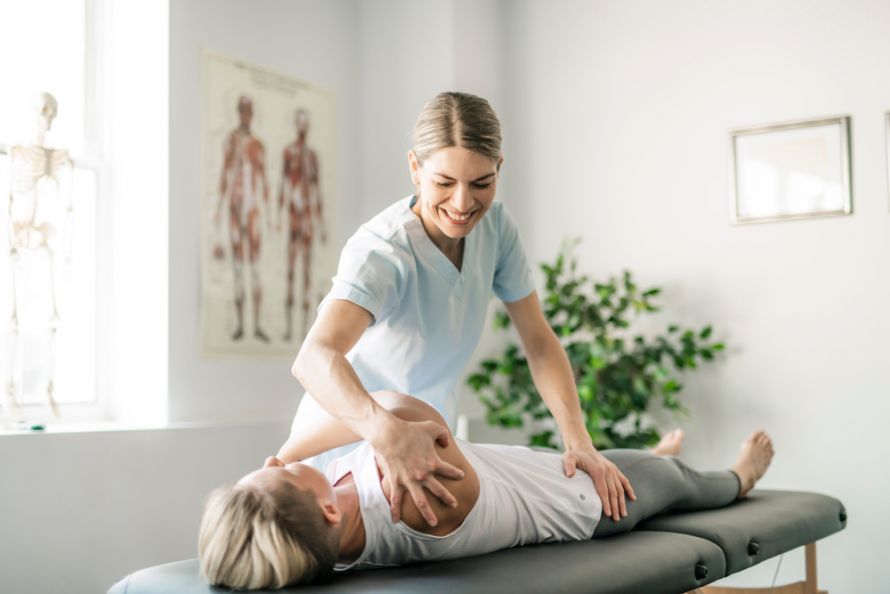 Orthopedic treatments for acute to chronic pain are an essential part of physical therapy practice @ Louis-Photo /AdobeStock
Diagnostic Options in Sports Orthopedics
As in any medical field, diagnosis in sports orthopedics begins with a detailed medical history interview. This is because two pieces of information are crucial for the subsequent examination:
- how the injury occurred and
- what symptoms the patient is experiencing
Occasionally, palpation and movement of the affected area are sufficient for a further diagnosis. To confirm a diagnosis of more severe injuries or conditions, the physician also needs imaging tests for support.
A sports orthopedist uses X-rays to diagnose bone fractures and a bone scan to analyze bone density.
Computed tomography (CT) and magnetic resonance imaging (MRI) are indispensable in sports orthopedics. MRI, in particular, allows for very precise external diagnosis of ligaments, tendons, menisci, or muscles.
In many cases, it is the diagnostic tool of choice because it provides detailed images. The only drawback: In the case of a fresh injury with severe swelling, it is not sufficiently informative.
CT is helpful in diagnosing bone injuries or damage to soft tissue.
Orthopedic surgeons are increasingly turning to ultrasound in cases of acute injury. It allows them to assess the severity of muscle and ligament injuries.
A major advantage is the dynamic examination, which allows the orthopedic surgeon to assess the function of injured ligaments. Because this enables a significantly better assessment of further treatment, more and more sports medicine specialists are rediscovering ultrasound.
For runners or athletes with foot problems, computer-assisted foot pressure measurement opens up new diagnostic possibilities. With a device like the Pedoscan, the doctor can identify exactly where problems and imbalances lie.
This allows them to recommend targeted orthotic solutions or surgical interventions. And virtually every runner is familiar with treadmill analysis, which can be used to analyze running style and foot misalignments.
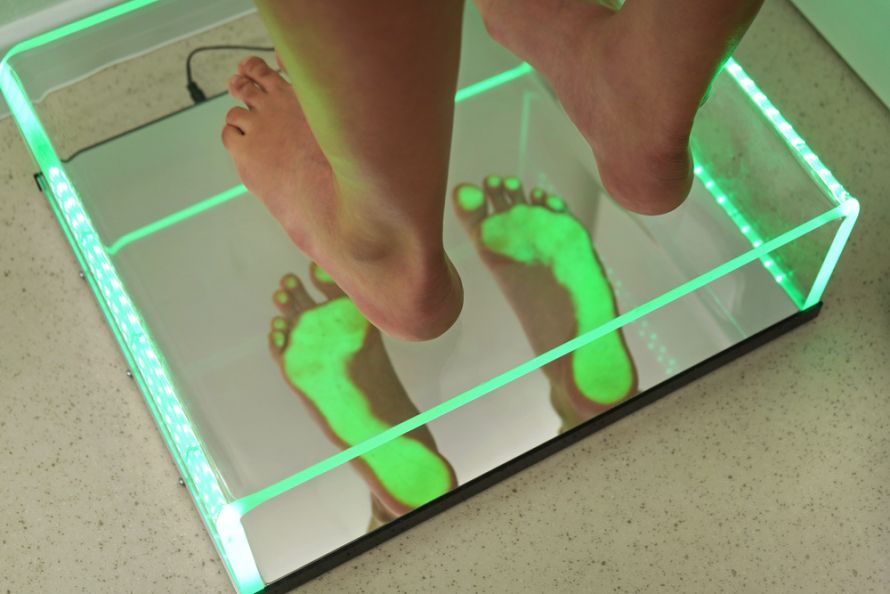 Electronic foot pressure measurement reveals orthopedic problems in the feet and helps specialists make a diagnosis @ Lubo Ivanko /AdobeStock
Sports Orthopedics Specialists: Where Can Patients Find Competent Specialists?
Sports orthopedists are highly specialized and, in larger cities, often join forces with colleagues in group practices or centers.
More often than not, sports orthopedics is a subspecialty within orthopedic practices because an orthopedist has completed additional training in this area.
This makes sense because orthopedists in private practices frequently diagnose and treat sports injuries. In-depth knowledge is valuable in their day-to-day work.
To be allowed to call oneself a sports orthopedist, two steps are necessary.
- First, one must complete training as a board-certified orthopedic surgeon
- Then comes an additional specialization
The extent of this specialization depends on the professional association that administers it.
At the German Society for Sports and Prevention, aspiring sports medicine specialists must complete approximately 240 hours of continuing education through courses.
In addition, they must provide sports medical support to a sports club for 120 hours. Furthermore, physicians can specialize even further.
To earn a certificate as a GOTS sports medicine physician, four two-day modules and a passed exam are required in addition to practice in sports orthopedics.
If patients are looking for experts in sports medicine, completed continuing education programs and certifications are a good indicator.
Sports orthopedists often do not work in isolation but instead collaborate with experts from other fields. In sports medicine centers, doctors can then advise and treat athletes from various perspectives.
They offer a valuable combination of expert knowledge, particularly for elite athletes and recreational athletes with chronic conditions.
Sports orthopedists also work in hospitals and clinics. Sports orthopedics is particularly well-established in university hospitals.
Here you’ll find specialists who are often deeply knowledgeable about the subject and up to date on the latest developments. This is because they conduct research in their field, carry out studies, and engage in intensive exchanges with colleagues.
Of course, a large part of their work also involves the surgical treatment of sports injuries.

About the medical author
Prof. Karl-Heinz Frosch
Medical Editor · Director of the Clinic and Polyclinic for Trauma, Hand and ReconstructiveSurgery · Hamburg
Prof. Dr. med. Karl Heinz Frosch – medical author: Explore expert articles and medical expertise in the Leading Medicine Guide.
More about the medical author →Sources
- https://www.dgu-online.de/fileadmin/published_content/2.Aktuelles/News/Textdateien/2020/OUMN_04_2020_Primaerpraevention_von_Sportverletzungen.pdf
- https://www.gots.org
- https://www.zeitschrift-sportmedizin.de/sonographie-bei-sportverletzungen-ersatzbank-oder-unterschaetzter-veteran/