Endarterectomy is one of the classic surgical procedures in vascular surgery and is performed when an artery is so severely narrowed or blocked by deposits that adequate blood flow can no longer be maintained. The procedure is frequently used to treat peripheral arterial disease (PAD), as well as conditions affecting the carotid artery or the leg arteries. The goal of the treatment is to remove atherosclerotic deposits from the vessel and restore blood flow. This can prevent serious complications such as amputations, strokes, or chronic circulatory disorders. In specialized clinics, such as the Vascular Center in Bremen, endarterectomy is one of the established treatments.
Surgical Treatment: What Is an Endarterectomy?
Endarterectomy—also known as thrombendarterectomy (TEA)—is a surgical procedure used in vascular surgery. It involves removing atherosclerotic deposits from a narrowed blood vessel. The affected narrowed vessel is opened, cleared of deposits, and then reconstructed. Endarterectomy improves blood flow and allows for targeted treatment of circulatory disorders, such as peripheral arterial disease (PAD).
The method is particularly suitable for vessels that are locally narrowed or occluded. This frequently affects the femoral artery (femoral TEA), the carotid artery (carotid TEA), or vessels in the extremities. If necessary, a patient’s own vein or a synthetic prosthesis is used as a graft.
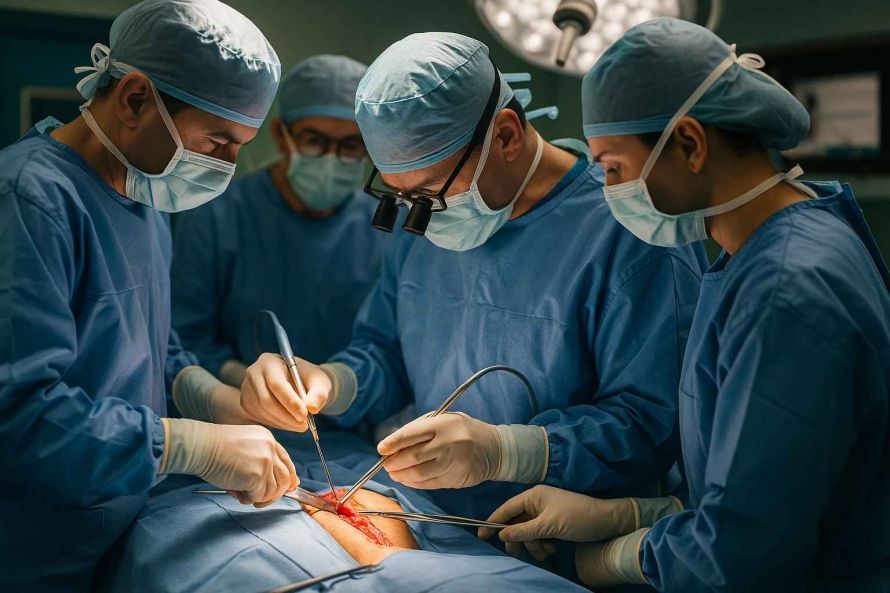
Surgical treatment of an arterial narrowing in the leg arteries—a typical scenario for endarterectomy (TEA).
Arterial Circulatory Disorders: When Endarterectomy Is Necessary
Endarterectomy is performed when an arterial circulatory disorder is caused by a significantly narrowed or occluded artery. Typical indications:
- Peripheral arterial occlusive disease (PAOD)
- Intermittent claudication with a painfully limited walking distance
- Occlusion or narrowing of the carotid artery for stroke prevention
- Arterial narrowings in the extremities
- Severe plaque buildup in the femoral artery
- Occlusions that do not improve sufficiently with walking therapy, medication, or minimally invasive procedures
Endarterectomy may also be necessary in cases of diabetic peripheral artery disease to prevent amputations. The procedure is particularly appropriate when a narrowing is clearly defined and easily accessible surgically.
Surgery: Procedure for endarterectomy in a blood vessel
The surgery is typically performed under regional anesthesia or general anesthesia. The blood vessel is surgically exposed and opened. The vascular surgeon then removes the atherosclerotic deposits using specialized metal instruments such as a dissector or ring stripper. The vessel is debrided so that the inner vessel wall is cleared and blood flow can proceed unimpeded.
If necessary, the vessel is widened using a patch made from the patient’s own vein or synthetic material, or bypassed using a graft. In some cases, a stent is also inserted, or the vessel is dilated using a balloon.
Endarterectomy is one of the classic procedures in vascular surgery and is a central treatment method in the field.
Risks Associated with Procedures on Arteries and Limbs
Like any surgical procedure, endarterectomy carries potential risks:
- Postoperative bleeding or bruising
- Infections
- Blood clot formation
- Complications due to narrowing or restenosis
- Injury to the vessel wall or adjacent structures
- Rare risks: stroke (during carotid artery procedures), vascular occlusion, or amputation
Choosing an experienced vascular center significantly reduces the risk.
Prognosis after surgical endarterectomy
Endarterectomy yields very good results for locally confined vascular narrowings. It improves blood flow, alleviates symptoms, and significantly increases walking distance. In cases of peripheral arterial disease (PAD), the progression of the disease can be slowed, especially if patients consistently manage risk factors such as smoking, high blood pressure, or diabetes mellitus.
Regular follow-up visits at the clinic and supplemental walking training improve long-term outcomes. The prognosis is particularly good when the narrowing can be completely removed and the treatment is combined with statins and other measures.
Alternatives to Surgical Treatment
Depending on the severity and location, the following alternatives may be considered:
- Minimally invasive balloon dilation (balloon expanded)
- Vascular support via stent (stent placement)
- Bypass surgery to bypass long narrowings
- Interventional procedures for narrowed blood vessels
- Drug therapy (e.g., statins)
- Structured walking training to improve walking distance
Each treatment option is evaluated on a case-by-case basis, depending on the patient’s vascular condition and overall health.
Additional treatment options for arterial narrowing
Additional treatment options include:
- Modern interventional techniques
- Combination procedures
- Treatment for diabetic foot problems
- Rehabilitation with walking training
- Treatment at the Bremen Vascular Center or specialized clinics
Endarterectomy is part of a comprehensive treatment plan that provides long-term stabilization for conditions such as atherosclerosis, circulatory disorders, or narrowings, depending on the specific condition.
Conclusion
Endarterectomy is an effective surgical procedure for treating arterial circulatory disorders. It allows for the removal of plaque, improves blood flow, and can prevent serious complications such as amputations or strokes. In experienced centers, the procedure has a high success rate and represents an important treatment option for PAD and other vascular diseases.
FAQ – Frequently Asked Questions About Endarterectomy
What is endarterectomy, and how is it performed?
Endarterectomy is a surgical procedure in which deposits or calcified sections of the artery are removed to keep the affected blood vessel open. During the procedure, the narrowed vessel is opened, the tissue is scraped away using special instruments, and blood flow is improved. This method is one of the classic procedures in the A-Z vascular lexicon and is primarily used to treat PAD, also known as “intermittent claudication.”
When is endarterectomy a better option than a bypass?
Endarterectomy is the preferred treatment when the narrowing is clearly defined and the artery is not extensively occluded or severely calcified. If a longer segment of the vessel is affected, a bypass may be more appropriate—either using a vein from the patient’s own body or a synthetic graft. The specialist determines which option is suitable based on imaging and the condition of the vessel.
What are the risks associated with endarterectomy?
As with any vascular surgery, complications are possible. These include blood clots, postoperative bleeding, infections, or restenosis. If too much of the artery is removed or the tissue is severely damaged, additional implantation of a patch or a bypass may be necessary. Disturbances in blood flow in the surrounding blood vessels are also possible, but occur rarely.
Does endarterectomy help with peripheral arterial disease (PAD)?
Yes, endarterectomy is an established procedure for treating peripheral arterial disease. Removing the plaque improves blood flow, which can increase walking distance and reduce pain. In addition, specialists recommend walking exercises, statins, and eliminating risk factors such as smoking or high blood pressure.
What happens if the artery is severely calcified or the vessel is too narrow?
If the narrowed vessel is severely calcified or cannot be completely debrided, a stent may also be inserted to keep the vessel open. Alternatively, the affected section can be bypassed. The decision depends on how much of the artery needs to be removed and how stable the vessel wall is after the procedure.
How long do the results of endarterectomy last?
The duration of the results depends on the overall condition of the blood vessels, risk factors, and follow-up care. Many patients benefit in the long term if they reduce risk factors, take their medications, and attend regular follow-up appointments. Consistent walking exercise also supports long-term success.

About the medical author
Sabine Schneider
Editor-in-Chief
Sabine Schneider – medical author: Explore expert articles and medical expertise in the Leading Medicine Guide.
More about the medical author →