A striking face with high cheekbones is considered the ideal of beauty worldwide. Well-defined cheekbones often convey a dynamic impression of youthfulness and attractiveness. However, not everyone is naturally blessed with these contours. A less pronounced zygomatic structure can make the face appear flat, bland, weak, or tired. The natural aging process also causes the tissue in the midface to sag. This is where modern plastic surgery comes in: A zygomatic bone correction (or cheekbone correction) can accentuate the cheekbones, improve the facial profile, and restore lost volume through cheek augmentation.
Aesthetically Defined Cheeks: Why Choose a Cheekbone Correction?
The zygomatic bone (Os zygomaticum) forms the widest part of the face and plays a key role in defining the facial contour. Well-defined and high cheekbones create light reflections that make the face appear smoother and fresher. They convey a sense of vitality. If this structure is missing—whether due to congenital factors or aging—the face often appears shapeless. The desire to project an image of youthfulness and confidence drives many patients to seek treatment at a cosmetic clinic. An experienced specialist will first conduct a personalized consultation to determine whether cheekbone augmentation through volume enhancement or structural modification is necessary.
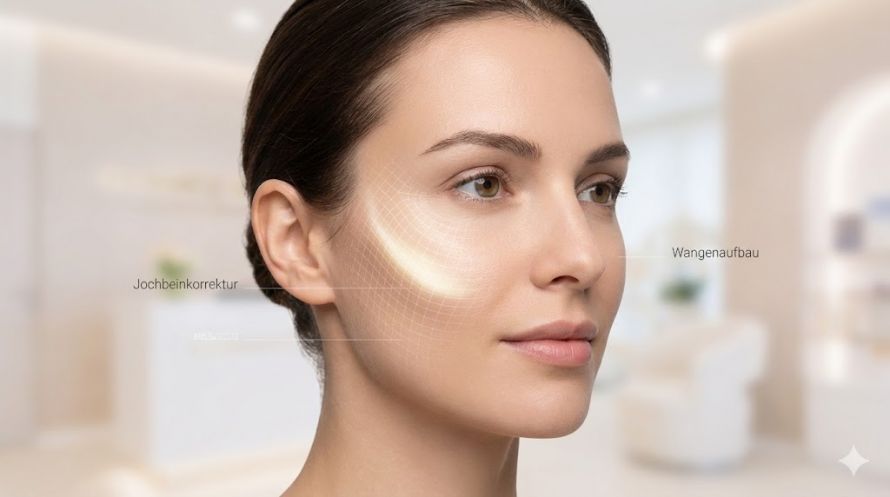
A zygomatic correction using implants or fillers can define the midface and give the facial profile a more youthful appearance.
Treatments for cheekbone contouring: hyaluronic acid and autologous fat
Those who are hesitant about surgery and general anesthesia often opt for non-surgical methods.
- Hyaluronic acid (filler): Injections of cross-linked hyaluronic acid are the most common method for cheek augmentation. The gel is injected deep into the bone or tissue. The advantage: The treatment is performed on an outpatient basis, often under local anesthesia alone. Since hyaluronic acid is biodegradable, the results are not permanent, but can be partially reversed if the patient is dissatisfied.
- Autologous Fat: Injections of autologous fat (lipofilling) offer a very natural-looking result. The fat is first harvested via liposuction from another area of the body. Since it is the body’s own tissue, there are virtually no compatibility issues. However, these autologous fat transfers require a minor surgical procedure to harvest the fat.
Cheekbone Reshaping and Implants
Surgery may be necessary to achieve a permanent, natural, and long-lasting result.
- Cheekbone implants: To permanently enlarge or reduce the size of the cheekbones, doctors insert implants made of silicone or porous plastic. Access is usually gained through an incision in the oral cavity, so that no external scars remain visible on the face. The implant is fixed directly to the zygomatic bone.
- Osteotomy: In rare cases, such as after accidents or in cases of extreme asymmetry, the oral and maxillofacial surgeon must cut through the bone and reposition it (osteotomy of the zygomatic bone).
The correction is often combined with other procedures, such as a facelift, lower eyelid lift, or corrections to the chin and lower eyelid, to holistically optimize the facial profile.
Complications and Healing Process
Like any procedure, zygomatic correction carries risks. After an injection, mild swelling and bruising are normal but subside quickly. With implantation under general anesthesia, the healing process takes longer. Swelling in the cheek area can last several weeks. Rare complications include implant displacement, infections, or damage to the nerves that control sensation in the cheek. Since this is typically a purely cosmetic procedure, health insurance generally does not cover the costs.
Conclusion
Whether using hyaluronic acid, autologous fat, or implants, cheek augmentation and cheekbone correction are effective ways to give the face more character. A detailed treatment plan developed by board-certified plastic surgeons is essential to achieving a result that looks natural and harmonious, rather than artificial.
FAQ: Frequently Asked Questions About Cheekbone Correction
How long do hyaluronic acid injections last?
The results of hyaluronic acid injections in the cheek area typically last 12 to 18 months, as the material is slowly absorbed by the body.
Are there visible scars after a cheekbone surgery?
No, generally not. The surgeon makes the incision inside the mouth (intraorally) or uses the access route from a simultaneous lower eyelid lift, thereby avoiding external scars.
How much does a cheekbone correction cost?
This varies greatly. Injectable treatments often start at a few hundred euros, while surgical zygomatic augmentation with implants and anesthesia can cost several thousand euros. Health insurance only covers the procedure if it is medically necessary (e.g., following an accident).
Is it possible to reduce the size of the cheekbones?
Yes. If the cheekbone is too prominent and makes the face appear too wide, the bone can be shaved down laterally or repositioned (reshaping). However, this is a more complex surgical procedure involving the bone.