News
Bursitis: A Minor Cause, Severe Pain

Melanie Al Tikriti, BSc ·
Even small movements can suddenly become a challenge.
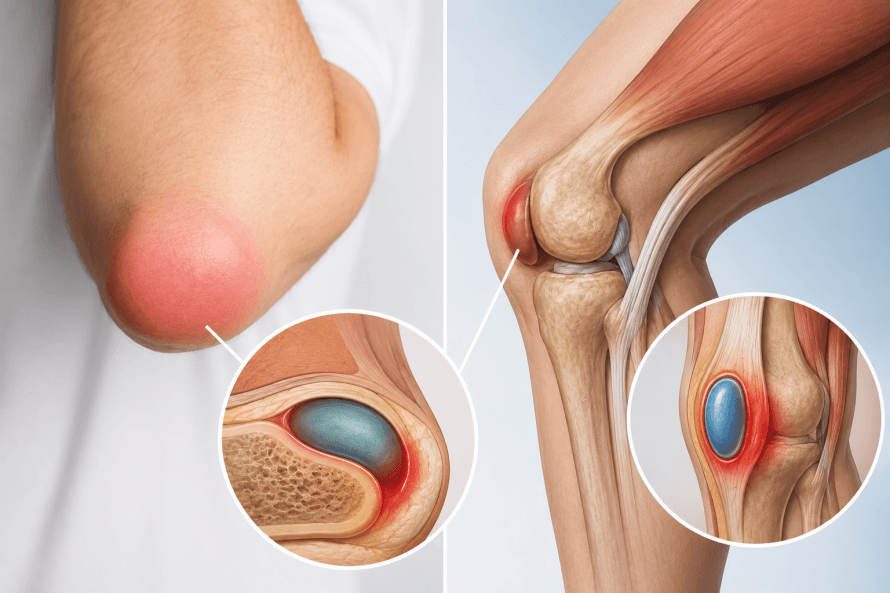
Pain in the shoulder, elbow, or knee is often initially attributed to overuse or normal wear and tear. However, bursitis may also be the underlying cause. These small, fluid-filled bursae act as natural shock absorbers and ensure that muscles, tendons, and bones glide smoothly past one another. If they become inflamed, even everyday movements can cause severe discomfort.
Bursitis can occur suddenly or develop over several days. In most cases, however, it heals completely with the right treatment. It is important, however, to identify the cause of the inflammation and to avoid putting continued strain on the affected joint.
Why Bursae Become Inflamed
There are more than 150 bursae in the human body, located wherever muscles, tendons, or skin are subjected to particularly heavy strain. Especially in the shoulders, elbows, hips, knees, and heels, they prevent tissues from rubbing against each other with every movement.
If these small “cushions” are subjected to stress or irritation over an extended period, they respond with inflammation. This causes fluid to accumulate in the bursa, leading to swelling and pain. As a result, the range of motion in the affected joint is often noticeably restricted.
Chronic strain is often the trigger
Bursitis often results not from a single incident but from recurring strain. Occupational activities or sports involving repetitive movements significantly increase the risk.
The most common causes include:
- repeated overhead movements
- prolonged kneeling or frequent leaning on one’s knees
- intense physical exertion
- bruises or injuries
- Improper loading of the joints
- rheumatic diseases
- Gout
- Bacterial infections
It is not uncommon for several factors to occur simultaneously. Poor posture or weakened muscles can also contribute to the development of bursitis.
These symptoms indicate bursitis
Symptoms depend on which bursa is affected. Initially, pain usually occurs only with certain movements. However, as inflammation worsens, the pain may persist even at rest.
Typical symptoms include:
- sharp or pulling pain
- Pain on pressure over the affected joint
- visible swelling
- Warmth
- skin redness
- Limited range of motion
- Pain when lying on the affected side
If a bacterial infection is also present, fever, chills, and a general feeling of illness may occur. In this case, medical attention should be sought promptly.
The shoulder, knee, and elbow are particularly commonly affected
Bursitis can occur in any joint. However, certain areas of the body are particularly susceptible. It often develops in the shoulder due to repetitive overhead movements or sports-related strain. In the elbow, constant leaning on the joint is a typical cause. In the knee, it frequently occurs in people who kneel a lot for work—such as tile setters, gardeners, or floor installers. Bursitis can also cause severe pain in the hip. This is particularly noticeable when walking, climbing stairs, or lying on the affected side of the body.
How the doctor determines the cause
The description of the symptoms alone provides important clues. The affected joint is then examined for swelling, tenderness, or limited range of motion. In addition, imaging techniques such as ultrasound or magnetic resonance imaging (MRI) may be used. These show whether the bursa is enlarged or inflamed and help rule out other causes of the symptoms.
If bacterial inflammation is suspected, fluid can be drawn from the bursa and analyzed in a laboratory.
Which Treatment Really Helps
Treatment depends on the cause and severity of the inflammation. In many cases, it is sufficient to rest the affected joint for a while and take anti-inflammatory medications. In addition, ice therapy, physical therapy, or targeted exercises can help relieve pain and restore mobility. If symptoms persist, cortisone injections may be considered.
If a bacterial infection is present, antibiotics are prescribed. Surgery is rarely necessary, such as when the inflammation keeps recurring or other treatments are ineffective.
What People with This Condition Can Do Themselves
In daily life, there are several things you can do to support healing and prevent bursitis from recurring.
The following measures, among others, are helpful:
- Temporarily reducing movements that put strain on the joint
- regularly applying cold to the joint
- Avoiding one-sided strain
- Establishing ergonomic work procedures
- Targeted muscle strengthening
- Gradually increase the level of activity
Anyone who repeatedly suffers from bursitis should work with their treating physician to identify possible causes. Often, even small changes in daily life can prevent symptoms from recurring.
Conclusion: With the right treatment, mobility usually returns.
Bursitis can significantly limit daily activities and make even simple movements painful. In most cases, however, it heals without causing permanent damage. It is crucial not to overuse the affected joint and to treat the underlying cause of the symptoms specifically. This can alleviate pain and often prevent recurrent inflammation.
Share this article
Verified expertise
Recommended specialists
12 specialists
12 results

Asst Lect. Dr Ralf Decking
Leverkusen






Dr René Malzkorn
Founder and Practice Proprietor

PD Dr. med. Friedrich Kutscha-Lissberg
Gelsenkirchen






1 / 2
News
Read next
- News
Scabies: A contagious skin disease that is easily treatable
Oct 26, 2026
Severe itching and minor skin changes should be taken seriously
Read more - News
Heat Rash: What's Behind the Itchy Blisters
Oct 23, 2026
Heat Rash: Heat and Sweat Can Disrupt the Skin's Balance
Read more - News
Enlarged Prostate – When Medication Is Sufficient and When Surgery Is Recommended
Oct 21, 2026
Why Many Men Ignore Urinary Problems for Too Long
Read more