News
Hallux valgus: Barely noticeable at first—but later, every step can be painful

Melanie Al Tikriti, BSc · September 21, 2026
At first, many people notice only a slight bulge on the inside of the foot. Over time, however, the position of the big toe changes more and more noticeably. Shoes suddenly feel tight, longer walks become uncomfortable, and even everyday movements can cause pain. These symptoms are often caused by hallux valgus—the most common deformity of the forefoot.
The condition usually develops over many years and primarily affects women. It is not just a cosmetic issue but can also impair the overall stability of the foot. The earlier the initial changes are recognized, the easier it is to alleviate symptoms and slow the progression of the condition.
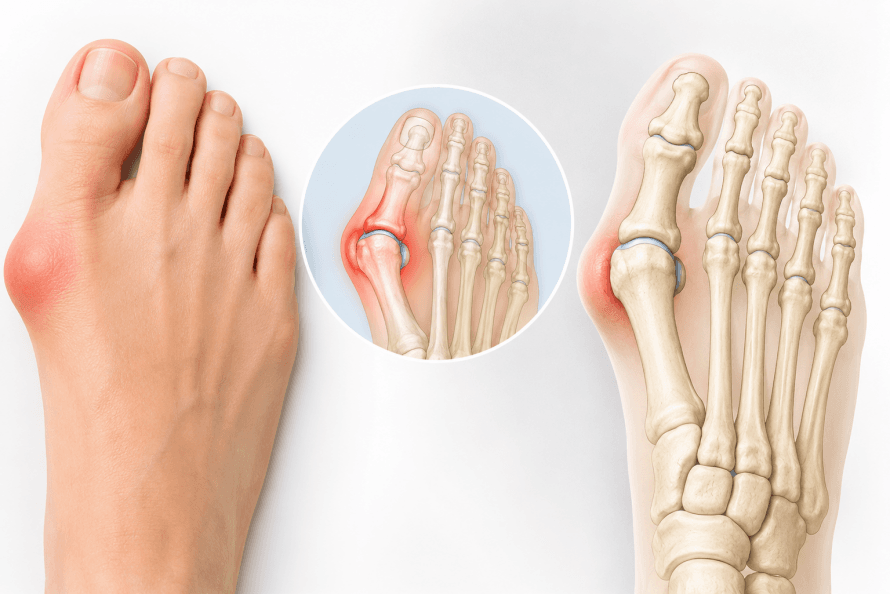
Image generated by AI
What Causes the Deformity
In hallux valgus, the big toe gradually deviates toward the other toes. At the same time, the metatarsophalangeal joint of the big toe protrudes more prominently on the inner side of the foot. This creates the characteristic bony bump that many people with the condition notice. As the deformity progresses, the entire biomechanics of the foot change. Weight can no longer be distributed evenly, which can lead to pressure points, inflammation, and pain. Other toes may also become deformed over time.
Various factors contribute to its development
Hallux valgus usually develops as a result of a combination of factors.
The most common risk factors include:
- genetic predisposition
- weak connective tissue
- spread-out feet
- tight or high-heeled shoes
- being overweight
- rheumatic diseases
- Years of improper weight distribution
Symptoms often develop gradually
At first, hallux valgus often causes few symptoms. Often, only a slight change in the position of the toes is noticed. Over time, however, pain develops.
Typical symptoms include:
- Pain at the base of the big toe
- Pressure points inside the shoe
- Red or swollen skin
- A burning sensation after prolonged activity
- Limited mobility
- Corns
- Difficulty walking
As the deformity progresses, hammertoes or claw toes may also develop, further exacerbating the symptoms.
The entire gait pattern changes
The big toe plays a crucial role in walking. It stabilizes the foot and ensures that body weight is distributed evenly. If its position is altered, other areas of the foot bear a greater load. This can lead to pain in the forefoot, the metatarsals, or even in the knees, hips, and back. Many people unconsciously alter their gait to avoid pain.
How the diagnosis is made
During the examination, the doctor assesses the mobility of the big toe joint as well as the alignment of the entire foot. X-rays show how severe the misalignment already is and help in planning further treatment.
What treatment options are available
The appropriate treatment depends on the severity of the symptoms and how far the misalignment has progressed. In the early stages, comfortable shoes with sufficient space in the forefoot area, orthotics, or specific exercises can help alleviate symptoms. Physical therapy can also help strengthen the foot muscles and reduce improper weight distribution.
If the deformity is already clearly pronounced or if there is severe pain, surgery may be advisable. Various procedures are available that are individually tailored to the severity of the hallux valgus.
What Those Affected Can Do Themselves
There are also steps you can take in your daily life to relieve pressure on your feet.
Some helpful measures include:
- Wearing comfortable shoes with a wide toe box
- Avoiding high heels as much as possible
- Doing regular foot exercises
- Losing excess weight
- Treat pressure points early on
- Adjust physical activity levels to accommodate the symptoms
These measures can alleviate symptoms and help slow the progression of the deformity.
Conclusion: Healthy feet ensure greater mobility in everyday life.
Hallux valgus usually develops gradually and is often underestimated at first. With the right treatment and proper footwear, symptoms can often be significantly relieved, and mobility can be maintained. Seeking medical evaluation early on when you notice the first changes can go a long way toward maintaining the long-term health of your feet.
Share this article
About the medical author
Melanie Al Tikriti, BSc
Editor
Melanie Al-Tikriti, BSc – author: Explore expert medical articles in the Leading Medicine Guide.
More about the medical author →Verified expertise
Recommended specialists
16 specialists
16 results


Dr. Daniel Krapf
Headof the St. Anna Foot Center, Lucerne – Head of the St. Anna Department ofOrthopedics
Lucerne






Sportklinik Freiburg
Freiburg





PD Dr. med. Dariusch Arbab
Herten, Westphalia

PD Dr. med. Friedrich Kutscha-Lissberg
Gelsenkirchen

Prof. Dr. Peter Schräder
Seeheim-Jugenheim



Univ.-Prof. Dr. med. Rüdiger von Eisenhart-Rothe
Medical Director Clinic and Policlinic of Orthopedics and Sports Orthopedics
Munich

1 / 2
News
Read next
- News
Hagelkorn: How to Properly Treat a Swelling on the Eyelid
Sep 17, 2026
A small knot can be more stubborn than you might think
Read more - News
Uterine Prolapse – When Downward Pressure Makes Daily Life Difficult
Sep 15, 2026
Why Many Women Underestimate Early Symptoms for a Long Time
Read more - News
Heel Spurs: Why Every Step Can Be a Strain
Sep 11, 2026
Heel Spurs: Why Every Step Can Be a Strain
Read more