Prostate disease always carries the risk of cancer and is particularly common in older men. Early diagnosis is just as important here as starting treatment as soon as possible. Here you can learn what prostate diagnostics entail and when specific tests are performed. If a diagnosis is made, your doctor will inform you about the treatment option that is best suited for you.
Definition: Prostate Diagnostics
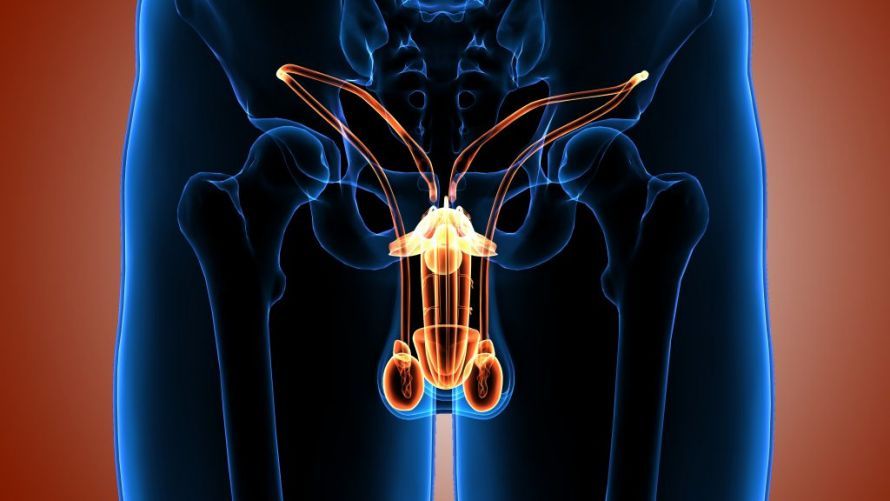
The prostate gland, located in the male body, is one of the sex glands. By the age of 50, nearly 50 percent of all men experience changes in this gland. These changes are either benign or malignant; in the latter case, they constitute cancer. In medicine, the benign condition is referred to as benign prostatic hyperplasia (BPH = benign enlargement of the prostate).
Prostate diagnostics are designed to detect malignant findings as early as possible. Its purpose is to identify a disease promptly through various examination methods. Health insurance providers recommend early screening as part of the statutory prostate cancer screening program starting at age 45. They cover the costs of a digital rectal exam of the genital area and inguinal lymph nodes.
Specialists in prostate diagnostics are physicians specializing in urology (urologists) and radiology (radiologists). These specialists often work in medical fields such as radiation therapy/radio-oncology and urological radiology.
A digital rectal exam alone is not considered sufficiently reliable for detecting a tumor. You have the option of also having a PSA test (PSA = prostate-specific antigen) performed by your doctor. This test allows for the detection of elevated levels through laboratory analysis and is a service you must pay for out of pocket. Since elevated PSA levels in the blood can also have harmless causes, such as inflammation, the test is considered controversial.
Reasons for Treatment: Early Detection of Prostate Cancer
The primary goal of prostate diagnostics is the early detection and treatment of prostate diseases. The focus is on prostate carcinoma (prostate cancer), for which the chances of a cure are greatest when the cancer is still very small and localized. A prostate tumor often causes no symptoms for a long time. Early detection as part of cancer screening is the only way to ensure treatment begins in a timely manner.
If you notice symptoms, they are nearly identical for benign and malignant conditions and indicate a tumor in only about ten percent of those affected. Possible symptoms include, for example, painful ejaculation, a frequent urge to urinate, or blood in the urine. Age is a key factor in the risk of a malignant diagnosis. A family history of the disease—specifically in a father or brother—also doubles the risk of a corresponding diagnosis.
Diagnostic Procedures
The course of prostate diagnostics depends largely on your initial findings. First, a physical examination is performed. During this, your doctor will conduct a digital rectal exam in the rectal area. During a separate appointment or even before the digital rectal exam, your doctor will draw blood as part of prostate cancer screening to measure your PSA level. Further tests are only conducted if these two methods indicate a reasonable suspicion of cancer.
In the next step, your doctor will recommend an MRI (magnetic resonance imaging) scan. This imaging technique provides more precise information about whether your findings indicate a tumor, an inflammatory process, or a benign enlargement. If the suspicion of cancer is confirmed, a subsequent prostate biopsy (tissue sample from the prostate) will provide the final diagnosis. Computed tomography (CT) can be used to detect metastases in the bones or lymph nodes.
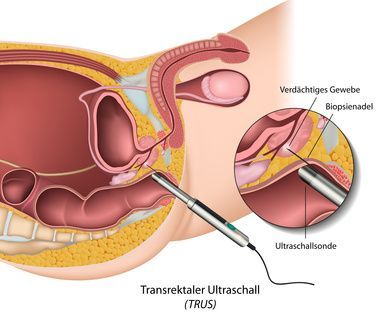
If prostate cancer is confirmed, additional diagnostic methods are available to determine the size and grade of the tumor. These include, most notably, transrectal ultrasound (TRUS). During this ultrasound examination, your doctor checks whether and to what extent the cancer has breached the capsule surrounding the prostate. In addition, elastography helps identify any additional suspicious areas of hardening.
Further Treatment Following Prostate Diagnosis
If your test results indicate that the cancer is confined to the prostate, further treatment will be tailored to your specific condition. The range of treatment options for prostate cancer includes, in summary:
- hormone therapy,
- prostate cancer surgery to completely remove the tumor,
- radiation therapy or chemotherapy, either instead of surgery or following it,
- localized radiation therapy via seed implantation.
Your doctor may use radiation therapy or chemotherapy either to shrink the tumor before surgery or afterward to prevent it from growing back.
As treatment progresses, your doctor may also prescribe comprehensive pain management. In the area of follow-up care, positron emission tomography (PET) is frequently used as part of the monitoring process for prostate cancer. This procedure uses radioactive tracers to visualize metabolic processes. Any remaining tumor tissue as well as new malignant changes can thus be clearly identified.
After treatment, there is a possibility of temporary—and, more rarely, permanent—incontinence. Sexual function is also likely to be initially impaired, though this usually involves temporary erectile dysfunction that does not persist. Since studies have established a link between an increased incidence of prostate cancer and smoking, it is helpful to quit smoking.
Potential Risks, Complications, and Prognosis
The treatment risks associated with surgery range from urinary incontinence, erectile dysfunction, and dry ejaculation to pain and inflammation in the surgical area. All of these can be effectively managed medically. If you undergo a radical prostatectomy (complete removal of the prostate), your doctor will likely recommend outpatient or inpatient rehabilitation to support your continued recovery.
The prognosis depends on the stage of the disease at the time of diagnosis. A disease detected early, before metastases have spread to other organs, has an exceptionally good chance of cure. The overall life expectancy for this type of cancer is considered very good. The so-called five-year survival rate is approximately 87–92 percent.
Conclusion
Prostate diagnostics offer various methods for the early detection of prostate cancer. Treatment depends on the individual findings and a personalized therapy plan developed by a specialist, a urologist. When detected early, prostate cancer is among the most treatable forms of cancer in men.
Sources
- Krebsgesellschaft: https://www.krebsgesellschaft.de/onko-internetportal/basis-informationen-krebs/krebsarten/prostatakrebs/diagnose.html
- Krebshilfe: https://www.krebshilfe.de/infomaterial/Blaue_Ratgeber/Prostatakrebs_BlaueRatgeber_DeutscheKrebshilfe.pdf
- Krebsinformationsdienst: https://www.krebsinformationsdienst.de/tumorarten/prostatakrebs/index.php
- https://www.prostata.de/magazin/diagnostik
- https://www.prostatakrebs-bps.de/medizinisches/diagnostik?start=2