Compartment syndrome is a serious condition in which pressure builds up inside a closed compartment. It occurs particularly frequently in the lower leg or forearm. Swelling of the muscles and surrounding tissues restricts blood flow to the affected limb. In acute compartment syndrome, this can lead to damage to muscles and nerves within a short period of time.
Typical symptoms of compartment syndrome include severe pain, a feeling of tightness, and progressive loss of function. Acute compartment syndrome often develops following a fracture, broken bone, or bleeding into the fascia. In addition to the acute form, there is also chronic or functional compartment syndrome, which occurs primarily during athletic activity.
Early diagnosis and surgical treatment via fasciotomy are crucial for the prognosis of compartment syndrome.
What is compartment syndrome?
Compartment syndrome (ICD T79.6) refers to an increase in tissue pressure within an enclosed space (compartment). A compartment is a group of muscles bounded on the outside by a firm, tendon-like layer of tissue (fascia). The fasciae that enclose the muscles in what are known as muscle compartments have only minimal elasticity. Therefore, swelling of the muscles—for various reasons—leads to an increase in pressure within the compartment, particularly since the fascia does not stretch.
In medical terminology, these compartments are also called muscle compartments. For this reason, compartment syndrome is also known as compartment syndrome.
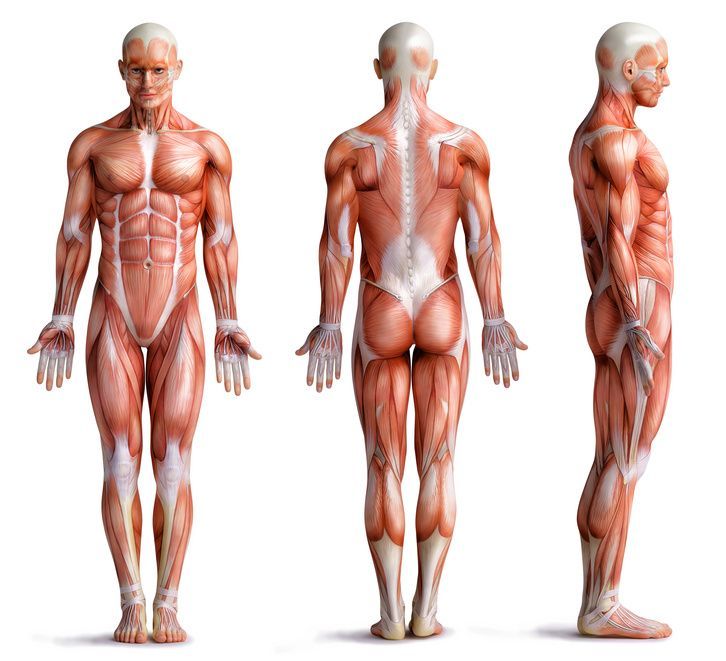
What can cause an increase in pressure within a compartment?
An increase in pressure within a muscle compartment can result from various causes:
- Traumatic causes (following physical trauma)
- Fracture
- Muscle injury
- Bleeding (hematoma) following an injury
- Circulatory causes
- Increased blood flow following vascular occlusion and reperfusion
- Increased blood flow following temporary hypothermia
- Impaired blood outflow due to venous thrombosis or
- due to a bandage that is too tight
What happens in compartment syndrome?
Compartment syndrome causes swelling of the affected muscles, which disrupts blood circulation in the small blood vessels. This occurs primarily because the muscle cannot expand.
The injured and swollen tissue can die, which can lead to tissue defects and tissue death (necrosis). Muscles, in particular, require a lot of oxygen-rich blood and nutrients, which is why they are very susceptible to tissue damage.
Nerves can also be affected by the increased pressure. Nerve compression triggers abnormal sensations and pain.
In any case, untreated compartment syndrome can cause tissue damage or permanent muscle damage.
Where does compartment syndrome occur most frequently?
Compartment syndrome most commonly affects the compartments of the lower leg and foot; less commonly, it affects the forearm and hand.
Abdominal compartment syndrome, which involves increased pressure in the abdominal cavity, should also be mentioned. Unlike compartment syndrome in the extremities—that is, the arms and legs—abdominal compartment syndrome does not cause damage to the muscles but rather to the abdominal organs. In particular, the small intestine is affected here; due to swelling and insufficient blood supply, it sustains tissue damage within a few hours.
In general, compartment syndrome can occur anywhere where tissue is enclosed by a tight layer of connective tissue.
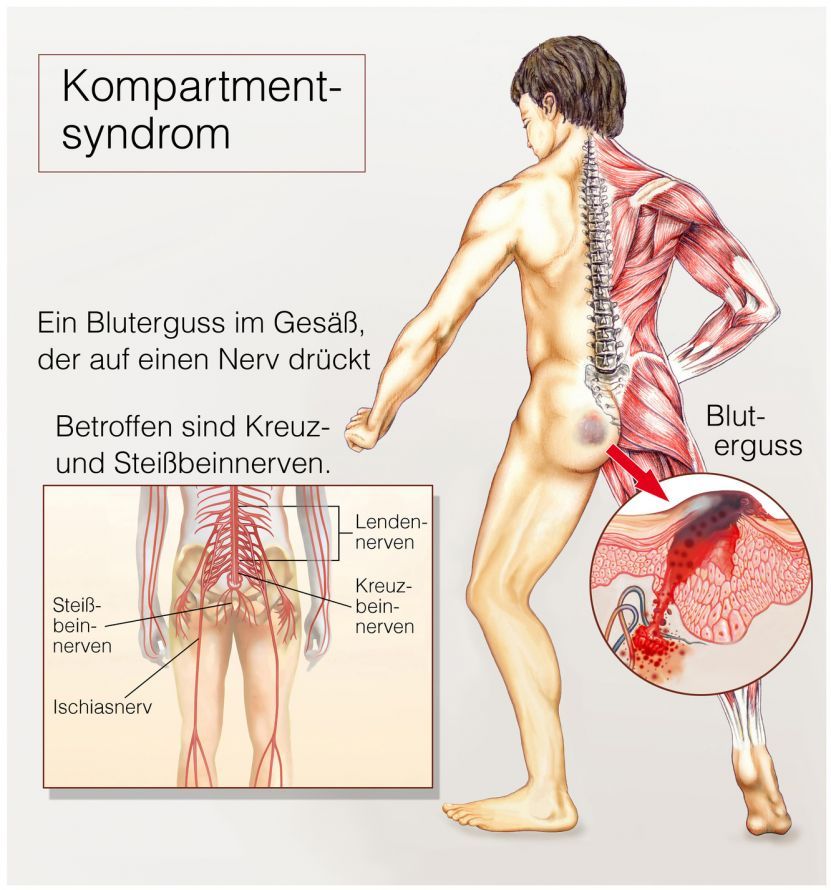
How quickly does compartment syndrome develop?
Generally, compartment syndrome can be classified into acute and chronic forms, depending on the cause:
In acute compartment syndrome, high tissue pressure develops suddenly—that is, within a few hours—in the affected compartment following a traumatic injury. This trauma can be caused by
- contusions
- falls
- severe bruises, and
- fractures
. Also,
- bandages that are too tight
- constrictions of other kinds, as well as
- surgical complications
can trigger acute compartment syndrome. The increased pressure in the compartment impedes blood flow to the muscle and nerve function. Due to the pressure, accumulated fluid cannot drain away. This poses a risk of permanent damage to the muscles and nerves.
Acute compartment syndrome is always a medical emergency!

Chronic or functional compartment syndrome results from long-term overuse and occurs almost exclusively in the extremities.
One of the most significant risk factors for this is excessive strength training. Due to a significant enlargement of the muscles caused by training, increased pressure develops within the muscle compartments. During intense exertion, the muscles can swell, causing the incoming and outgoing blood vessels to be compressed. This exercise-induced compartment syndrome is particularly common among middle- and long-distance runners (marathon and triathlon) as well as competitive race walkers.
What are the symptoms of compartment syndrome?
Typical problems associated with compartment syndrome include pain and nerve damage.
Acute compartment syndrome manifests as
- severe pain,
- a strong sensation of tightness, and
- sensory disturbances, up to
- complete loss of sensation and mobility
in the affected muscle area. The pain, which can be unbearable at times, cannot be relieved even by taking painkillers. Elevating the leg also does not alleviate the pain.
In addition, there is often
- significant swelling and
- stiffness of the muscles
in the affected area.
Due to poor blood flow and nerve damage in the muscles, sensory and motor deficits soon develop, such as:
- numbness
- tingling
- Paralysis.
Patients with chronic compartment syndrome typically feel
- a feeling of pressure in the affected area and
- a stabbing pain that occurs during or immediately after physical activity.
Also
- temporary weakness in the legs or arms, as well as
- intermittent tingling of the skin
may indicate functional compartment syndrome. As a rule, taking breaks from walking or stopping the workout quickly relieves the symptoms.
How is compartment syndrome diagnosed?
If acute compartment syndrome is suspected, the doctor first performs functional tests. This means that he checks the function of the muscles and nerves. In particular, they will examine the range of motion in the affected area and assess sensation more closely. They will also check for pulses, which are often weakened or no longer palpable in cases of compartment syndrome.
If the examination already raises suspicion of compartment syndrome, the doctor can measure the pressure inside the muscle compartment. To do this, they insert a probe into the muscle compartment from the outside and take a pressure reading externally. This involves a pressure sensor that allows the exact pressure within the muscle compartment (measured in millimeters of mercury = mmHg) to be read from the outside. Once tissue pressure reaches a certain level, it is essential to open the muscle compartment and relieve the pressure on the muscles.
However, there is no minimum threshold at which compartment syndrome can be ruled out. The pressure measurement is merely a tool for assessing the course of the condition. If the examination reveals severe swelling of the muscles and the patient exhibits corresponding symptoms of muscle constriction and impaired blood flow, a provisional diagnosis of compartment syndrome should still be made, and further measures should be taken.
How is compartment syndrome treated?
Treatment for acute compartment syndrome involves emergency surgery. Immediate surgical treatment is required, involving a procedure known as a fasciotomy. This involves incising and opening the thick, tight muscle compartments (fascia) surrounding the muscle over a long stretch. To prevent tissue pressure from rising again, the surgical wound is not closed immediately. Instead, it is left open and protected with a tissue barrier.
The wound is then dressed regularly, and once the swelling has subsided, the skin can be closed. In some cases, however, a split-thickness skin graft is also necessary. This is a skin graft taken from the same thigh and modified into a mesh-like structure through special techniques.
In acute cases of chronic compartment syndrome, rest and cooling provide relief. After 48 hours, you may massage and warm the painful muscles. You may also use heparin ointments once this two-day period has elapsed.
In the long term, chronic compartment syndrome can be managed to a certain extent conservatively through
- modifications to your training regimen and/or
- choosing appropriate footwear.
- The use of nonsteroidal anti-inflammatory drugs (NSAIDs) can also provide short-term relief for those affected. These include, for example, ibuprofen.
Competitive athletes who wish to or must maintain their training level can undergo surgical release of the muscle fascia.
What is the prognosis for compartment syndrome?
The duration and course of the condition depend primarily on prompt treatment. In particular, rapid relief of the increased pressure within the compartment is essential. Ideally, the lack of oxygen and nutrients in the muscles (muscle ischemia) should be addressed early on. If this is achieved within a few hours, the muscles can usually recover completely.
However, if compartment syndrome remains untreated, the muscle tissue dies due to the lack of oxygen supply. This can lead to
- severe functional limitations of the muscles,
- joint stiffness, or
- abnormal flexion of the hands and fingers.
- If the nerves have been damaged, patients may also suffer from permanent paralysis.
FAQ
What is compartment syndrome?
Compartment syndrome, also known as muscle compression syndrome, describes an increase in pressure within enclosed fascial compartments. This damages blood flow, muscles, and tissues. Compartment syndrome of the lower leg occurs particularly frequently following a fracture or injury.
What are the symptoms of compartment syndrome?
Typical symptoms of compartment syndrome include severe pain, swelling, a feeling of tightness, and neurologically related paralysis or sensory disturbances. In acute compartment syndrome, symptoms often worsen rapidly. Other symptoms include swollen tissue and limited function of the limb.
What causes compartment syndrome?
Compartment syndrome is usually caused by a traumatic increase in pressure following a bone fracture or bleeding. Intense physical strain can also trigger chronic compartment syndrome. The most common cause is swelling within the muscle groups, which increases pressure within the compartment.
How is compartment syndrome treated?
Treatment for compartment syndrome depends on the cause and course of the condition. For acute compartment syndrome, surgical treatment via fasciotomy is the treatment of choice. For chronic compartment syndrome, conservative treatment, reduced physical activity, and physical therapy are options.
What complications can compartment syndrome cause?
If left untreated, compartment syndrome can lead to ischemia, necrosis, and permanent damage to muscles and nerves. Circulatory disorders in the affected limb and permanent functional limitations are also possible. The prognosis depends on how quickly a diagnosis is made and surgical intervention is performed.
Share this article

About the medical author
Prof. Dr. med. Susanne Regus
Medical Author
Prof. Dr. med. Susanne Regus – medical author: expert articles, professional insights and medical expertise in the Leading Medicine Guide.
View full expert profile →