News
Aortic Aneurysm – Explained in Simple Terms for Patients, Laypeople, and Doctors

Sabine Schneider ·
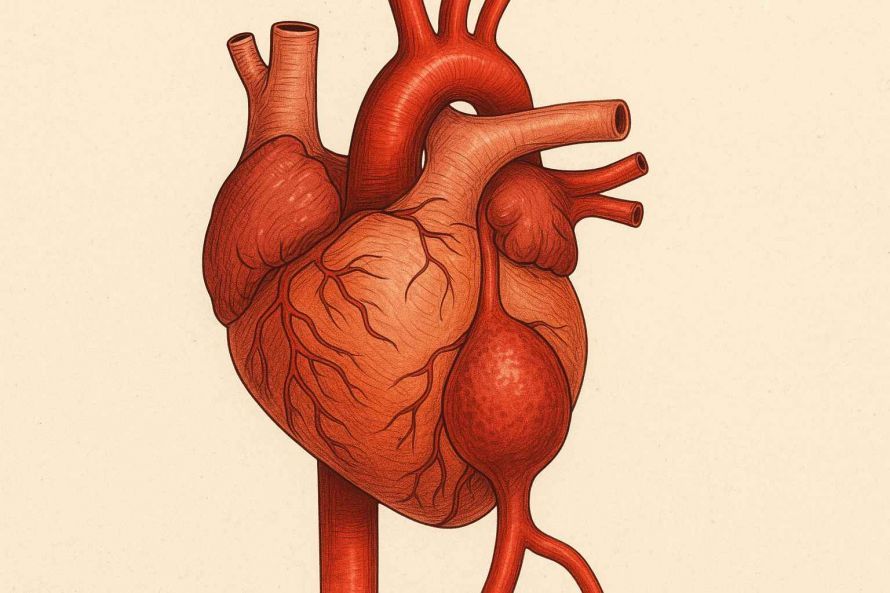
An aortic aneurysm is a pathological, sac-like enlargement of the aorta. If the vessel weakens and continues to expand unchecked, it can rupture—a potentially life-threatening situation.
Causes & Risk Factors
The main causes of an aortic aneurysm are atherosclerosis (calcification and hardening of the arterial wall) and chronically high blood pressure, both of which cause long-term damage to the vessel wall. A family history of the condition or congenital connective tissue weaknesses also play a role. In addition, smoking, advanced age (over 65 years), being male, and metabolic disorders (e.g., lipid metabolism disorders) increase the risk.
The dilation can occur in both the chest (thoracic) and abdominal regions of the aorta.
Symptoms
An aortic aneurysm often progresses for a long time without symptoms and is discovered by chance.
Typical symptoms may include:
- For a thoracic aneurysm: chest or back pain, difficulty swallowing or breathing, hoarseness
- For an abdominal aneurysm: unexplained abdominal or back pain, sometimes a palpable pulsating mass in the abdomen
A tear (rupture) of the aorta presents with sudden, severe pain and circulatory shock and is a medical emergency.
Diagnosis
The diagnosis is made in several steps:
- Ultrasound examination for screening or initial diagnosis
- If findings are abnormal: contrast-enhanced computed tomography (CT) or magnetic resonance imaging (MRI) to determine the exact size, location, and analysis of the vessel wall
- Additional tests to assess heart and lung function and monitor risk factors
Treatment – When Is Treatment Necessary?
Whether treatment is necessary depends primarily on the diameter of the aorta, the growth of the aneurysm, and the patient’s risk profile. Smaller, stable aneurysms are often monitored regularly (“watch-and-wait”). For larger diameters (e.g., 5 cm or more in the abdominal region) or in cases of rapid growth or symptoms, surgical treatment is indicated.
Surgical Procedures
- Open surgery: The aneurysm is removed through an incision in the abdomen and replaced with a vascular prosthesis.
- Endovascular procedure (e.g., stent graft): A vascular stent graft is inserted through a vascular access point in the groin to treat the aneurysm—a minimally invasive procedure.
The choice of procedure depends on the location, size, the patient’s condition, and any comorbidities.
Follow-up Care & Rehabilitation
Intensive follow-up care is necessary after surgery:
- The access site is monitored, and mobilization begins early
- Depending on the procedure, a recovery period applies, particularly after open surgery (e.g., no heavy lifting for 3 months)
- Regular follow-up examinations using ultrasound or CT, once a year or more frequently depending on the procedure
- Lifestyle changes are essential: quitting smoking, a healthy diet, targeted physical activity, and consistent monitoring of blood pressure and cholesterol
Prognosis and Complications
The prognosis is good for aneurysms detected and treated early. Early diagnosis before complications arise and optimized follow-up care are crucial. Possible complications include infectious processes, endovascular leaks (“endoleaks”), kidney or organ dysfunction, and increased surgical risks with the open procedure. An untreated aneurysm that ruptures often leads to death—therefore, early detection is essential.
Share this article
Verified expertise
Recommended specialists
13 specialists
13 results




Dr. med. Konstantinos Verginis
Duisburg



Dr. med. (syr) Amer Jomha
Bad Hersfeld

Dr Thomas Riester
Karlsbad

Prof. Dr. med. Alexander Albert
Dortmund







1 / 2
News
Read next
- News
Scabies: A contagious skin disease that is easily treatable
Oct 26, 2026
Severe itching and minor skin changes should be taken seriously
Read more - News
Heat Rash: What's Behind the Itchy Blisters
Oct 23, 2026
Heat Rash: Heat and Sweat Can Disrupt the Skin's Balance
Read more - News
Enlarged Prostate – When Medication Is Sufficient and When Surgery Is Recommended
Oct 21, 2026
Why Many Men Ignore Urinary Problems for Too Long
Read more