News
The Invisible Disease: Why We Need to Talk About Endometriosis Now

Sabine Schneider ·
"Don't be such a drama queen—period cramps are normal." – Many women who have suffered from extreme pain during their periods for years have heard statements like these. But when everyday life becomes a torment every month, there’s often more to it than just ordinary discomfort: endometriosis. It’s one of the most common gynecological conditions, and yet far too few people know about it.
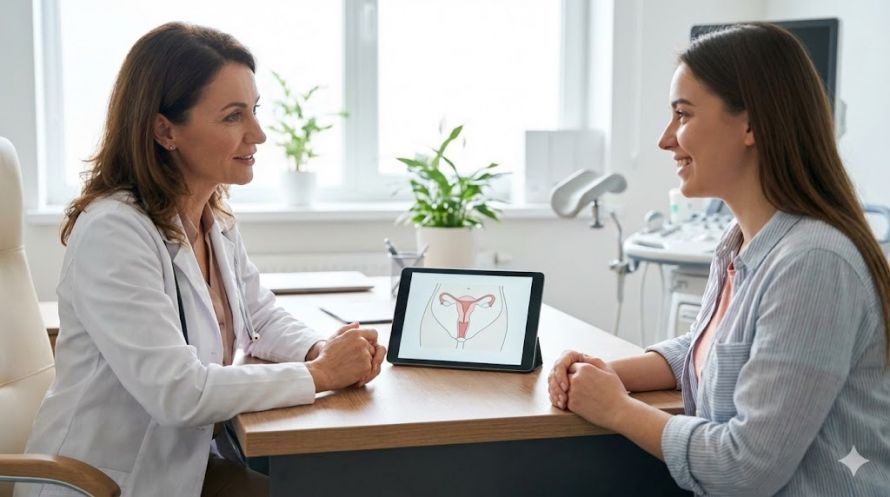
Endometriosis is a chronic, often painful condition in which tissue similar to the lining of the uterus (endometrium) grows outside the uterus. These “lesions” can form on the ovaries, fallopian tubes, in the abdominal cavity, or even on the intestines and bladder. The problem: This tissue behaves like the normal uterine lining—it builds up during the menstrual cycle and bleeds out. But since the blood cannot drain away, it leads to inflammation, cysts, and adhesions.
An Odyssey to a Diagnosis
The tricky thing about endometriosis is its wide range of manifestations. Symptoms range from excruciating menstrual cramps to chronic lower abdominal pain, pain during intercourse, and problems with bladder or bowel control. Infertility is also often the first sign.
The variety of symptoms and the widespread tendency to downplay women’s pain mean that, on average, it takes up to ten years in Germany for the correct diagnosis to be made. This is time lost, during which the disease often worsens.
Treatment: Not curable, but effectively treatable
The good news: Once a diagnosis is made, there are effective ways to regain quality of life. Treatment is as individualized as the patient herself.
In many cases, hormonal therapies (e.g., special “pills” that suppress the menstrual cycle) can slow the growth of endometriotic lesions and relieve pain. If this is not sufficient, surgery (laparoscopy) is often the gold standard for removing endometriosis lesions and adhesions as completely as possible.
One thing is especially important: Do not simply put up with severe pain. Seek out specialized gynecologists who take your symptoms seriously and have experience with this complex condition.
Read detailed information here about symptoms, diagnostic procedures, and specialists in endometriosis.
Share this article
Verified expertise
Recommended specialists
11 specialists
11 results

Ass. Prof. Dr. Resmiye Ermis
Frankfurt am Main


University Hospital, Tubingen
Tuebingen






Prof. Dr. med. Amadeus Hornemann
Frankfurt am Main



Prof. Mag. Dr. med. Andreas Widschwendter
Senior Surgical Gynaecology Consultant Private Practice
Innsbruck

1 / 2
News
Read next
- News
Scabies: A contagious skin disease that is easily treatable
Oct 26, 2026
Severe itching and minor skin changes should be taken seriously
Read more - News
Heat Rash: What's Behind the Itchy Blisters
Oct 23, 2026
Heat Rash: Heat and Sweat Can Disrupt the Skin's Balance
Read more - News
Enlarged Prostate – When Medication Is Sufficient and When Surgery Is Recommended
Oct 21, 2026
Why Many Men Ignore Urinary Problems for Too Long
Read more