News
Frozen Shoulder: When the Shoulder Becomes Increasingly Stiff

Melanie Al Tikriti, BSc ·
At first, the shoulder only hurts during certain movements; later, even getting dressed, combing your hair, or reaching for an object above your head becomes a challenge. These symptoms may be caused by what’s known as a frozen shoulder. The condition, medically referred to as adhesive capsulitis, causes the shoulder to gradually lose mobility.
Many people initially suspect muscle tension or overexertion. In reality, however, frozen shoulder usually develops slowly and can significantly limit daily activities for many months. Although the condition often requires patience, there’s a good chance that mobility will improve again over time.
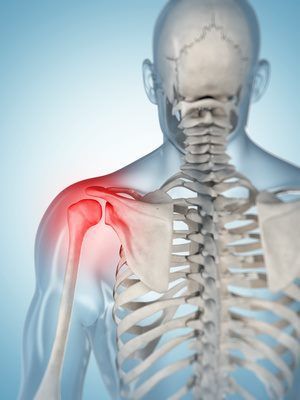
What Causes Frozen Shoulder
The shoulder joint is surrounded by a joint capsule that provides stability while also allowing for a wide range of motion. In frozen shoulder, this joint capsule becomes inflamed and thickens. As the condition progresses, this can lead to scarring, causing the capsule to lose elasticity and mobility to become increasingly restricted.
The condition usually progresses in several phases. Initially, severe pain is the main symptom; later, range of motion decreases significantly. The symptoms do not subside until some time has passed.
Why the Condition Develops
The exact causes are not yet fully understood. It is important to note that a distinction is made between primary and secondary frozen shoulder:
The primary form develops without any apparent cause.
The secondary form develops as a result of other medical conditions or following injuries.
The most common risk factors include:
- Diabetes mellitus
- Thyroid disorders
- Shoulder injuries
- Shoulder surgery
- Prolonged immobilization of the arm
- Rheumatic diseases
Frozen shoulder occurs particularly frequently between the ages of 40 and 60. Women are affected more often than men.
Symptoms usually develop gradually
A characteristic feature is that pain is the primary symptom at first. Many people with the condition can no longer lie on the affected shoulder and wake up at night because of the pain. The shoulder also becomes increasingly stiff over time. As a result, even everyday movements become increasingly difficult. Symptoms usually develop over weeks or months and can significantly interfere with daily life.
Typical symptoms include:
- Shoulder pain
- nighttime pain
- increasingly limited range of motion
- Difficulty raising the arm
- Pain when getting dressed or combing one’s hair
- Limited range of motion in all directions
Not every case of frozen shoulder has the same cause
Shoulder pain can have many different causes. In addition to frozen shoulder, possible causes include tendon injuries, osteoarthritis, or impingement syndrome. That is why a thorough medical examination is important. This is the only way to determine which condition is actually causing the symptoms and which treatment is appropriate.
How the Diagnosis Is Made
During the examination, the doctor assesses the extent to which shoulder mobility is restricted. X-rays are primarily used to rule out other causes, such as osteoarthritis. Ultrasound or magnetic resonance imaging (MRI) may also be used to evaluate tendons or other structures in greater detail. Frozen shoulder is often diagnosed based on the typical symptoms and significantly limited range of motion.
What Treatment Options Are Available
Treatment depends on the stage of the condition. The goal is to relieve pain and maintain range of motion as much as possible. Anti-inflammatory pain relievers and physical therapy are often used. Special exercises help keep the shoulder mobile without causing additional irritation.
In some cases, cortisone injections can reduce inflammation. Surgery may be necessary only if conservative measures prove ineffective, to release adhesions in the joint capsule.
Patience plays an important role
Unfortunately, a frozen shoulder usually does not heal within a few weeks. The entire course of the condition can last one to three years. Appropriate range-of-motion exercises can help maintain mobility for as long as possible and support the healing process. At the same time, excessive strain should be avoided. With patience and consistent therapy, symptoms improve significantly for most people affected.
Conclusion: Even if the shoulder becomes temporarily stiff, there is a good chance of significant improvement.
Frozen shoulder can make daily life considerably more difficult and even make simple movements painful. With personalized treatment, regular physical therapy, and a little patience, pain can usually be relieved and mobility gradually restored. It is important to have the symptoms evaluated by a doctor and to follow through with treatment consistently.
Share this article
Verified expertise
Recommended specialists
20 specialists
20 results







Sportklinik Freiburg
Freiburg







Priv.-Doz. Dr. Mohamed Moursy
Salzburg





Professor Dr. Aristotelis Kaisidis
Frankfurt am Main


Prof. Markus Scheibel
Berlin


1 / 2
News
Read next
- News
Heat Rash: What's Behind the Itchy Blisters
Oct 23, 2026
Heat Rash: Heat and Sweat Can Disrupt the Skin's Balance
Read more - News
Enlarged Prostate – When Medication Is Sufficient and When Surgery Is Recommended
Oct 21, 2026
Why Many Men Ignore Urinary Problems for Too Long
Read more - News
Daraxonrasib as a treatment for metastatic pancreatic cancer
Oct 21, 2026
Daraxonrasib: Survival time almost doubled in the study
Read more