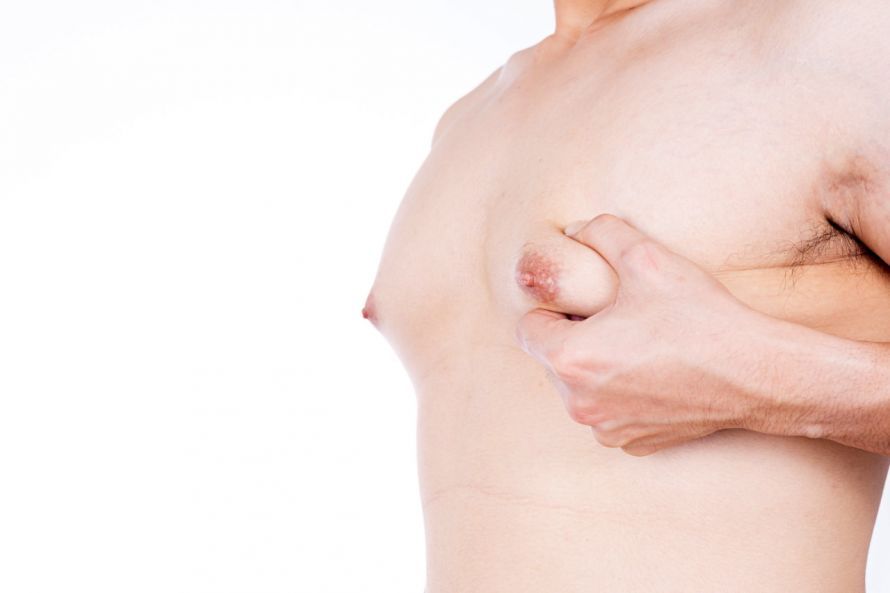
Gynecomastia refers to a benign enlargement of the male breast and is often perceived as “man boobs.” It is usually caused by a hormonal change that disrupts the balance between estrogen and testosterone.
The condition can occur on one or both sides, affects boys during puberty as well as adult men, and can be physically and psychologically distressing. Depending on the cause and severity, conservative or surgical treatments are available for gynecomastia.
What is gynecomastia?
Gynecomastia is the medical term for enlarged breasts in men. The word is derived from Greek and means “women’s breasts.”
About 65% of all men are affected by gynecomastia at some point in their lives. It very often occurs in infants and usually disappears during the first year of life. During puberty, about half of all boys also experience enlarged breasts. In 90% of these cases, the breasts return to normal within two years.
After that, it primarily affects men in their later years.
Men who suffer from gynecomastia
- often feel embarrassed and
- are teased, or
- experience social trauma.
Out of shame, affected men tend to wear loose-fitting shirts rather than tight ones. In addition, many avoid sports and activities that require them to be shirtless. Young men, in particular, suffer greatly from their “feminine” appearance.
What are the causes of gynecomastia?
Gynecomastia appears to be primarily genetic. However, various substances can also trigger the condition, including
- anabolic steroids,
- medications containing estrogen,
- alcohol, and
- marijuana.
There are also some medical causes, such as cancer or impaired liver function. However, in the majority of gynecomastia patients, the causes are currently unknown. The “feminine” breast contour is caused by excess fat or glandular tissue. It accumulates primarily along the lower part of the breast.
A healthy diet and exercise can help reduce excess fat. However, there is no way to specifically reduce fat in the chest area.
Nor is there a diet or specific exercises that help reduce excess glandular tissue. On the contrary, intensifying chest muscle training pushes the overlying fat and glandular tissue further forward. This results in the gynecomastia appearing even more pronounced.
What is the best way to have gynecomastia treated by a specialist?
Can gynecomastia be treated surgically?
Gynecomastia surgery is considered a male breast reduction procedure. The procedure is suitable for healthy men of all ages.
Teenagers should not undergo surgery until they are 17 years old. This allows the body and psyche to continue maturing, and gynecomastia often resolves on its own.
However, if the gynecomastia has not resolved by then, surgery is recommended. Waiting longer—beyond the age of 18 or 19—often causes significant emotional distress for adolescents.
A free consultation with a plastic and cosmetic surgeon can provide both the patient and his parents with the support they need to make the right decision. Gynecomastia surgery yields the best results in men with firm contours and elastic skin.
How is male breast reduction performed?
Depending on the type and extent of gynecomastia, liposuction alone may be sufficient for breast reduction. This is the case when the excess fatty tissue has not overstretched the skin. In some cases, it is also necessary to excise excess glandular tissue, with or without skin removal.
The procedure takes an average of two hours. It is usually performed on an outpatient basis under general or local anesthesia.
In cases involving liposuction alone, the surgeon makes very small incisions near the nipple. Through these incisions, he uses very narrow cannulas to suction out the fat. In such cases, the scars are very small and barely visible. The results are permanent.
If excess glandular tissue also needs to be removed, an incision is made along the areola. The excess glandular tissue can then be removed through this incision.
In very severe cases, excess skin can also be removed through this incision. This allows for a breast lift to be performed at the same time.
Possible Complications and Risks of Gynecomastia Surgery
Some patients may experience temporary numbness in the chest area. These sensory disturbances can last up to one year.
Rare complications associated with this procedure—as with many surgical procedures—include
- the possibility of infection,
- fluid retention,
- bleeding,
- wide scars,
- pigment changes, or
- postoperative asymmetry.
In rare cases, a second surgery may be necessary to achieve better tissue tightening.
Recovery After Surgical Gynecomastia Treatment
Downtime after this procedure is very short. Patients can usually return to work after one week, unless their job is very physically demanding.
Some bruising and swelling may occur temporarily. To support the healing process, the patient is provided with a compression garment to wear for 3 to 6 weeks. If possible, lymphatic drainage is also highly recommended.
The scars should be protected from sunlight or UV light for at least 6 months. Of course, every patient can further enhance their “masculine profile” by exercising their chest muscles. The scars around the nipple will fade only after some time.
FAQ
What is gynecomastia?
Gynecomastia refers to a pathological enlargement of the male breast caused by an increase in breast tissue. It differs from pseudogynecomastia, which is caused solely by fat deposits.
What causes gynecomastia?
The causes of gynecomastia include hormonal changes, an imbalance between estrogen and testosterone, pubertal gynecomastia, age-related gynecomastia, obesity, anabolic steroids, medications, as well as testicular disorders or hormone-producing tumors.
How is gynecomastia diagnosed?
Diagnosis involves a physical examination, an ultrasound of the chest area, hormone tests, and, if necessary, additional imaging procedures. The goal is to determine whether true gynecomastia or pseudogynecomastia is present and whether there is an underlying cause that requires treatment.
How is gynecomastia treated?
Treatment for gynecomastia depends on the cause and severity. In many cases, the enlargement may resolve on its own. If it persists or is severe, surgical intervention may be performed to remove glandular tissue and perform liposuction.
Does health insurance cover the costs of gynecomastia surgery?
Whether health insurance covers the costs depends on whether the gynecomastia is classified as a medical condition. If the condition is medically diagnosed and causes significant psychological distress, coverage may be possible.
Share this article