
In reality, he has moderate depression. And that has nothing to do with age—it has to do with an illness that often presents differently in older people than in younger ones, and that’s precisely why it so often goes untreated.
As a geriatrician, I see depression almost every day—often as an incidental finding during an evaluation for a fall, weight loss, or declining functional ability. And I see what changes when it’s recognized and treated. The father from the introduction is back at his skat night after three months of antidepressant therapy. Depression is not a consequence of aging. It is one of the most treatable conditions in older adults.
How common is depression among older adults?
- Seniors living at home: 15 to 20 percent have significant depressive symptoms.
- After a hospital stay: 25 to 30 percent of older patients develop depression in the months that follow.
- Nursing homes: Up to 40 percent of residents.
- After a heart attack, stroke, or cancer diagnosis: 30 to 50 percent develop clinically significant depression within the first year.
- Suicide rate: Men over 75 have the highest suicide rate of any age group in Germany—one-third of these cases are attributed to untreated depression.
Despite these figures, depression in older adults is massively underdiagnosed and undertreated. Estimates suggest that only one in three affected individuals receives adequate treatment.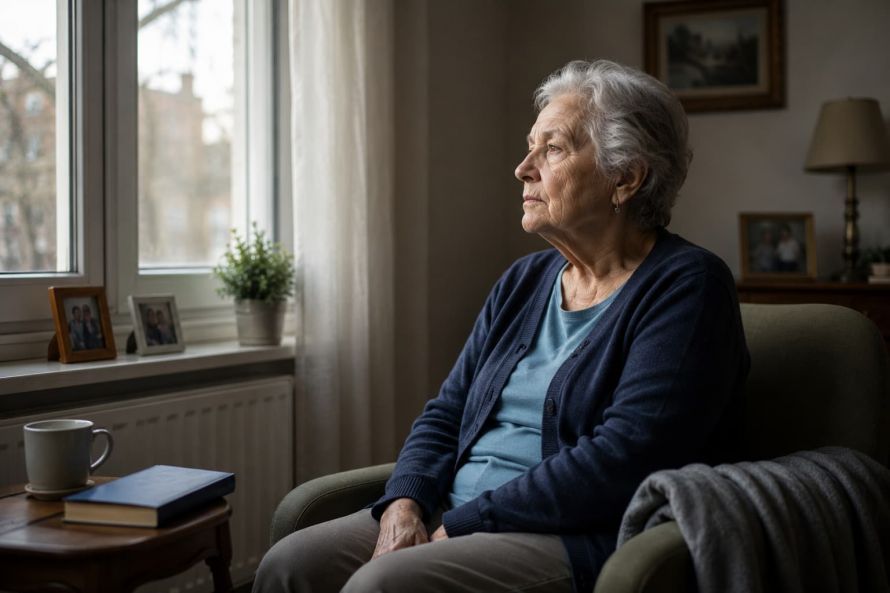
Why Depression in Older Adults Is Often Overlooked
Three systemic reasons explain this gap in care:
1. Depression manifests differently in older adults
Typical symptoms in younger adulthood—pronounced sadness, tearfulness, feelings of guilt—are less likely to be prominent in older adults. Instead, the following symptoms dominate:
- Loss of drive and interest
- Social withdrawal
- Physical complaints without a clear organic cause (pain, dizziness, digestive problems)
- Sleep disturbances, particularly waking up too early
- Loss of appetite and unintentional weight loss
- Difficulty concentrating and memory problems
- Irritability instead of classic sadness
- Hopelessness, which manifests as “weariness of life”
2. Depression is interpreted as a normal part of aging
“He’s just getting old.” “She’s been through a lot.” “It’s no wonder at her age.” These statements are humanly understandable—and medically dangerous. They prevent the diagnostic question from being asked. Yet the field of geriatrics and geriatric medicine counts depression among the most common and far-reaching illnesses in older age.
3. Depression is confused with dementia
Cognitive deficits in depression can be so pronounced that they clinically resemble dementia. This is referred to as pseudodementia. Conversely, early-stage dementia can trigger depressive symptoms. Distinguishing between the two is clinically challenging but crucial.
→ For a detailed differential diagnosis: Dementia or depression? — the most common misdiagnosis in older adults.
Causes and Triggers
Depression in older adults is multifactorial. The main drivers are:
- Physical illnesses: heart failure, COPD, diabetes, chronic pain, and cancer—all significantly increase the risk of depression. Depression is not only a consequence but often also an exacerbating factor in these conditions.
- Neurobiological changes: Serotonin, norepinephrine, and dopamine systems change with age. Chronic inflammation plays an increasingly important role.
- Medications as Triggers: Certain antihypertensives, benzodiazepines when taken long-term, corticosteroids, and some Parkinson’s medications can trigger or exacerbate depressive symptoms.
- Losses: The death of a partner, the loss of friends, children moving out, moving into a nursing home, and the loss of physical independence—all of these factors contribute to frailty syndrome and the development of depression.
- Social isolation: Loneliness is an independent biological risk factor—measurable in the blood, not merely psychologically relevant.
- Vitamin D deficiency: Common among older adults, it contributes to depressive symptoms. It is also associated with osteoporosis in older adults.
- Sleep disturbances and pain: Chronic conditions that pave the way for or exacerbate depression.
→ On the role of medications in causing psychological side effects: Polypharmacy in older adults.
Diagnosis: What a thorough evaluation entails
The diagnosis is clinical—that is, it is made through a structured interview. The Geriatric Depression Scale (GDS), a questionnaire with 15 yes/no questions developed specifically for older adults, is used to support the diagnosis. A score of 6 points or more indicates significant depression.
The evaluation also includes:
- Cognitive testing (MMSE, MoCA) to rule out dementia
- Laboratory tests: TSH (hypothyroidism), vitamin B12, vitamin D, electrolytes, kidney function, inflammatory markers
- Medication review — Which medications might be contributing?
- Assessment of social factors (loneliness, living situation, recent losses)—a comprehensive frailty screening can provide valuable insights here
- Suicidal thoughts — ask about them openly; do not avoid the topic
Openly addressing suicidal ideation in older adults is not a provocation—it is standard of care. Studies show that addressing the issue does not increase the risk but rather paves the way for help. Many older adults are waiting for someone to ask.
Treatment: What Really Helps
Modern depression treatment rests on three pillars, which are ideally combined.
1. Psychotherapy
Effective for older adults as well—studies show that cognitive behavioral therapy (CBT) and interpersonal psychotherapy (IPT) are just as effective for depression in older adults as they are for younger people. The common assumption that psychotherapy is “no longer useful in old age” has been disproved. Specialized psychiatric and psychotherapeutic treatment may also be indicated as a complementary measure.
2. Medication
- SSRIs (e.g., sertraline, citalopram, escitalopram): The most commonly used antidepressants in older adults—effective and relatively well tolerated. Caution is advised regarding drug interactions (risk of bleeding when combined with anticoagulants) and sodium balance (SIADH).
- SNRIs (venlafaxine, duloxetine): Additional noradrenergic component; often helpful in cases of concomitant pain.
- Mirtazapine: Often used in older adults due to its sleep-inducing and appetite-stimulating effects. Effective for weight loss, malnutrition, and sleep disorders.
- Agomelatine: For sleep disturbances; few drug interactions.
- Avoid in older adults: Tricyclic antidepressants such as amitriptyline and doxepin—strongly anticholinergic, on the PRISCUS list. Increased risk of delirium, falls, and cognitive decline.
Drug therapy requires patience: Initial effects often become apparent only after two to four weeks, with full effect seen after six to eight weeks. Deciding after just one week that “it’s not working” is often premature. For older patients with multiple conditions, it is also recommended to check for drug interactions in the context of polypharmacy.
3. Non-pharmacological Interventions
- Physical activity: The evidence is strong—aerobic exercise produces effects comparable to those of mild to moderate drug therapy. Physical activity is also a central component of geriatric early rehabilitation.
- Social engagement: Group activities, day care, volunteer support—a direct countermeasure to loneliness as a cause and an effective strategy against immobility in older adults.
- Light therapy: Particularly effective in cases with a seasonal pattern.
- Vitamin D supplementation: Only when a deficiency is confirmed; not as a blanket measure.
- Treatment of concomitant sleep disorders: Sleep hygiene; if necessary, agomelatine or low-dose mirtazapine.
When standard therapy is insufficient
For treatment-resistant or severe depression, additional options are available:
- Augmentation: Combining an antidepressant with a low-dose neuroleptic or lithium.
- Electroconvulsive therapy (ECT): Highly effective for severe, treatment-resistant depression or depression associated with suicidal ideation. Often better tolerated in older adults than many medications. Commonly held public misconceptions about ECT do not reflect the current state of evidence.
- Transcranial magnetic stimulation (TMS): A non-invasive procedure with a growing body of evidence supporting its use for depression.
- Inpatient psychiatric treatment: For suicidal ideation, inability to care for oneself, or severe psychotic depression. In such situations, the issue of a living will should also be discussed early on.
What Family Members Can Do
- Take it seriously: Don’t downplay it; don’t respond with “Cheer up.” Depression is an illness, not a state of mind.
- Provide support: Accompany them to doctor’s appointments; help with treatment planning. They often cannot navigate this journey alone.
- Encourage activity without pushing: Take walks together, help with small tasks, maintain regular contact. Targeted fall prevention in daily life also protects against the dangerous consequences of lethargy.
- Always take suicidal statements seriously: “I don’t want to go on” is not just a passing remark. Take action—seek medical or emergency medical help.
- Take care of yourself: Family members caring for patients with depression are themselves at increased risk of depression. Support groups and professional counseling are not a sign of weakness—palliative care can also provide relief for family members when the illness is advanced.
When should you see a doctor?
The sooner, the better. Specifically:
- Persistent low mood or lack of motivation lasting more than two weeks
- Social withdrawal and giving up activities once enjoyed
- Persistent sleep disturbances, loss of appetite, unintentional weight loss
- Physical symptoms with no clear organic cause
- New or worsening cognitive impairments—possibly an indication of mild cognitive impairment (MCI)
- Statements such as “It’s not worth it anymore” or “I don’t want to go on”
- Acute suicidal thoughts — in such cases, urgent care is needed rather than scheduling an appointment
The first point of contact is the primary care physician. For older patients with multiple chronic conditions, the geriatric perspective is often particularly valuable—it connects depression to the patient’s overall situation. A structured geriatric assessment helps to systematically identify all relevant factors. For complex psychiatric cases, a specialist in psychiatry and psychotherapy is the appropriate resource.
→ How a comprehensive geriatric assessment links depression to other problems: Geriatric Assessment.
Share this article
Sources
- Kok RM, Reynolds CF (2017): Management of Depression in Older Adults: A Review. JAMA. DOI: 10.1001/jama.2017.5706
- S3 Guideline on Unipolar Depression, DGPPN and DEGAM, AWMF Register 051-028, current version.
- Schuch FB, Vancampfort D, Richards J et al. (2016): Exercise as a treatment for depression: A meta-analysis adjusting for publication bias. Journal of Psychiatric Research.
- Alexopoulos GS (2019): Mechanisms and treatment of late-life depression. Translational Psychiatry. DOI: 10.1038/s41398-019-0514-6
