
Nevertheless, she fell twice, once resulting in a wrist fracture. Her kidney function was deteriorating. Her blood pressure was often too low. And her daughter’s most important remark was: “She has no strength left. Not for what’s still important now.”
As a geriatrician, in situations like this I often ask a different question than the one posed by cardiology guidelines. Not “Which treatment prolongs life?” but rather: “Which treatment protects what still works—and when does that protection become a burden?” It is precisely this shift in focus that lies at the heart of geriatric cardiology.
What is heart failure?
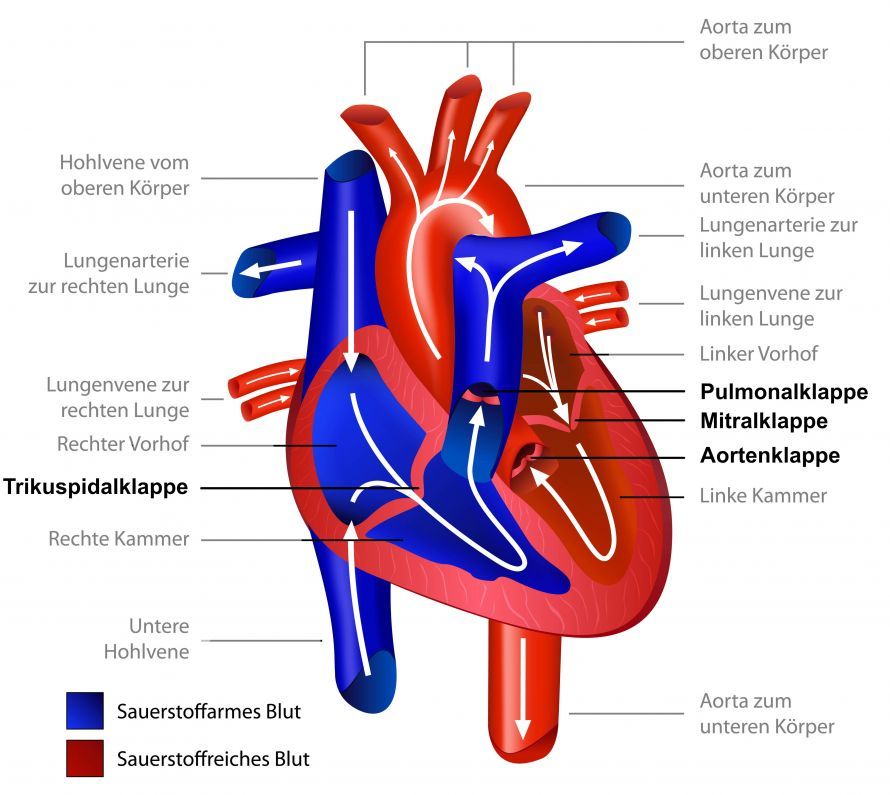
In heart failure, the heart is no longer able to continuously supply the body with blood through the blood vessels. The reduced pumping function means that the organs are no longer optimally supplied with blood and oxygen.
It is a complex heart condition that can be acute or chronic. Chronic heart failure usually develops gradually, while acute heart failure occurs suddenly and can be a medical emergency.
At a Glance: Heart failure encompasses various forms, causes, and stages. It can affect the left ventricle, the right side of the heart, or both ventricles. Symptoms and treatment vary depending on the severity and cause. Heart failure in older adults is a common and serious condition that deserves special attention in the fields of geriatrics and gerontology.
Classification of Heart Failure
Medical professionals classify heart failure into different forms based on various characteristics:
- acute or chronic
- left- or right-sided heart failure
- systolic or diastolic heart failure
- based on symptoms, into different degrees of severity
If heart failure begins suddenly within a few hours or days, it is considered acute heart failure.
Heart failure is considered chronic if the condition develops over months or even years.
In chronic heart failure, the body can compensate to a certain extent for the heart’s reduced function. For example, the heart muscle may thicken to increase its pumping capacity. An increased heart rate can also help compensate for heart failure.
Patients with compensated heart failure often experience symptoms only during strenuous physical activity. In contrast, symptoms of decompensated heart failure occur even at rest or during minimal physical exertion.
If the left side of the heart is responsible for the heart failure, this is known as left-sided heart failure. In this case, blood backs up in the pulmonary circulation.
In right-sided heart failure, the right side of the heart is affected. This leads to blood congestion in the systemic circulation.
Global heart failure presents with symptoms of both forms.
If the heart muscle’s pumping function is impaired, this is known as systolic heart failure (weakness of the heart muscle). If, on the other hand, the heart does not fill sufficiently despite normal pumping function, this is referred to as diastolic heart failure.
The New York Heart Association (NYHA) has developed criteria for classifying heart failure into stages/severity levels:
- In Stage I, there are no symptoms during normal physical activity
- In Stage II, there are mild symptoms (shortness of breath and weakness) during normal physical exertion, as well as reduced exercise tolerance
- In Stage III, there is a significant reduction in exercise capacity during routine physical activity
- In Stage IV, shortness of breath occurs even at rest
Causes and Risk Factors of Heart Failure
The causes of heart failure are varied. It is often caused by an underlying heart condition that can permanently impair the function of the heart muscle.
The most common cause is coronary artery disease (CAD). It is often the cause of a heart attack, in which the heart no longer receives enough oxygen due to narrowed coronary arteries.
High blood pressure is also a major risk factor. In this case, the heart must work harder, which the body cannot sustain over the long term and can eventually lead to heart failure.
Other causes may include the following conditions:
- Heart valve disease
- Arrhythmias
- Myocarditis, as well as
- Other diseases of the heart muscle and lungs
Lifestyle factors such as smoking, lack of exercise, or obesity are additional factors that can worsen this condition. Atrial fibrillation in older adults is also a common trigger or exacerbating factor for heart failure in older patients. In addition, comorbidities such as diabetes in older adults can increase the risk of heart failure and negatively impact its course. Similarly, existing frailty syndrome can significantly worsen the course of the disease.
Symptoms of Heart Failure
The symptoms of heart failure depend on the type of heart failure and the stage of the disease.
Typical symptoms of left-sided heart failure include:
- Cough and shortness of breath, as well as
- fluid accumulation in the lungs (edema) or pulmonary edema
Right-sided heart failure typically causes edema in the tissues, particularly in the legs and abdomen.
Shortness of breath is also possible. In advanced stages, symptoms such as severe shortness of breath occur even at rest. Exercise tolerance is reduced, and frequent nighttime urination is also a typical symptom.
The early signs of heart failure are often nonspecific and are therefore recognized late. The first symptoms include rapid fatigue and shortness of breath during physical exertion. In older adults, these symptoms can be mistaken for general frailty or immobility associated with aging, which makes diagnosis more difficult.
In advanced stages, severe symptoms occur even at rest. Severe heart failure can be life-threatening.
According to the New York Heart Association (NYHA), heart failure is classified into four stages that describe the degree of functional impairment.
Diagnosis of Heart Failure
The diagnosis of heart failure involves several steps. In addition to the medical history, the physical examination is a key component.
Further diagnostic tests include:
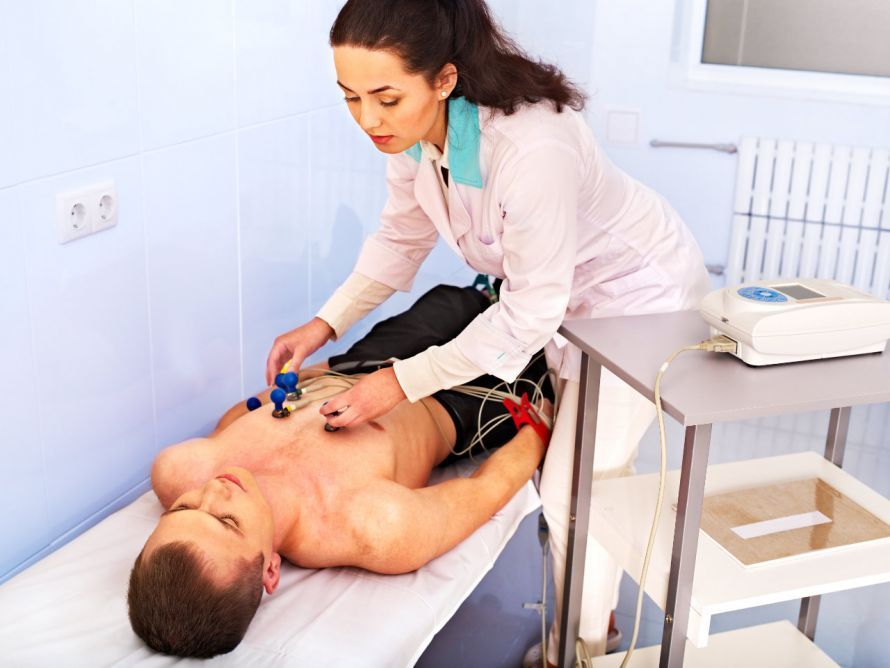
- ECG (e.g., stress ECG or Holter monitoring),
- blood pressure measurement,
- blood tests,
- chest X-ray, and
- an ultrasound examination of the heart
Echocardiography (which shows the function of the heart chambers) distinguishes between systolic heart failure and diastolic heart failure, as well as between heart failure with reduced ejection fraction and heart failure with preserved ejection fraction.
An X-ray often provides additional clues, such as fluid accumulation in the lungs or an enlarged heart.
For geriatric patients, a geriatric assessment is also recommended to evaluate overall functional status and identify possible comorbidities such as sarcopenia or malnutrition in older adults.
Treatment of Heart Failure
Heart failure is incurable. Treatment for heart failure aims to alleviate symptoms, prevent complications, and improve quality of life.
Treatment for heart failure is individualized and depends on the cause and severity of the condition.
Depending on the underlying condition, certain medications are often used:
- ACE inhibitors lower blood pressure
- Beta-blockers prevent arrhythmias
- Diuretics promote fluid excretion, and
- Digitalis preparations improve the heart’s pumping power
It is important for drug therapy that patients consistently take their prescribed medications. Particularly in older adults with multiple pre-existing conditions, the issue of polypharmacy in older adults must be considered—taking too many medications at the same time can cause interactions and jeopardize the success of treatment. In such cases, targeted deprescribing may be advisable.
For patients with life-threatening cardiac arrhythmias, an implantable cardioverter-defibrillator (ICD) may be used. A biventricular pacemaker can also help compensate for heart failure.
If the patient’s condition continues to deteriorate despite medication and invasive treatments for heart failure, a heart transplant may become necessary. For older patients for whom a transplant is not an option, palliative care for the elderly and an advance care plan drawn up early on play an important role in planning future care.
Course and Prognosis of Heart Failure
The course of heart failure varies and depends heavily on the timing of diagnosis and consistent treatment.
In the early stages, the condition can often be kept stable. In compensated heart failure, symptoms usually occur only during physical exertion. Without adequate treatment, however, the condition can worsen. Possible consequences of heart failure include severe limitations in physical performance as well as organ damage. Older patients are particularly at risk of subsequently developing depression in old age or suffering from pneumonia in old age. To prevent falls and further complications, fall prevention measures and early geriatric rehabilitation are recommended.
Life expectancy in heart failure depends on many factors, including the cause, severity, and success of treatment.
Which specialists and specialized clinics treat heart failure?
Specialists in heart failure are cardiologists (doctors specializing in heart diseases). For further diagnosis or specific treatment of heart failure, it may be necessary to consult additional specialists, such as:
- Radiologists
- Vascular and cardiac surgeons, as well as
- Transplant physicians
- Specialized clinics for heart failure are usually cardiology clinics
Frequently Asked Questions
What are the typical symptoms of heart failure?
The most common symptoms include shortness of breath, coughing, reduced physical capacity, and fluid retention. These symptoms can vary depending on the stage of the disease.
How is heart failure diagnosed?
Heart failure is diagnosed through medical history, physical examination, an ECG, imaging, and lab tests.
What treatment options are available?
Treatment for heart failure includes medication, mechanical support devices, and, in severe cases, a heart transplant.
What is the life expectancy for people with heart failure?
Life expectancy with heart failure varies from person to person and depends on the course of the disease, treatment, and comorbidities.
Share this article
Sources
- McDonagh TA, Metra M, Adamo M et al. (2021): 2021 ESC Guidelines for the diagnosis and treatment of acute and chronic heart failure. European Heart Journal. DOI: 10.1093/eurheartj/ehab368
- National Disease Management Guideline on Chronic Heart Failure (NVL), current version.
- Pandey A, Kitzman D, Reeves G (2019): Frailty Is Intertwined With Heart Failure: Mechanisms, Prevalence, Prognosis, Assessment, and Management. JACC Heart Failure.
- Sokoreli I, de Vries JJG, Pauws SC, Steyerberg EW (2016): Depression and anxiety as predictors of mortality among heart failure patients: systematic review and meta-analysis. Heart Failure Reviews.
