An acromioclavicular joint sprain is a common injury to the acromioclavicular joint and often occurs after a direct fall onto the shoulder. This injury damages the ligaments, joint capsule, and tendons of the acromioclavicular joint. Typical symptoms of an acromioclavicular joint sprain include shoulder pain, swelling, and limited range of motion in the arm.
Depending on the severity, the injury is classified according to the Tossy or Rockwood systems. People who participate in high-impact sports or who have fallen onto their shoulder are particularly prone to this injury. The diagnosis is made through a physical examination, imaging studies, and a detailed assessment of the clavicle, scapula, and joint. Treatment for an acromioclavicular joint sprain can be conservative or surgical.
Definition and Causes of Acromioclavicular Joint Dislocation
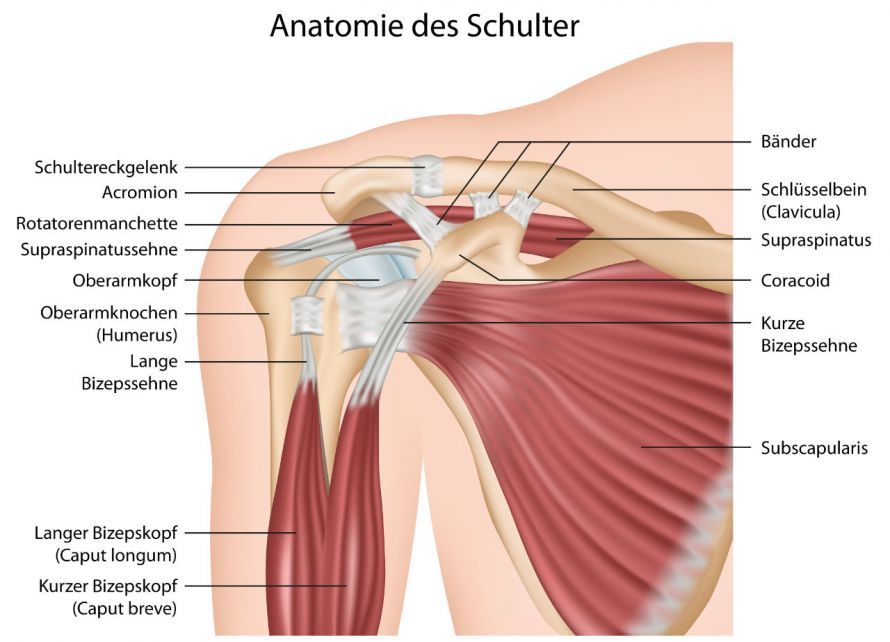
A shoulder joint dislocation is an injury to the ligaments that stabilize the acromioclavicular joint (AC joint, ACG). Synonyms for a shoulder joint sprain therefore include acromioclavicular joint sprain or AC joint sprain.
In most cases of a shoulder joint dislocation, the stabilizing ligaments are dislocated or torn (ruptured).
Depending on the extent of the injury, different degrees of severity are distinguished, classified according to Rockwood Types I–VI. The mechanism of injury is usually a fall onto the outstretched arm.
Treatment of a Shoulder Dislocation
Minor injuries involving ligament dislocation or rupture of the AC ligament (Types I and II) can be treated conservatively. Surgery is not necessary in these cases.
In Type III injuries, where the coracoclavicular ligaments are torn but the muscle fascia is intact and horizontal stability is maintained, surgical treatment may be necessary in individual cases.
More severe injuries (Types IV–VI) are generally treated surgically. There are over 60 different surgical techniques.
Follow-up Care for an Acromioclavicular Joint Dislocation
Follow-up care after surgical treatment usually involves wearing a sling, with a gradual increase in range of motion.
Full range of motion and weight-bearing are typically permitted after up to 8 weeks.
Prognosis for an acromioclavicular joint dislocation
The prognosis is good following both conservative and surgical treatment. Osteoarthritis may develop in the ACG region as a long-term complication. In addition to general surgical risks, the risks associated with surgical treatment include recurrence of clavicle elevation.
FAQ
What is an acromioclavicular joint sprain?
An acromioclavicular joint sprain is a common injury to the acromioclavicular joint between the clavicle and the scapula. It involves damage to the ligaments, joint capsule, and the AC joint. The cause is usually a direct fall onto the shoulder.
What are the symptoms of an acromioclavicular joint sprain?
Typical symptoms of an acromioclavicular joint sprain include shoulder pain, swelling, and limited range of motion in the arm. Many patients adopt a protective posture and complain of pain in the area of the acromioclavicular joint. A visible misalignment at the outer end of the clavicle may also occur.
How is the diagnosis made?
A shoulder acromioclavicular joint sprain is diagnosed through a physical examination and imaging tests. Doctors assess the severity, stability, and extent of injury to the shoulder acromioclavicular joint. The Tossy classification or the Rockwood classification help guide further treatment planning.
When is surgery necessary?
Whether surgical treatment is necessary depends on the severity of the acromioclavicular joint dislocation. Rockwood I or II and Tossy 1 are often treated conservatively. For Tossy 3 or higher-grade dislocations, surgical or arthroscopic treatment may be appropriate.
How long does recovery take after an acromioclavicular joint dislocation?
The recovery time for an acromioclavicular joint dislocation varies depending on the severity of the injury. Conservative treatment involving immobilization and physical therapy often takes several weeks. After surgical treatment, it may take longer for the joint to achieve full stabilization.
Share this article