Chronic wounds are a serious medical problem that affects many people. These wounds do not heal within the normal timeframe and can lead to significant health complications. Patients, family members, and people without a medical background often seek clear and accurate information on this topic.
In this article, you’ll learn everything you need to know about chronic wounds, including their symptoms, causes, potential underlying conditions (such as diabetes), diagnosis, and treatment options. You’ll also find a list of selected specialists in the treatment of chronic wounds.
When is a wound considered chronic?
By definition, chronic wounds are wounds that do not heal within 8 weeks. They result from various causes and often lead to long-lasting pain and significant limitations in the daily lives of those affected.
Common sites include the legs, particularly in patients with diabetes mellitus or circulatory disorders. However, venous diseases (varicose veins and thrombosis) can also lead to chronic wounds.
In the case of foot wounds caused by diabetes mellitus (also known as diabetic foot syndrome), the condition is classified as a chronic wound from the outset. This is because these wounds almost without exception heal poorly and require special attention and treatment. Proper treatment is intended to reduce pain in the wound and the surrounding area and to avoid amputation whenever possible. The quality of life of those affected is often severely compromised. Existing underlying conditions such as diabetes mellitus also complicate the management of these wounds.
What symptoms are caused by chronic wounds?
Chronic wounds exhibit typical symptoms that those affected should take seriously. These include:
Long-lasting pain:
Normally, wounds cause pain initially, but this pain gradually subsides over time. If the pain persists for an extended period, this should be considered a warning sign and a reason to seek medical evaluation. The underlying condition of diabetes can influence pain.
Swelling and redness:
Wounds are usually not irritated on the surface and show neither redness nor swelling. If these clear signs of an (early-stage) infection appear, the causes of the problem should be investigated. In some cases, disinfecting the wound and applying cooling dressings may be sufficient; however, antibiotic treatment is often necessary. This always depends on the cause of the infection. Wound swabs and bacterial testing can provide further information to identify the causes of the wound infection.
Discharge of Wound Fluid or Pus:
If pus is oozing from the wound, this is a clear sign of a wound infection and should prompt further action. Often, the wound must then be opened through surgery. However, since this is associated with varying degrees of pain, general anesthesia is usually necessary.
Skin discoloration:
Skin discoloration can also be an indication of a wound infection and resulting impaired wound healing. Redness, in particular, should be regarded as a warning sign. However, whitish or bluish discoloration should also be taken into account, as these may indicate circulatory problems or other medical conditions.
Odor emanating from the wound:
A foul-smelling wound should always be considered an indication of a wound infection or impaired wound healing, which can become chronic and lead to a chronic wound. Blood poisoning can also occur in an infected and extensive wound, as the cause of the foul odor is almost without exception a bacterial infection.
What are the causes and risk factors for chronic wounds?
The causes of chronic wounds are varied. Among the most common are:
Circulatory disorders:
Poor blood circulation, such as in the case of an ulcus cruris (open leg), leads to an insufficient supply of nutrients and oxygen to the skin. This is particularly the case when the arteries are narrowed or blocked. Venous disorders can also lead to open and poorly healing wounds, as blood enriched with waste products can no longer be properly drained from the tissue. Venous disorders (thrombosis, varicose veins) can cause very large, circumferential wounds on the lower leg. In this case, the condition is referred to as a “gaiter ulcer,” named after the gaiters worn in equestrian sports.
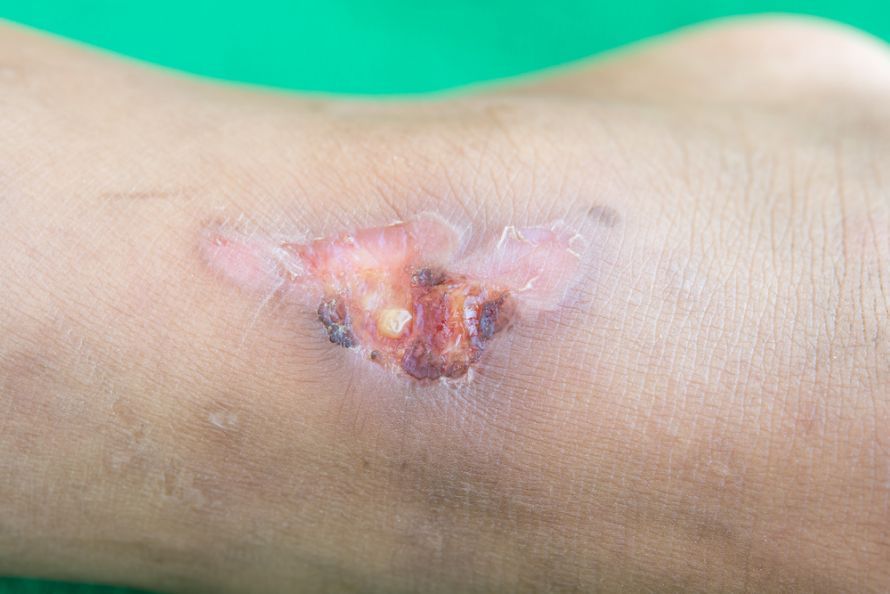
A leg ulcer is a deep, usually weeping wound on the lower leg @ srisakorn /AdobeStock
Diabetes mellitus:
Diabetes mellitus (diabetes) in particular can significantly impair wound healing and lead to chronic wounds. This is due to fluctuations in blood sugar levels, especially elevated blood sugar levels. Consequently, poorly healing wounds can also be an early sign of “diabetes,” which should always be kept in mind. Wounds in people with diabetes are therefore always classified as chronic, as they almost without exception heal poorly.
Pressure ulcers:
Pressure ulcers are, as the name suggests, wounds caused by external pressure. Medically, they are also referred to as decubitus ulcers (plural: decubiti) or decubital ulcers. They can be observed, for example, on the buttocks or coccyx in bedridden patients. However, decubitus ulcers can also—and particularly—develop on the feet due to shoes that are too tight or ill-fitting.
Diabetic wounds, impaired wound margins, and pressure ulcers as causes of chronic wounds
Chronic wounds often develop in connection with diabetic metabolic disorders, a pressure ulcer, or impaired wound margin healing. In diabetes mellitus, circulatory disorders and nerve damage cause even minor injuries to heal poorly.
Impaired wound edge healing indicates delayed cell regeneration and prevents the skin from closing. Pressure ulcers result from prolonged pressure, particularly in immobile patients, and are among the most common causes of chronic wounds. Early pressure relief and consistent wound care are crucial for preventing complications.
Special attention must be given to diabetic foot syndrome, in which even the smallest injuries can lead to a chronic wound. Continuous moist wound therapy supports the healing process and prevents infections. While acute wounds usually heal quickly, chronic lesions require long-term care. However, many chronic wounds can be prevented through targeted measures, especially when risk factors are identified and treated early.
Venous insufficiency, peripheral arterial disease (PAD), and impaired wound healing
Venous insufficiency and peripheral arterial disease (PAD) are among the most common causes of chronic leg wounds. In venous insufficiency, blood pools in the veins, preventing the skin from receiving an adequate supply of oxygen and nutrients. As a result of arterial circulatory disorders, too little oxygen-rich blood reaches the tissue.
Both mechanisms lead to impaired wound healing, which promotes the development of chronic ulcers. Accurate vascular diagnostics and targeted treatment of the underlying condition are crucial for improving wound healing.
Venous leg ulcers, i.e., open leg ulcers resulting from venous insufficiency, are among the most common forms of chronic wounds. Professional wound care in accordance with current expert standards includes both careful diagnosis of the underlying vascular disease and individually tailored therapy. Only through the combined treatment of the wound and the underlying condition can sustainable healing be achieved and the risk of recurrent ulcers be significantly reduced.
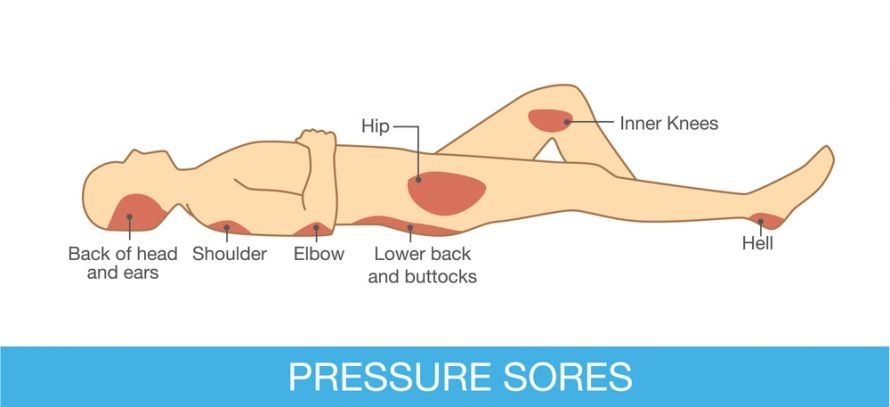
A pressure ulcer is a wound caused by prolonged lying or sitting @ logo3in1 /AdobeStock
How are chronic wounds diagnosed?
Chronic wounds are diagnosed using various examination methods:
Medical history:
During the medical history review—which is synonymous with taking a patient’s medical history—the healthcare provider asks about previous illnesses, prior surgeries, and the use of specific medications. Conditions that may be associated with chronic wounds are also—and particularly—addressed here. As mentioned above, diabetes mellitus, circulatory disorders, and venous diseases are of particular importance.
Clinical examination:
During the clinical examination, the appearance and size of the wound, as well as the condition of the surrounding skin, are assessed. Initial clues regarding the underlying causes of the wound may already be identified at this stage. Ulcers on the toes or on the outer side of the lower leg suggest arterial disease. Extensive wounds on the inner side of the lower leg are always indicative of venous disease.
Blood tests:
Blood tests can help identify underlying conditions such as diabetes mellitus. Infectious diseases can also be detected early through blood tests and, ideally, treated in a timely manner.
Wound swab:
A swab can be used to identify infectious pathogens. If these are detected—which normally takes 2–3 days—treatment can begin with appropriate antibiotic therapy. Often, antibiotic therapy must be initiated at the time the swab is taken, even though the causative pathogens have not yet been identified. In such cases, a broad-spectrum antibiotic is administered to combat the majority of common infectious agents. Once the swab results are received, antibiotic therapy should be de-escalated, which means switching to antibiotics with a narrower spectrum of activity to target only the specific bacteria causing the infection. This helps reduce the risk of bacteria developing resistance. Resistant bacteria respond to only a very limited number of antibiotics and are very difficult to treat.
Imaging Techniques:
Ultrasound or X-rays can be used to assess the depth of the wound and check for any bone involvement. Photos are also frequently taken to visualize the wounds and document their progress. This allows for monitoring over a longer period of time to determine whether and to what extent wounds are healing and becoming smaller.
How are chronic wounds treated?
The treatment of chronic wounds requires a holistic approach and collaboration among various medical disciplines. The following measures are part of the treatment regimen:
Wound cleansing and care:
Regular cleaning and special dressings promote healing. In some cases, this can be achieved solely through disinfection measures. No anesthesia is required for this; only disinfectant solutions and dressings are needed.
Chronic wounds require care by healthcare professionals @ Trip /AdobeStock
Surgical procedures:
More often, however, a surgical procedure is necessary to clean the wound and facilitate healing. This usually requires anesthesia to remove dead tissue.
Medication:
In some cases, antibiotics are necessary to combat pathogens and, consequently, infections. However, medications to improve blood circulation can also be helpful in many cases. These are available in tablet form, but sometimes infusions must also be administered.
Compression therapy:
Compression therapy may be indicated, particularly for venous disorders, to reduce congestion caused by impaired venous outflow and thereby promote wound healing. However, this method may be contraindicated in cases of circulatory disorders caused by arterial disease (peripheral arterial occlusive disease). This is because compression therapy (using bandages or medical stockings) further exacerbates the existing narrowings in the arteries.
Nutritional Counseling
A balanced and healthy diet supports wound healing. A protein-rich diet is particularly recommended to strengthen the immune system and support the regeneration and renewal of dead tissue.
What is the course and prognosis for chronic wounds?
The course of chronic wounds depends heavily on the cause and treatment:
- Depending on the cause: Wounds resulting from easily treatable causes, such as pressure ulcers, often have a better prognosis.
- Avoiding complications: Infections and further circulatory problems must be avoided to support healing.
- Long-term care: Regular doctor visits and consistent wound care are crucial.
Chronic wounds pose a serious challenge, but they are no reason to despair. With the right diagnosis and a comprehensive treatment plan, many wounds can be successfully healed. Take care of your health and don’t let yourself get discouraged—modern medical procedures offer numerous options for successful treatment.
FAQ on Chronic Wounds
What treatment options are available for patients with chronic wounds?
Patients with chronic wounds require individualized therapy that includes targeted local treatment in addition to managing the underlying condition. Modern, moisture-retaining wound dressings are used to promote healing and prevent infections.
How long does it take for a chronic wound to heal?
Healing depends on the cause, comorbidities, and wound care. It typically takes between four and twelve weeks, though it may take longer in complex cases. Regular follow-up with specialized wound care experts is crucial for treatment success.
Why is moist wound therapy important?
Keeping a wound moist supports new cell growth and prevents the tissue from drying out. Modern moist wound dressings create an optimal environment, promote blood circulation, and accelerate healing, particularly in patients with underlying diabetes.
What does ICW mean in the context of chronic wound care?
ICW stands for Initiative Chronische Wunden e.V. – a professional association that develops standards and training programs for the care of chronic wounds. Nurses and physicians trained according to ICW guidelines ensure professional wound care in accordance with current expert standards.
How is local therapy performed for diabetic wounds?
In the treatment of diabetic wounds, local therapy follows a structured approach: removal of necrotic tissue, cleansing, moist wound dressings, and pressure relief. Regular checkups help prevent complications and promote wound healing within a few weeks.
Share this article

About the medical author
Prof. Dr. med. Susanne Regus
Medical Author
Prof. Dr. med. Susanne Regus – medical author: expert articles, professional insights and medical expertise in the Leading Medicine Guide.
View full expert profile →Sources
- Deutsche Diabetes Gesellschaft: www.deutsche-diabetes-gesellschaft.de
- Deutsche Gesellschaft für Wundheilung und Wundbehandlung: www.dgfw.de