Varicose veins, medically known as varices, are visible, twisted enlargements of superficial veins that develop when venous valves no longer close properly. Blood pools, blood flow to the heart slows down, and symptoms such as a feeling of heaviness, itching, or nighttime calf cramps may occur. Understanding how varicose veins develop helps you better interpret your symptoms and choose an appropriate treatment for varicose veins.
Symptoms of Varicose Veins
The term “varicose veins” has nothing to do with a cramp, but rather with the Old High German word for “to bend.”
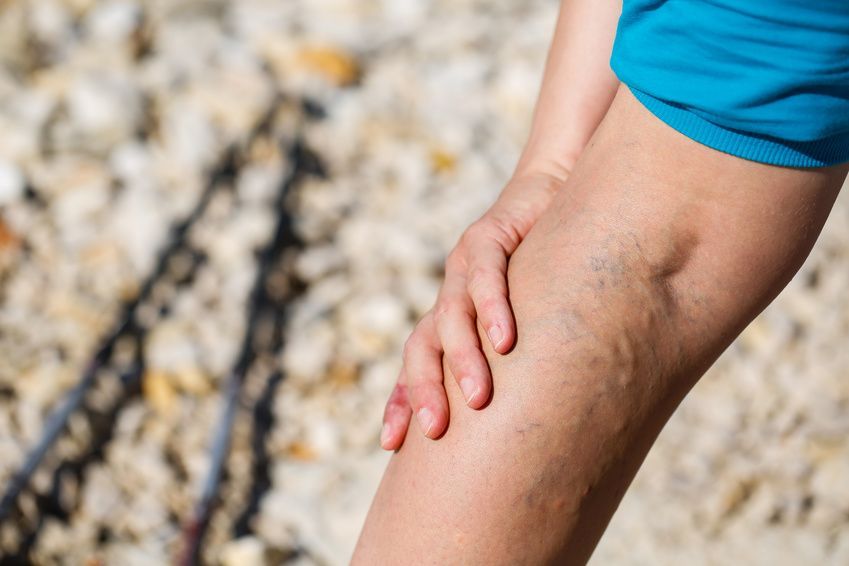
In varicose veins, the superficial veins beneath the skin are visible as curved, winding blood vessels. Varicose veins most commonly occur on the legs, but they can also develop in the abdominal area and, in men, in the scrotal region (known as varicoceles).
The overburdened veins are not only visible as varicose veins but are also usually accompanied by symptoms. The following symptoms are typical:
- Pain in the legs
- Legs may feel heavy, tight, and itchy
- especially at night, calf cramps
- Brownish discoloration and hardening of the skin, particularly on the shins
These symptoms often worsen in warm temperatures and in the evening, as well as in women before their menstrual period.
While some people notice only mild varicose veins without significant limitations, others with pronounced varicose veins suffer from severe discomfort in their daily lives. Many people live with varicose veins for years before seeking medical help due to increasing pain or swelling.
Causes of Varicose Veins
Veins transport blood from the blood vessels back to the heart. This process places a great deal of strain on the veins in the legs in particular, as they must move blood against gravity.
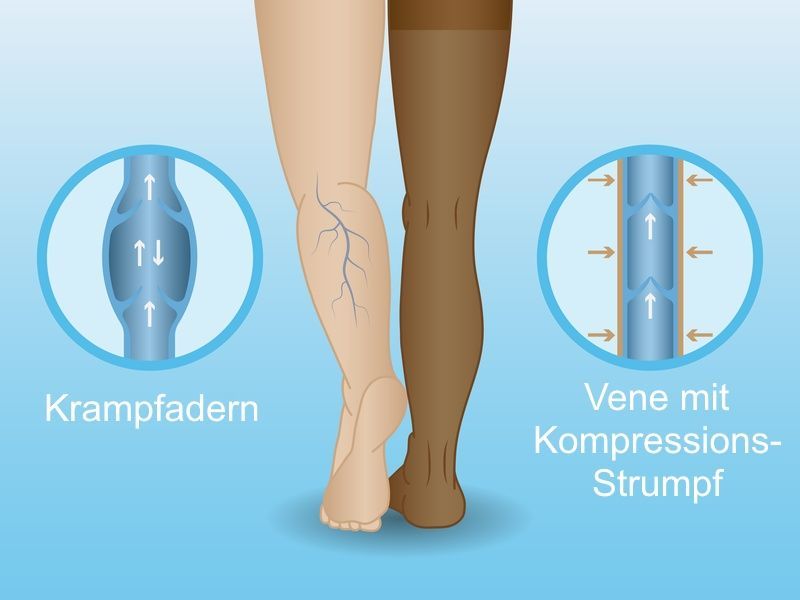
Breathing, as well as the muscles of the feet and legs, act as natural pumps. The muscles compress the veins during movement, allowing the blood to reach the heart. Each vein also has dozens of venous valves that prevent blood from flowing back into the vein when the muscles are relaxed. The venous valves thus act as one-way valves.
Varicose veins develop when the veins are overloaded and the venous valves no longer function properly. As a result, blood pools in the vessels. This pooling of blood causes the veins to dilate, making them visible beneath the skin. Varicose veins are thus the visible sign of venous insufficiency.
The causes of varicose veins are varied:
- a genetic predisposition to venous insufficiency
- lack of exercise and, in general, a predominantly standing or sitting lifestyle without variation
- excess weight
- Smoking
- Pregnancy (increased weight and hormonal changes)
The hormone estrogen is generally associated with venous disorders. For this reason, taking the birth control pill is generally not recommended after age 30.
Diagnosis of Varicose Veins
If you experience any of the signs of varicose veins mentioned above, you should consult a vein specialist (phlebologist) or a vascular specialist (angiologist). The earlier treatment for varicose veins begins, the sooner you can prevent the condition from worsening.
To diagnose varicose veins, the doctor first performs a physical examination. Varicose veins usually appear on the legs, especially the lower legs. Therefore, the specialist will first examine the legs and palpate them to check for abnormalities. This examination is performed while the patient is standing, sitting, and lying down.
Various methods are available for a more detailed examination of the veins. These include color Doppler ultrasound (color-coded duplex sonography). This allows the doctor to visualize the veins and determine whether and where blood is actually pooling.
If the deeper leg veins are affected by varicose veins, the doctor will also use phlebography to make a diagnosis. This is an X-ray examination using a contrast agent. During the procedure, a contrast agent is injected into the dorsal vein of the foot under local anesthesia. It makes all the leg veins visible, which can then be examined for varicose veins.
Phlebography is generally used to diagnose varicose veins only in cases involving veins with complex courses or deeper veins in the leg.
Using light-reflection rheography (LRR), also known as photoplethysmography, it is possible to assess the pumping function of the leg veins. A measuring device emits infrared rays toward the affected areas, and the red blood pigment in the vein reflects the infrared light through the skin.
When the patient performs simple leg movements, the veins empty due to muscle contraction and then refill when the muscles relax. The fluctuations in venous volume lead to changes in the reflection of the infrared light, which are then analyzed. This allows the specialist to draw conclusions about the vein’s refill time.
The shorter the refill time, the more damaged the vessel is. The refill time is normally 25 seconds.
Treating Varicose Veins
Although varicose veins cannot be cured, the right treatment can help prevent the condition from worsening. Relief is also possible.
If varicose veins remain untreated, persistent symptoms may develop. These include:
- severe leg swelling
- reddened and painful veins that feel warm to the touch
- Bleeding
- ulcers
- open wounds (“ulcerated leg”)
- Thrombosis
Medicine offers patients various treatment options for varicose veins. These include
- treatment with compression stockings (compression therapy),
- various sclerotherapy procedures, including laser therapy, as well as
- surgical methods.
For optimal treatment of venous disorders, consult a phlebologist.
Applying Pressure to the Veins with Compression Therapy
Compression therapy is performed using compression stockings that apply targeted pressure to the veins. They extend from the ankles, over the knees, up to the thighs.
The pressure on the damaged, dilated veins can cause the veins to narrow. This also helps the venous valves close more effectively. As a result, blood flow in the legs improves.
The pressure exerted by compression stockings is greatest at the ankle and gradually decreases toward the thigh. For this reason, compression stockings should not be confused with support stockings, which distribute a significantly lower level of pressure evenly across the leg.
Compression stockings are tailored to the patient’s needs and made to measure. Depending on the severity of varicose veins, there are different compression classes or levels of compression. The stockings must be replaced after six months at the latest.
However, compression stockings merely alleviate the symptoms of varicose veins; the underlying problem persists.
Sclerotherapy (Vein Sclerotherapy) for Varicose Veins
Sclerotherapy is used for milder cases of varicose veins. During the procedure, the doctor injects a liquid or foam into the patient’s veins, which artificially induces inflammation of the veins. The vein walls stick together and subsequently break down slowly, making surgical intervention unnecessary.
Modern procedures use microfoam, which can be precisely injected into the desired location in the vein under ultrasound guidance.
Afterward, compression stockings must be worn to promote the breakdown of the sclerosed veins. In addition, plenty of exercise is necessary to stimulate blood flow in the remaining veins.
The procedure is performed on an outpatient basis under local anesthesia. It can be repeated as many times as necessary, which is usually required to achieve lasting, reliable results.
Laser Therapy—Sclerotherapy Using Heat
Laser therapy is another treatment for varicose veins that leads to the obliteration of the vessels. The doctor inserts a laser probe into the vessel through a small incision and uses it to generate targeted heat. This heat warms the blood and is thus transferred to the vessel wall, causing it to seal shut.
In a gradual process, the vein then breaks down and, as with sclerotherapy, does not need to be removed.
Medical lasers are precisely calibrated for their intended use to ensure highly accurate and targeted treatment. As a result, laser therapy for varicose vein removal is painless and yields impressive results.
Laser therapy is usually performed on an outpatient basis under local anesthesia. After the procedure, the patient must wear compression stockings for about four weeks.
Surgical Treatment of Varicose Veins
In contrast to sclerotherapy and laser therapy, varicose veins are completely removed during a surgical procedure. Varicose vein surgery is generally used to treat varicose veins in the large veins (trunk veins).
This varicose vein treatment is particularly recommended in cases of complications such as an “open leg,” severe pain, or inflammation. Commonly performed varicose vein surgeries include
- stripping
- crossectomy
- phlebectomy
In stripping, the varicose veins are removed from the leg using a probe inserted into the veins. The doctor inserts the small, flexible probe into the vein through an incision in the groin, where it becomes knotted. The doctor then pulls the vein out of the leg.
In a partial stripping procedure, the doctor removes only the diseased portion of the vein, while the healthy portion is preserved. Various types of catheters can be used for this, such as a Babcock catheter (Babcock procedure) or a cryocatheter (cryostripping).
During a crossectomy, the connections between the superficial and deep venous systems are severed. This procedure is often performed prior to a stripping or partial stripping. This allows the doctor to subsequently remove only the diseased portion of the vein from the leg using a partial stripping technique.
A phlebectomy is primarily used to remove smaller side branches of the larger veins. Along the affected veins, the doctor makes micro-incisions (1–2 mm) and inserts a small hook into the subcutaneous fatty tissue. Using this, the specialist pulls out the diseased vein and removes it piece by piece.
The doctor then closes the incision with a fine suture, a band-aid, or skin adhesive.
For more information on varicose vein treatment, see the linked article “Varicose Vein Therapy—With Foam, Light, or Steel?”
Preventing Varicose Veins
Varicose veins generally cannot be prevented. However, you can still take steps to support your vein health and thereby reduce your risk of developing the condition:
- Exercise: especially endurance sports like jogging, cycling, and swimming
- Quit smoking
- Lose excess weight
- Avoid standing or sitting for prolonged periods on a regular basis
- Take alternating hot and cold showers to improve blood circulation in your legs
- Avoid wearing high-heeled shoes
- Follow a high-fiber diet with reduced sugar and fat content
FAQs on Varicose Veins
How exactly do varicose veins develop?
Varicose veins develop when the valves in the leg veins no longer close tightly, making it harder for blood to flow from the leg veins back to the heart. The blood backs up, causing the vein to dilate and become twisted, making varicose veins visible. The main causes of varicose veins include a congenital weakness of the connective tissue, hormonal influences, being overweight, lack of exercise, and prolonged standing or sitting. These factors can contribute to the development of varicose veins because they place additional strain on the venous valves. These varicose veins often develop over many years, initially going unnoticed. Typically, superficial veins are affected, but varicose veins in the perforating veins can also play a role.
What are the typical symptoms of varicose veins, and what discomforts are associated with them?
Common symptoms include heavy, tight legs, itching, nighttime calf cramps, and visible, winding veins. The symptoms often worsen in warm weather or after standing or sitting for long periods. Some people initially have only mild, barely noticeable varicose veins that cause little discomfort, while others experience severe symptoms early on, including swelling, a feeling of tightness, or pain. Varicose veins can then cause noticeable pain in daily life, may limit mobility, and, over time, lead to skin changes and a feeling of pressure, causing those affected to suffer significantly from their varicose veins.
What are the risk factors, and who is particularly likely to develop varicose veins?
Risk factors include genetic predisposition, pregnancy, obesity, smoking, lack of exercise, and prolonged standing or sitting due to occupational requirements. Age and hormonal factors also increase the risk of developing varicose veins. These risk factors can contribute to varicose veins by increasing pressure in the leg veins and weakening the venous valves. If they are not detected and treated in time, this venous condition can slowly worsen over the course of years.
Are varicose veins harmless, or do they pose a risk of complications?
Initially, varicose veins are often primarily a cosmetic issue. If left untreated, varicose veins can worsen and lead to complications such as phlebitis, bleeding, skin changes, and even leg ulcers; in rare cases, they can progress to deep vein thrombosis. The more pronounced the varicose veins are and the more severe the symptoms, the more important it is to seek a specialist’s evaluation to prevent long-term damage in a timely manner.
How are varicose veins diagnosed, and what will the doctor tell you?
The diagnosis of varicose veins includes a medical history, a visual examination while standing, and an assessment of the veins using color Doppler ultrasound to evaluate blood flow and visualize reflux. For specific issues, phlebography or photoplethysmography may be used as supplementary tests. Your first point of contact may be your primary care physician, but you will often be referred directly to a phlebologist or vascular specialist. During the consultation, your doctor will explain the changes present, the primary causes of your varicose veins, and which treatment is appropriate.
What treatment options are available for varicose veins, and which therapy is appropriate?
Treatment for varicose veins depends on the severity of the condition and the associated symptoms. Conservative measures such as exercise, weight loss, and compression stockings help alleviate symptoms caused by varicose veins and slow their progression. For larger varicose veins, sclerotherapy, endovenous laser therapy, or surgical procedures may also be considered. These methods can remove varicose veins or seal them from the inside, thereby improving blood flow. Together with your specialist, you will decide which therapy is best suited to your individual case.
How does compression therapy work, and who does it help?
Compression stockings apply pressure to the affected veins from distal to proximal. They reduce the diameter of the veins, support the function of the venous valves, and improve the return of blood to the heart. This can alleviate existing symptoms and reduce edema. Compression therapy can help with varicose veins by relieving pressure on the veins, reducing swelling, and slowing the progression of the condition. It is particularly important for people who already suffer from varicose veins or are at increased risk.
What is sclerotherapy, and when is it recommended?
In sclerotherapy, a liquid or foamy sclerosing agent is injected into the affected vein. The vein wall seals shut, and the vein is broken down by the body. The procedure is particularly suitable for small to medium-sized varicose veins and can be repeated as needed if varicose veins form again over time. Sclerotherapy is a minimally invasive way to treat varicose veins without making large incisions.
How does laser therapy treat varicose veins?
Laser therapy closes off diseased veins from the inside using heat. A laser probe is inserted through a small incision, which selectively heats and seals the vein wall. The vein is then reabsorbed by the body, so that it no longer causes any symptoms. Laser therapy is often performed on an outpatient basis and is an established alternative to traditional surgery, particularly for straight trunk veins.
When do varicose veins need to be surgically removed?
Surgery is particularly advisable in cases of large or pronounced varicose veins, when complications such as inflammation, bleeding, or a leg ulcer are a risk, or when conservative treatments are insufficient. Typical surgical procedures include stripping, crossectomy, and phlebectomy, in which diseased sections of the veins are selectively removed. The goal is to improve blood flow and reduce the risk of further damage.
Can varicose veins be prevented, and what helps in everyday life?
Complete prevention is not always possible, but there are measures that counteract factors contributing to the development of varicose veins. These include regular exercise, endurance sports, weight loss, avoiding prolonged standing or sitting, elevating the legs, alternating hot and cold showers, and a lifestyle that supports vascular health. These strategies can help alleviate varicose veins, slow their progression, and support long-term vein health.
Do varicose veins often recur, and what should you do if new ones form?
Even after successful treatment, varicose veins can reappear over the course of a person’s life because the underlying venous insufficiency persists. New or recurring varicose veins do not mean that the previous treatment was ineffective, but rather that the disease process is still active. In such cases, follow-up examinations, adjustments to compression therapy, and, if necessary, further procedures may be required to manage symptoms and prevent complications.
What role do spider veins and other minor venous changes play?
Spider veins are very fine, superficial veins and are considered a special form of varicose veins. They are usually a cosmetic concern and rarely cause severe symptoms. Nevertheless, they can indicate general venous insufficiency. Mildly noticeable varicose veins and spider veins should be evaluated by a doctor if they change, cause symptoms, or if there is a family history of severe varicose veins.
How do varicose veins affect daily life, and when is treatment necessary?
Varicose veins often lead to a feeling of heaviness, fatigue, and swelling in the legs and can significantly impair quality of life. Many people wonder what happens to varicose veins if they remain untreated for years. Untreated varicose veins can enlarge, damage the skin, and increase the risk of inflammation and wounds. Surgery is recommended if there are severe symptoms, skin changes, complications, or if the varicose veins are particularly pronounced. Your doctor will work with you to determine which treatment for varicose veins is most appropriate for your situation.
n
Share this article