Bladder stones are urinary stones, also known as calculi, that form as a result of the crystallization of certain salts in the urine and are deposited in the bladder. Sometimes they are passed naturally from the body; in other cases, they must be surgically removed. Bladder stones can occur at any age, but are more common in older adults and people who are overweight.
Below you will find additional information as well as a selection of specialists in the treatment of bladder stones.
Formation of Bladder Stones
Bladder stones can form either directly in the bladder or in the kidneys. From there, they travel through the ureters into the bladder and are therefore also referred to as secondary bladder stones.
Bladder stones are caused by specific salts in the urine. Normally, these salts are dissolved in the urine and excreted. However, if the salt concentration is too high, they crystallize and form small grains known as calculi. New layers of crystallized salt can continue to form on top of these. As a result, the stones grow and can reach a size that causes symptoms.
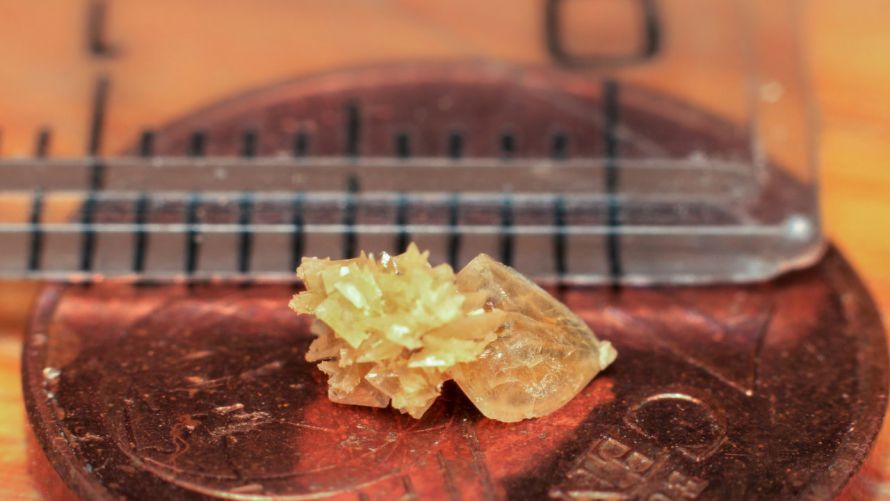
Classification of Bladder Stones
Bladder stones are classified based on their chemical composition. Classifying bladder stones is important for determining the cause, making a diagnosis, and providing treatment. The stones consist of different salts:
- Calcium oxalate stones (about 75 percent of all urinary stones)
- Struvite stones made of magnesium ammonium phosphate (about 10 percent)
- Urate stones composed of uric acid (about 5 percent)
- Calcium phosphate stones (about 5 percent)
- Cystine stones (rare)
- Xanthine stones (rare)
Symptoms of bladder stones
In many cases, the body flushes out bladder stones on its own. In such cases, they are harmless and cause no symptoms.
However, the stones may sometimes block the opening to the urethra, thereby obstructing the flow of urine. They can also grow large enough that they can no longer be passed in the urine.
In both cases, the following symptoms may occur:
- Staccato micturition (repeatedly interrupted urine flow),
- frequent urge to urinate with only small amounts of urine,
- a sensation of a foreign body,
- pain at the end of urination (in men, sometimes extending to the tip of the penis),
- abdominal pain,
- bladder spasms,
- blood in the urine,
- Mucosal irritation and associated inflammation of the bladder,
- urinary retention (inability to pass urine).
Causes of Bladder Stones
There are many possible causes of bladder stones. Often, several factors contribute to the formation of urinary stones. Factors involved in the formation of bladder stones include:
- obstruction caused by disease (for example, due to an enlarged prostate),
- urinary tract infection,
- an unhealthy diet high in animal fats and proteins as well as foods containing oxalic acid (such as nuts, rhubarb, and coffee),
- low fluid intake,
- an unbalanced diet high in meat and dairy products,
- excessive intake of vitamin D3,
- deficiencies in vitamins B6 and A,
- foreign objects in the bladder (such as a urinary catheter or surgical sutures),
- osteoporosis and the associated increased release of calcium into the blood,
- excessive magnesium intake.
Diagnosis of Bladder Stones
If bladder stones are suspected, you should see a specialist in urinary tract disorders—a urologist.
The urologist will first take your medical history, asking about your symptoms and past medical history. He or she will then perform a physical examination, which includes listening to your abdomen with a stethoscope and gently palpating it. In addition, the patient’s blood and urine will be analyzed in a laboratory.
In addition, imaging techniques such as X-rays or ultrasound may be used. However, these methods can only detect calcium-containing bladder stones on the images; other types of stones are radiolucent.
Another option is computed tomography, also known as a CT scan. This allows the doctor to detect all types of bladder stones.
A cystoscopy (bladder examination) can also provide information about the possible presence of bladder stones. During this procedure, a rod-shaped device with a camera is inserted into the bladder. The advantage is that the doctor can also identify other possible causes of the blockage of urine flow.
Treatment of Bladder Stones
Treatment for bladder stones depends on the size and location of the stones. In some cases, targeted removal is necessary; in others, the stones may pass on their own.
Certain medications and increasing fluid intake can help facilitate the passage of the stones. Pain relievers are used to manage any pain that may occur as the bladder stones pass.
Sometimes, the stones can be treated using a procedure called chemolitholysis. In this procedure, the bladder stones are dissolved or broken down through a chemical reaction so that they can be flushed out.
In some cases, it is necessary to remove the stones surgically. The surgeon removes smaller stones directly during cystoscopy or breaks them up with forceps.
Open surgery is rarely performed these days. However, it may be necessary, for example, if the doctor is unable to access the bladder during a cystoscopy because it is blocked by a stone.
Extracorporeal shock wave lithotripsy (ESWL) is now frequently used to treat bladder stones. In this procedure, the bladder stones are broken up into smaller pieces using shock waves, which can then be passed in the urine.
Share this article