News
Circulatory Disorders—Explained Simply

Sabine Schneider ·
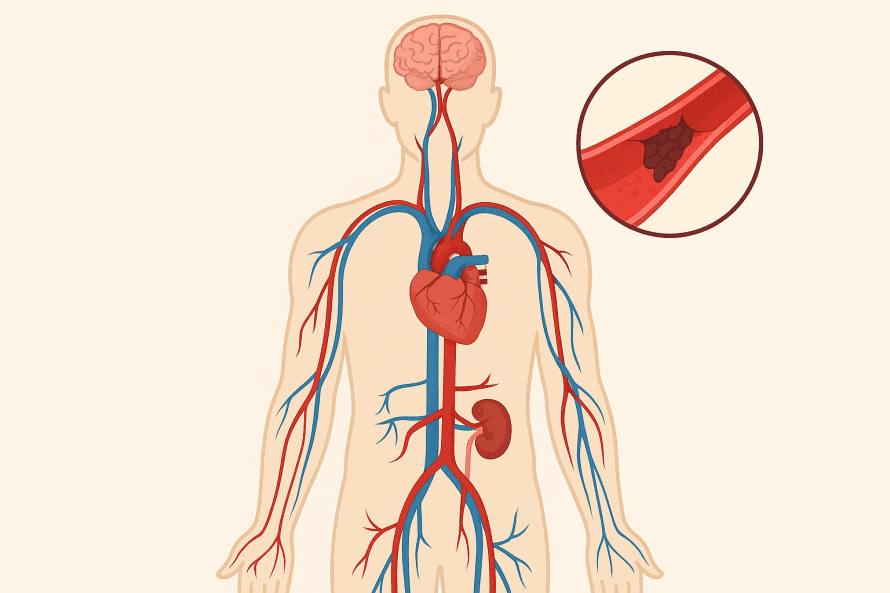
When organs or tissues no longer receive an adequate blood supply, this is referred to as a circulatory disorder. This can develop gradually or occur suddenly—and typically affects the legs, arms, brain, and heart, as well as internal organs.
Causes and Risk Factors
The most common cause is a narrowing or blockage of blood vessels—usually due to atherosclerosis (calcification and plaque buildup in the artery walls).
Other causes include:
- elevated blood lipid levels, high blood pressure, diabetes
- smoking and lack of physical activity
- vascular spasms or vascular injuries
- in acute forms: embolisms or thromboses
Risk factors include advanced age, male gender, genetic predisposition, and chronic diseases.
Symptoms—how can I recognize a circulatory disorder?
Symptoms depend heavily on which part of the body is affected:
- In the legs: pain when walking (“intermittent claudication”), cold or pale extremities, tingling, or numbness.
- In the arms or hands: symptoms similar to those in the legs—such as a sensation of coldness or sensory disturbances.
- In the heart or brain: rapid fatigue, chest pain, dizziness, visual disturbances, or sudden loss of function.
In advanced stages, tissue and organ function may be impaired.
Diagnosis—how is blood flow assessed?
A thorough medical history is essential, followed by:
- An ultrasound examination of the blood vessels (e.g., duplex sonography) to assess blood flow and vessel diameter.
- Imaging techniques such as CT or MRI if deeper vascular segments are affected.
- In specific cases, vascular imaging via angiography.
General physical examinations and measurements of pulse, skin color, and temperature are also important.
Treatment—what can be done?
Treatment depends on the cause, location, and extent of the condition:
Conservative measures
- Lifestyle changes: quitting smoking, regular exercise, healthy diet.
- Management of risk factors: blood pressure, blood sugar, and lipid metabolism.
- Compression therapy or measures to improve blood circulation for peripheral forms.
Interventional or surgical procedures
- In cases of significant vascular narrowing or blockages, angioplasty or vascular bypass surgery may be necessary.
- In specific cases, a stent is implanted to restore blood flow.
The decision is based on test results, age, and comorbidities.
Follow-up Care & Prevention
Consistent follow-up care is crucial:
- Regular monitoring of vascular health and risk factors.
- Getting up early after procedures and incorporating exercise into daily life.
- Long-term lifestyle changes to prevent relapses.
- For chronic conditions: Adjusting treatment as the condition progresses.
Prognosis and Possible Complications
The earlier a circulatory disorder is detected and treated, the better the prognosis. If left untreated, serious consequences may result: muscle and tissue damage, impaired wound healing, and, in extreme cases, amputation or organ damage. Following successful treatment, a significantly improved quality of life is possible.
Share this article
Verified expertise
Recommended specialists
15 specialists
15 results


Dr. med. Dipl. oec. med., FESC Michael Lichtenberg
Chief Physician


Dr. med. Konstantinos Verginis
Duisburg


Dr. med. (syr) Amer Jomha
Bad Hersfeld

Dr Thomas Riester
Karlsbad




Professor Frank Breuckmann
Kitzingen






1 / 2
News
Read next
- News
Scabies: A contagious skin disease that is easily treatable
Oct 26, 2026
Severe itching and minor skin changes should be taken seriously
Read more - News
Heat Rash: What's Behind the Itchy Blisters
Oct 23, 2026
Heat Rash: Heat and Sweat Can Disrupt the Skin's Balance
Read more - News
Enlarged Prostate – When Medication Is Sufficient and When Surgery Is Recommended
Oct 21, 2026
Why Many Men Ignore Urinary Problems for Too Long
Read more