Prof. Tienush Rassaf
Specialist for Cardiology, Sports Cardiology in Essen
University Hospital, Essen | Western German Cardiac and Vascular Center· Hufelandstr. 55, 45122 Essen
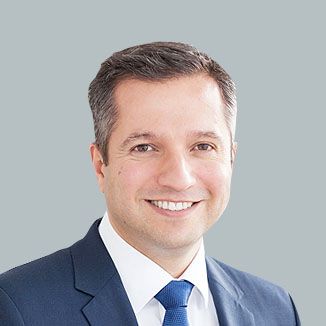
Prof. Rassaf is very familiar with the extensive spectrum of cardiovascular medicine. The highly specialized physician has an outstanding expertise, especially in minimally invasive procedures involving cardiac catheters and in complex coronary artery diseases.
Areas of focus
- Angiology treatment
- HOCM
- CHD
- LAA closure
- MitraClip
- Oncologic cardiology
- PFO / ASD closure
Admission criteria
- At least 10 years of surgical and treatment experience
- Expertise in modern diagnostic and surgical procedures
- An outstanding treatment focus within your own specialist area
- Member of a leading national professional association
- Leading professional position
- Active participation in specialist events (e.g. lectures)
- Active in research and teachin
- Evaluated quality management (e.g. certification)
- Medical specialist title (Cardiology)
- Medical specialist title (Cardiology)
Curriculum vitae
Scientific Training and Positions
| since 01/2022 | Certification of the Cardio-Oncology unit of the Department of Cardiology and Vascular Medicine, University Hospital Essen as ,ICOS Center of Excellence – Gold Status’ |
| since 10/2021 | Founding member and Vice President of the ICOS Chapter Germany |
| since 04/2020 | Vice Dean for Research, Medical Faculty, University Duisburg Essen, Germany |
| since 04/2018 | Founding member and chairmen of the working group ‘Cardiooncology’ of the German Cardiac Society (DGK) |
| since 01/2017 | Director of the Department of Cardiology and Vascular Medicine, West German Heart & Vascular Center Essen (WHGZ), University Duisburg-Essen, Germany |
| since 2016 | Medical Director of the West German Heart and Vascular Center Essen (WHGZ), University Duisburg-Essen, Germany |
| since 08/2015 | Full Professor (W3) for Internal Medicine and Cardiology and Director of the Department of Cardiology at the West German Heart- and Vascular Center Essen (WHGZ), University Duisburg-Essen, Germany |
| 2013 – 2015 | Vice-Director of the Department of Cardiology, Pulmonary Diseases, and Vascular Medicine, Heinrich Heine University Düsseldorf, Germany |
| 2010 - 2015 | Heisenbergprofessor (W2) for Internal Medicine and Myocardial Infarction of the German Research Foundation at the Heinrich Heine University Düsseldorf, Germany |
| 2008 | Habilitation and Venia Legendi in Internal Medicine (Transport, Metabolism and Function of Nitric Oxide and Nitrite in the Cardiovascular System) |
| 2005 - 2008 | Leader of the CardioBioTech Research group of the Dept. of Cardiology, University Hospital Aachen, Germany |
| 2002 - 2003 | Postdoctoral fellow, Department of Cardiovascular Physiology, Heinrich Heine University Düsseldorf, Germany |
| 2001 – 2002 | Postdoctoral fellow, Department of Molecular and Cellular Physiology, Louisiana State University, Shreveport, LA, USA |
| 2001 | Doctoral thesis: The NO/O2 assay: Possibility of simultaneous determination of nitric oxide and superoxide anion radicals considering their interaction (‘Dr. med’ with magna cum laude) at the Division of Cardiology, Pulmonary Diseases and Vascular Medicine, Heinrich Heine University Düsseldorf, Germany |
Clinical Training and Positions
| since 2016 | Medical Director of the West German Heart and Vascular Center Essen, University Duisburg-Essen, Germany |
| since 08/2015 | Director of the Department of Cardiology and Vascular Medicine, University Hospital Essen, Germany |
| 2013 – 2015 | Vice-Director of the Department of Cardiology, Pulmonary Diseases, and Vascular Medicine, Heinrich Heine University Düsseldorf, Germany |
| 2009 - 2015 | Attending, Department of Cardiology, Pulmonary Diseases and Vascular Medicine, University Hospital Düsseldorf, Germany (Prof. Dr. M. Kelm) |
| 2011 | Board Certification ‘Angiology’ |
| 2011 | Board Certification ‘Emergency Medicine’ |
| 2010 | Board Certification ‘Cardiology’ |
| 2008 | Board Certification ‘Internal Medicine’ |
| 2005 - 2009 | Resident/Attending, Department of Cardiology, Pulmonary Diseases, Vascular Medicine and Intensive Care Medicine, RWTH Aachen, Germany |
| 2003 - 2005 | Resident, Department of Cardiology, Pulmonary Diseases and Vascular Medicine, University Düsseldorf. Germany |
Scholarships and Awards
| 2018 | Fellow of the American College of Cardiology (FACC) |
| 2010 | Heisenberg professorship of the German Research Foundation (DFG) |
| 2009 | Fellow of the European Society of Cardiology (FESC) |
| 2009 | Heisenberg scholarship of the German Research Foundation |
| 2009 | Ernest-Solvay-Research Award for Medicine and Pharmacy |
| 2006 | Hans and Gertie Fisher Research Award |
| 2006 – 2007 | Research scholarship of the Medical Faculty of the RWTH Aachen, Germany |
| 2002 – 2003 | Research scholarship of the German Cardiac Society (DGK) |
| 2001 – 2002 | Research scholarship of the German Research Foundation (DFG) |
Editorships
| since 2020 | International Journal of Molecular Sciences (Section Editor) |
| since 2019 | Scientific Reports |
| since 2019 | Cardio News (Chief Editor) |
| since 2016 | European Journal of Medical Research (Section Editor) |
| since 2016 | Healthmanagement.org (Chief Editor, cardiology) |
| since 2013 | Basic Research in Cardiology |
| since 2011 | Journal of Molecular and Cellular Cardiology |
About Prof. Tienush Rassaf
Publications
1. Totzeck M, Michel L, Lin Y, Herrmann J, Rassaf T. CAR-T cells, cardio-oncology, cardiotoxicity,
chimeric antigen receptor, cytokine release syndrome. Eur Heart J. 2022; in press.
2. Michel L, Helfrich I, Hendgen-Cotta UB, Mincu RI, Korste S, Mrotzek SM, Spomer A, Odersky A,
Rischpler C, Herrmann K, Umutlu L, Coman C, Ahrends R, Sickmann A, Löffek S, Livingstone E,
Ugurel S, Zimmer L, Gunzer M, Schadendorf D, Totzeck M, Rassaf T. Targeting early stages of
cardiotoxicity from anti-PD1 immune checkpoint inhibitor therapy. Eur Heart J. 2022; 43(4):316-329.
3. Michel L, Mincu RI, Mahabadi AA, Settelmeier S, Al-Rashid F, Rassaf T, Totzeck M. Troponins and
brain natriuretic peptides for the prediction of cardiotoxicity in cancer patients: a meta-analysis. Eur
J Heart Fail. 2020, 22(2):350-361.
4. Merz SF, Korste S, Bornemann L, Michel L, Stock P, Squire A, Soun C, Engel DR, Detzer J,
Lörchner H, Hermann DM, Kamler M, Klode J, Hendgen-Cotta UB, Rassaf T, Gunzer M, Totzeck
M. Contemporaneous 3D characterization of acute and chronic myocardial I/R injury and response.
Nat Commun. 2019, 10(1):2312.
5. Mahabadi AA, Rassaf T. Imaging of coronary inflammation for cardiovascular risk prediction. Lancet
2018, 392(10151):894-896.
6. Rammos C, Hendgen-Cotta UB, Totzeck M, Pohl J, Lüdike P, Flögel U, Deenen R, Köhrer K,
French BA, Gödecke A, Kelm M, Rassaf T. Impact of dietry nitrate on age-related diastolic
dysfunction. Eur J Heart Fail. 2016, 18(6):599-610.
Therapeutic services
- Coronary heart disease including treatment of acute coronary syndrome including balloon dilatation (PTCA), rotablation and reopening of occluded coronary vessels (CTO), intravascular ultrasound (IVUS), optical coherence tomography (OCT) and fractional flow reserve measurement (FFR)
- High risk procedures including cardiac support systems for interventional treatment of complex coronary heart disease
- Acquired structural cardiac conditions including interventional treatment of aortic valve and mitral valve conditions
- Interventional aortic valve replacement (TAVI)
- Interventional mitral valve reconstruction (MitraClip© and PASCAL©) and tricuspid valve reconstruction
- Valvuloplasty
- Congenital cardiac defects including PFO, ASD and LAA closure
- Interventional electrophysiology with complex ablation and device implantation (ICD, CRT, cardiac pacemaker, S-ICD)
- Cardiac insufficiency including mechanical support systems and heart transplantation listing and follow-up care
- Vascular conditions including the care of patients with acute aortic syndromes (aortic dissection, penetrating aortic ulcer, intramural hematoma)
- Cardiac intensive care including the treatment of patients in acute cardiogenic shock
- Diagnostic and interventional angiology treatment (recanalization, PTA, stent Implantation)
- Cardiovascular emergency medicine - 24 h Chest-Pain Unit
- Cardiovascular Imaging
- Cardiovascular prevention and check-up examinations
Diagnostic services
General and Acute cardiology
Our General and Acute Cardiology Section includes an Emergency Admissions Unit, the “Chest Pain Unit”, which has been established especially for the evaluation of emergency cardiology patients with suspect cardiac infarct and other cardiovascular emergencies.
The hospital has multiple stat-of-the-art Cardiac Catheter Laboratories, in which over 4,000 procedures are performed annually, together with examinations and treatments of the cardiovascular system.
A special preparation algorithm has been developed at our hospital for coronary interventions with increased risk. This comprises measures in the ward for the patient’s preparation (special clarification) and certain requirements in the cardiac catheter laboratory (cardiac support system, cardioanalgosedation).
We are one of the first hospitals in Germany to provide an Onco-cardiology Program. This provides guidance, diagnosis and concomitant therapy for cancer patients, prior to, during and following cardiotoxic treatment, for the prevention and treatment of cardiac conditions in the wake of cancer treatment. This innovative program also addresses the scientific analysis of the risk to those patients who have been given cancer treatment which may potentially affect cardiovascular functions. Close collaboration with the Department of Gynecology, Dermatology, Urology and the Western German Tumor Center and thanks to the application of the most advanced techniques, early damage to the heart can be recognized and treated early.
The area of activity of our hospital includes all diagnostic techniques in cardiovascular medicine, with a focus on cardiology. These are available both to out-patients in the Polyclinic and the clinics and to in-patients. One focus of functional diagnostics is echocardiography. Here, the beating heart is examined by means of ultrasound. Thanks to extensive examination protocols, a high degree of standardization and facilities with state-of-the-art equipment in our hospital, cardiac conditions can be recognized in the early stages.
Structural cardiac conditions
New techniques for minimal invasive, catheter-based treatment of cardiac valve conditions have been developed in the last decade, which have fundamentally changed the previous treatment concepts for patients with these conditions. Previously only surgically treatable structural heart conditions can now be treated using interventional techniques with very good results. Here, above all, the treatment of aortic valve stenosis and mitral valve stenosis by means of catheter techniques has been established. Together with cardiac vascular conditions (cardiac infarct, coronary heart disease), the focus here is also on congenital (atrial septal defect) and acquired cardiac defects (aortic valve stenosis, mitral valve stenosis) and vascular conditions, particularly of the aorta (aortic aneurysm, aortic dissection).
Rhythmology and Device Therapy
One focus of our Center for Electrophysiology and Rhythmology is the invasive and noninvasive diagnosis and treatment of cardiac arrhythmias.
Along with noninvasive examinations such as resting EKG, long-term EKG, ergometry, transthoracic and transesophageal echocardiography, our service portfolio includes interventional electrophysiology (including ablation therapy) and invasive and noninvasive device therapy (including CRT-D and S-ICD implantation). Cardiac insufficiency and intensive care In order to respond to the increasing number of patients with severe cardiac insufficiency, special structures have been created at the Department of Cardiology at the Western German Cardiac and Vascular Center in Essen to meet this need.
The central structure of our Center of Excellence for Cardiac Insufficiency is an in-patient ward tailored to the requirements of the patient with cardiac insufficiency, an artificial heart or a heart transplant – the “Heart Failure Unit (HFU)”. Here, patients with severe cardiac insufficiency, patients following a heart transplant and, in particular, patients following the implantation of an artificial heart can be comprehensively cared for and all therapeutic and diagnostic procedures can be performed.
Diagnostic and Interventional Angiology Here, the spectrum of the Department includes diagnosis, advice, medication / conservative treatment and, not least, minimal invasive, catheter-guided procedures (therapeutic interventions) for conditions of the arteries and veins. The most advanced and innovative techniques are drawn on for the identification and treatment of arterial, venous and lymphatic vascular conditions. A particular focus is placed on the diagnosis and treatment of atherosclerotic conditions such as extracranial and peripheral arterial occlusive disease (PAOD). In treating PAOD, we are able to rely on many years of expertise in the dilatation of constrictions and the reopening (balloon dilatation and recanalization) of longstanding arterial occlusions in the arteries of the upper leg and the lower leg and the pelvic arteries.
In our new Out-patient Cardiovascular Center in Essen, , following clarification beforehand and in the case of a coronary diagnosis without intervention, the patient is able to undergo a cardiac catheter examination as an out-patient and to be discharged home again by as early as the afternoon. Transesophageal echocardiography including electric cardioversion can also be performed on an out-patient basis.
Additional services
- Coronary heart disease including acute coronary syndrome
- Acquired structural cardiac conditions (aortic valve and mitral valve conditions)
- Congenital cardiac defects (PFO, ASD and LAA closure)
- Cardiac arrhythmias including device implantation (ICD, CRT, cardiac pacemaker)
- Priority treatment of terminal cardiac insufficiency
- Acute aortic syndrome
- Cardiogenic shock
Expert interviews
- A Digital Pioneer: Essen University Hospital Is a “Smart Hospital”! (opens in a new tab)
- Expert interview with Dr. Lars Michel, M.D., on behalf of Univ.-Prof. Dr. Tienush Rassaf, M.D., of the West German Heart and Vascular Center at Essen University Hospital (opens in a new tab)Myocarditis: A Focus on Definition, Symptoms, and Treatment—An Expert Interview with Dr. Lars Michel, M.D., on behalf of Univ.-Prof. Dr. Tienush Rassaf, M.D.
Insights
Insights: University Hospital, Essen | Western German Cardiac and Vascular Center
University Hospital, Essen | Western German Cardiac and Vascular Center – Image 1 University Hospital, Essen | Western German Cardiac and Vascular Center – Image 2 University Hospital, Essen | Western German Cardiac and Vascular Center – Image 3 University Hospital, Essen | Western German Cardiac and Vascular Center – Image 4 University Hospital, Essen | Western German Cardiac and Vascular Center – Image 5 University Hospital, Essen | Western German Cardiac and Vascular Center – Image 6 University Hospital, Essen | Western German Cardiac and Vascular Center – Image 7 University Hospital, Essen | Western German Cardiac and Vascular Center – Image 8 University Hospital, Essen | Western German Cardiac and Vascular Center – Image 9 University Hospital, Essen | Western German Cardiac and Vascular Center – Image 10 University Hospital, Essen | Western German Cardiac and Vascular Center – Image 11
Location
How to reach Prof. Tienush Rassaf

University Hospital, Essen | Western German Cardiac and Vascular Center
Department of Cardiology and Angiology
Specialisation
The medical spectrum of Prof. Tienush Rassaf
Diseases
- Renal Artery Stenosis (opens in a new tab)
- Atrial Septal Defect (opens in a new tab)
- Vasculitis (opens in a new tab)
- Erysipelas (opens in a new tab)
- Angina pectoris (opens in a new tab)
- Aortic valve stenosis (opens in a new tab)
- Arterial Stenosis (opens in a new tab)
- Arterial occlusion (opens in a new tab)
- Atherosclerosis (opens in a new tab)
- High Blood Pressure (opens in a new tab)
- Carotid Stenosis (opens in a new tab)
- Circulatory disorders (opens in a new tab)
- Vascular Diseases (opens in a new tab)
- Heart Attack (opens in a new tab)
- Heart Failure (opens in a new tab)
- Heart Disease (opens in a new tab)
- Myocarditis (opens in a new tab)
- Heart palpitations (opens in a new tab)
- Cardiomyopathy (opens in a new tab)
- Coronary Heart Disease (opens in a new tab)
- Pulmonary Embolism (opens in a new tab)
- PAOD (Peripheral Arterial Occlusive Disease) (opens in a new tab)
- Pericardial effusion (opens in a new tab)
- Thrombosis (opens in a new tab)
- Vein Disorders (opens in a new tab)
- Atrial Fibrillation (opens in a new tab)
- Phlebitis (opens in a new tab)
- Dyspnea (opens in a new tab)
- Heart Rhythm Disorders (opens in a new tab)
- Fainting (Syncope) (opens in a new tab)
- Metabolic Syndrome (opens in a new tab)
- Mesenteric Artery Occlusion (opens in a new tab)
- Heart defect (opens in a new tab)
- Fibromuscular Dysplasia (opens in a new tab)
- HOCM (Hypertrophic Obstructive Cardiomyopathy) (opens in a new tab)
Treatments
- Balloon Catheter Angioplasty (PTCA) (opens in a new tab)
- Carotid PTA (opens in a new tab)
- Cardiac Resynchronization Therapy (CRT) (opens in a new tab)
- Stent Implantation (opens in a new tab)
- PTCA (opens in a new tab)
- Cardioversion (opens in a new tab)
- Catheter Ablation (opens in a new tab)
- TASH Treatment (opens in a new tab)
- Device Therapy (opens in a new tab)
- Electrophysiology (opens in a new tab)
- Sports Cardiology