Balloon catheter dilation is a minimally invasive procedure that gently and precisely widens narrowed blood vessels to treat circulatory disorders in the leg or other parts of the body. The procedure uses a balloon catheter to controlledly dilate the narrowed area and improve blood flow. This method is recognized in clinics and hospitals as an established and medically sound procedure that is often used as an alternative to surgical interventions. Since the procedure is available at many centers, a specialized physician or expert can alleviate symptoms early on and improve patients’ quality of life.
What is balloon catheter dilation?
Balloon catheter dilation is a minimally invasive procedure used to gently widen narrowed arteries. During the procedure, a thin balloon catheter is advanced into the affected vessel through the groin or another access site. At the site of the narrowing, the balloon is inflated in a controlled manner, causing the vessel wall to expand and improving blood flow. The procedure is one of the most important treatments for circulatory disorders, particularly in the legs, and has been used successfully in vascular medicine for many years. Since the procedure does not require major surgery, balloon angioplasty is considered one of the most effective and low-risk methods for treating symptoms of circulatory disorders and sustainably improving patients’ quality of life.
When is balloon catheter dilation performed?
Balloon catheter dilation is used when there is a narrowing of an arterial segment that causes circulatory disorders and triggers symptoms in the leg or other parts of the body. This is often caused by deposits in the arteries that occur in conditions such as peripheral arterial disease (PAD). The procedure is particularly recommended when treatment with medication alone is insufficient or when the tissue is already experiencing insufficient blood supply.
Balloon angioplasty for circulatory disorders is performed in a clinic, hospital, or university medical center and is considered a standardized, minimally invasive procedure in internal medicine. It is crucial for the patient that the physician or specialist carefully assesses whether the procedure is appropriate and determines the length of the affected vascular segment that needs to be treated.
Since the method is minimally invasive, it can also be appropriate for older patients or those with comorbidities. In some cases, a stent is also inserted if the vessel wall is not stable enough after balloon angioplasty.
How is the balloon catheter procedure performed?
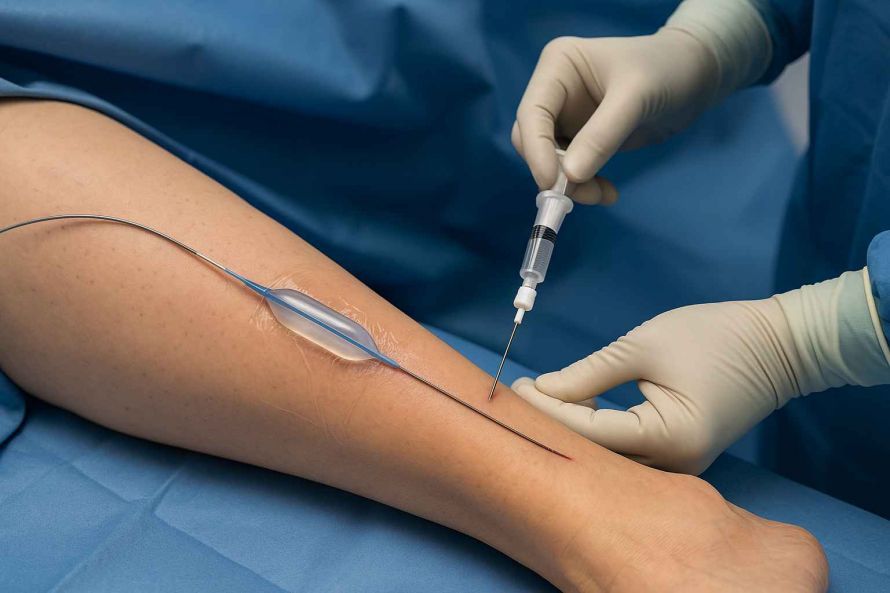
Balloon catheter dilation (PTA) is a standardized medical procedure performed under local anesthesia. First, a thin wire is advanced through the groin or, less commonly, through the arm to the narrowed section of the vessel. Using this wire, the specialist guides a balloon catheter to the affected area.
The balloon is then inflated in a controlled manner. This dilates the vessel, improving blood flow and widening the narrowed area. Depending on the length of the plaque, the procedure can take anywhere from a few minutes to over half an hour.
If a stable opening in the vessel is required, an additional stent is placed to keep it open. Modern balloon catheters allow for a highly targeted, gentle treatment that spares surrounding structures such as nerves. The procedure is usually performed on an outpatient basis or during a short hospital stay.
Medical Benefits of Balloon Dilatation
Balloon angioplasty improves blood flow immediately after the procedure, thereby alleviating symptoms caused by circulatory disorders. Particularly in the leg, many patients experience a rapid improvement in their quality of life as pain while walking or symptoms at rest subside.
Another advantage is that the procedure is minimally invasive and therefore significantly less stressful than bypass surgery. It is considered an appropriate treatment when surgery is to be avoided or when the patient cannot undergo surgical treatment. Modern PTA techniques have shown significant advances, further improving success rates.
Risks and Possible Complications
Like any procedure, balloon angioplasty for circulatory disorders can carry risks. In rare cases, vascular injuries, bruising, or restenosis may occur. In very narrow segments, the dilation can cause small vascular tears, which, however, can usually be treated immediately.
Complications occasionally arise when severe plaque cannot be completely dissolved or dilated. In such cases, an additional stent may be necessary. It is important that the procedure be performed at an experienced clinic or a specialized center, as expertise plays a crucial role in preventing complications.
Despite potential risks, PTA is considered a minimally invasive and safe method, especially compared to surgical alternatives.
Follow-up Care After Balloon Catheter Dilatation
After treatment, the patient remains in the hospital for a short time so that their circulation and the puncture site can be monitored. The patient can move around cautiously just a few hours after the procedure. It is crucial to avoid putting pressure on the groin.
Blood-thinning medications are often prescribed to stabilize the dilated vessel. Regular follow-up visits help ensure the long-term success of the balloon angioplasty. Good follow-up care prevents new narrowings from occurring.
How can a recurrence of vascular narrowing be prevented?
Successful treatment alone is not enough if risk factors are not consistently addressed. It is particularly important to avoid smoking, engage in regular exercise, maintain a healthy diet, and keep blood lipid levels well-controlled.
The doctor will inform the patient about which measures are appropriate. Follow-up examinations at a university medical center, hospital, or specialized clinic ensure that no new problems arise over the long term. Effective prevention plays a crucial role in the long-term success of the treatment.
Alternatives to Balloon Angioplasty
Depending on the severity of the circulatory disorders, alternative treatment options are available. In cases of extremely long or severely calcified narrowings, bypass surgery may be necessary. Smaller narrowings can sometimes be treated with medication alone.
If balloon angioplasty alone is not sufficient, the option of combining it with stent placement is available. In rare cases, surgical procedures may be appropriate if PTA could not be performed successfully or if the narrowings are located in an unfavorable position. For specific cases, new methods are available that are applied peripherally and allow for even more targeted dilation.
FAQ
How does balloon catheter dilation work?
During balloon catheter dilation, a thin catheter with a small balloon is advanced through the groin into the narrowed vessel. The balloon is briefly inflated at the site of the narrowing, stretching the vessel wall. This improves blood flow, and surgical intervention is often not necessary.
When does a doctor recommend this procedure?
Balloon angioplasty is recommended when circulatory problems cause symptoms or limit walking distance. The procedure can be an appropriate treatment, particularly for PAD in the leg. An accurate diagnosis based on tests such as ultrasound or angiography is crucial.
How long does the balloon catheter procedure take?
The procedure usually takes between 20 and 60 minutes. The duration of treatment depends on the length of the narrowing and the affected section of the vessel. In experienced centers, the procedure can be performed precisely and quickly, often under local anesthesia.
What are the benefits of balloon angioplasty?
The advantage lies in the minimally invasive treatment that avoids major surgery. The procedure improves blood flow, relieves symptoms, and can enhance quality of life. If necessary, a stent can also be inserted if the narrowed area does not remain stable after dilation.
What are the risks?
As with any procedure, bleeding, vascular injury, or reactions at the puncture site may rarely occur. In some cases, restenosis may develop. The risk is slightly higher in patients with diabetes, long plaque deposits, or very narrow vessels.
What does follow-up care involve?
After balloon angioplasty, patients usually remain in the hospital for a short time until the puncture site has stabilized. They are often able to move around on the same day. Regular checkups ensure that the vessel remains open and that no new symptoms develop.
Can the narrowing recur?
Yes, depending on the length of the narrowed section and individual risk factors, a narrowing may recur. This risk can often be reduced through targeted follow-up care and, if necessary, stent implantation.
What alternatives are there to balloon angioplasty?
Possible alternatives include surgical procedures such as bypass surgery or purely medication-based therapies. For mild symptoms, walking exercises and risk factor management can help. The appropriate treatment depends on the findings and the recommendation of a specialist.
When is balloon angioplasty not appropriate?
If the vessel is completely blocked or the calcifications are very hard, the procedure may reach its limits. In such cases, doctors often choose a different form of treatment or combine PTA with additional measures.

About the medical author
Sabine Schneider
Editor-in-Chief
Sabine Schneider – medical author: Explore expert articles and medical expertise in the Leading Medicine Guide.
More about the medical author →