When every step is painful and mobility in daily life is severely limited, many patients see hip surgery as their only option. In most cases, advanced cartilage wear—known as coxarthrosis—is the cause of the symptoms. In a specialized clinic for orthopedics and trauma surgery, the implantation of an artificial hip joint is now a routine procedure. Thanks to modern medicine and minimally invasive surgical techniques, patients can often quickly return to an active lifestyle. Whether a cemented prosthesis or a cementless stem is chosen, and how rehabilitation proceeds, depends on the individual’s health status. Learn everything you need to know here about the procedure, the risks, and the recovery period following hip surgery.
The hip joint consists of the hip socket (acetabulum) and the head of the thigh bone (femur). The joint allows the leg to rotate in all directions.
Hip surgery is necessary when
- the patient experiences limited mobility,
- is in pain, and
- conservative treatment methods do not improve their health.
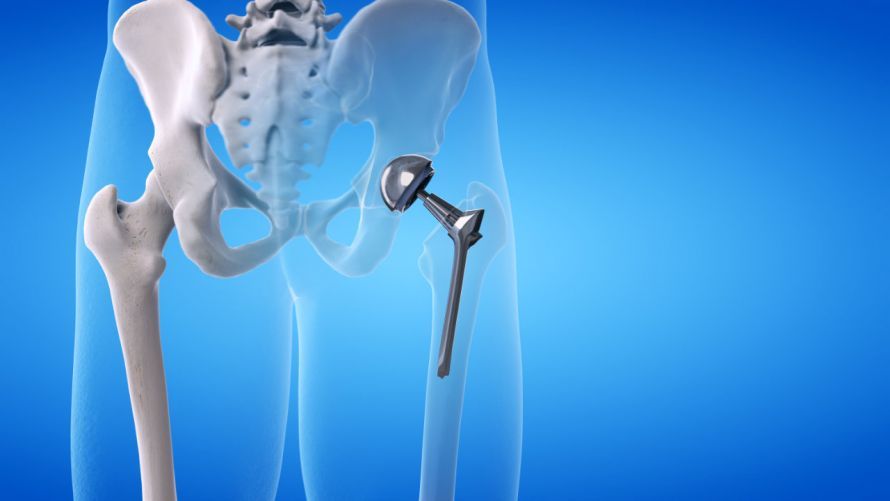
A very common hip procedure is the implantation of an artificial hip joint (hip prosthesis). For this reason, this text focuses specifically on hip replacement surgery. The artificial hip joint subsequently performs the same functions that the natural joint previously did.
In some cases, joint replacement is not necessary: in such cases, it is sufficient to remove pieces of cartilage and other problematic tissue to restore pain relief.
Medical conditions that require hip surgery
The most common reason for implanting an artificial hip joint is severely advanced osteoarthritis of the hip joint (coxarthrosis). The wear and tear of the joint cartilage—which is usually age-related—typically makes it impossible to repair the natural hip joint. Therefore, the implantation of an artificial hip is necessary.
Other reasons for hip surgery include:
- Congenital hip dysplasia: Severe misalignments of the hip joint that cannot be treated conservatively must be corrected surgically. In babies with this malformation, the femoral head sits incorrectly in the acetabulum, causing the two joint parts to rub against each other. As a result, the children have legs of different lengths and often an asymmetrical gluteal fold.
- A hip fracture, for example, resulting from a serious accident.
- Hip joint bone spurs
- Inflammatory (arthritic) changes in the hip
Hip replacement surgery at the hospital: Implantation and surgery for a total hip replacement (THR)
What procedures are available for hip surgery?
The surgeon replaces either both parts of the hip joint with a total hip replacement (THR), also known as an artificial hip joint. In cases of less severe damage, only one part of the joint needs to be replaced with a so-called partial hip replacement.
Which prosthesis is ultimately used for a patient depends
- the patient’s age,
- their activity level,
- their body weight, and
- their bone density
. The artificial hip joints and partial prostheses implanted today are normally designed to last 15 to 20 years. After that, they must be replaced as part of a hip replacement procedure.
Before hip surgery, the doctor examines the patient using imaging techniques. An X-ray is usually used. This allows the doctor to determine whether a hip prosthesis is necessary. If so, the doctor can assess which prosthesis is most likely to be successful and which type of fixation (screw-fixation or cemented) is appropriate.
Based on the X-ray image, the surgeon creates a computer-aided planning sketch. This allows him to optimally tailor the size and position of the prosthesis components to the patient. This approach helps minimize potential complications during the surgical procedure.
For hip surgeries, hip surgery specialists use either the conventional or the minimally invasive procedure.
Conventional Surgical Technique
Conventional surgical technique refers to a procedure involving a long incision. This gives the surgeon a direct view of the surgical site and allows them to work on the exposed hip bone.
This conventional surgical technique and the implantation of a total hip replacement (THR) are typically used in cases of severe joint wear.
The procedure is performed under general anesthesia or spinal anesthesia (an anesthetic injection into the spinal canal).
The surgeon completely opens the hip joint and removes worn bone material. He then prepares the hip bone for the prosthesis: He mills down the cartilage surfaces of the acetabulum, opens the femoral shaft, and shapes it with special rasps. Afterward, they screw or cement the artificial hip joint into place.
Finally, the artificial hip is tested for mobility and functionality. If everything went according to plan, the surgeon closes the incision and applies a compression bandage.
Minimally Invasive Hip Surgery
Modern minimally invasive hip surgery is much gentler on the tissues. The surgeon makes smaller incisions and implants the endoprosthesis through a naturally occurring gap in the muscle. This way, he does not have to cut through the hip muscles. It is also gentler on tendons and nerves.
Rehabilitation after hip surgery therefore takes less time. Complications during the surgical procedure are virtually nonexistent, even in patients who are severely overweight. Blood loss during the surgery is also lower.
The surgical scars are shorter and less noticeable than after conventional surgery.
The minimally invasive method is suitable for patients of all ages. However, it cannot be used for every type of hip condition.
Arthroscopic Hip Surgery
Arthroscopy may be used for mild osteoarthritis symptoms. During the procedure,
- the surgeon smooths the hip joint cartilage affected by wear and tear,
- removes any bone spurs that may be present, and
- thereby improves the patient’s mobility.
In some cases, this can halt or slow the progression of coxarthrosis.
How long does hip surgery take?
The duration of hip surgery depends on the surgical technique chosen and other factors. If the surgeon uses the conventional procedure, the surgery takes a maximum of two hours—unless complications arise.
For minimally invasive hip surgeries, the procedure takes 50 to 70 minutes.
Risks and Complications of Hip Surgery
Like other surgical procedures, hip surgeries also carry risks. For example, any surgery can lead to wound infections caused by bacteria or healing complications.
Venous thrombosis can occur during the implantation of an artificial hip joint. In medical terms, this refers to the formation of a blood clot. This clot can block important blood vessels and thus cause a life-threatening embolism. To prevent this from happening, the patient is given blood-thinning medication as a preventive measure.
Specific surgical risks include:
- hip dislocation (dislocation of the hip joint): This complication occurs if the surgeon does not position the endoprosthesis precisely enough.
- Improper bone healing: If the patient does not move enough immediately after hip surgery, this can sometimes result in joint contractures and tissue adhesions.
- Periarticular ossification (calcification in the tissue near the surgical site): Calcium deposits form in the surrounding muscle tissue, causing limited mobility and pain. A second surgery is required.
The most common complications of hip surgery include:
Rehabilitation and Recovery After Hip Replacement: The Period Following the Procedure with the Artificial Hip
FAQ: The 8 Most Important Questions About Hip Replacement Surgery
When is the right time for hip replacement surgery?
The optimal time for hip replacement surgery varies from person to person and depends heavily on the patient’s level of discomfort. If conservative treatments such as physical therapy and pain medication no longer provide relief, and hip pain occurs even at rest or at night, hip replacement is often advisable. An X-ray shows the orthopedic surgeon how far the cartilage has already worn down. If quality of life is permanently compromised by limited mobility, joint replacement is often the treatment of choice.
What happens during the implantation of an artificial hip joint?
During the implantation of an artificial hip joint, the surgeon—usually a specialist—gains access to the hip joint. To do this, muscles and tendons are moved aside or partially detached. The diseased femoral head is removed, and the acetabulum is milled. The artificial acetabular cup and the stem are then anchored in the femur. Depending on bone quality, bone cement is used, or the implant is fixed by compression (cementless). Finally, the new hip joint is checked for stability and leg length before the incision is closed.
How long is the hospital stay?
The hospital stay typically lasts about 5 to 7 days, depending on the healing process and the patient’s overall health. Mobilization begins under the guidance of physical therapists as early as the first few days after surgery. The goal is for the patient to be able to walk safely with forearm crutches and manage stair climbing before being discharged to rehabilitation.
What are the advantages of minimally invasive surgery?
Minimally invasive surgery is characterized by access to the joint through smaller incisions, without cutting through any major muscles. This spares the tissue and muscles, which often results in less pain after the procedure and a faster recovery. Wound healing after surgery is usually less complicated, and the scar is smaller. However, this surgical technique is not suitable for every patient and requires an experienced surgeon.
What is the rehabilitation process like after hip surgery?
Rehabilitation, or “reha” for short, usually begins immediately after the hospital stay and lasts about three weeks. It can be done on an outpatient or inpatient basis. During rehab, patients learn through targeted physical therapy and gait training how to properly bear weight on the operated leg again and strengthen their muscles. In the first few weeks after surgery, certain movements—such as crossing your legs or bending over more than 90 degrees—should be avoided to prevent dislocation of the prosthesis.
How long does an artificial hip last?
Modern hip replacements are very durable and often last 15 to 20 years, and in some cases even longer. The lifespan depends on factors such as the patient’s activity level, body weight, and the quality of the prosthesis’s anchorage in the bone. If the artificial hip joint becomes loose over the years, a revision surgery can be performed at a specialized joint replacement center.
What are the risks of hip surgery?
As with any surgery, there are general risks such as infection, postoperative bleeding, or blood clots. Specific complications associated with total hip replacement (THR) can include a leg-length discrepancy, nerve damage, or dislocation of the new joint. To minimize the risk of infection, patients are given antibiotics around the time of the procedure. Choosing an experienced center for orthopedics and orthopedic surgery can help minimize many of these risks.
When will I be back on my feet after surgery?
The recovery period varies from patient to patient. Most patients can put their full weight on the new joint immediately. Walking aids are usually needed for 4 to 6 weeks to help restore a normal gait. Light physical activities such as walking or cycling are often possible again after about 3 months. However, it may take several months after surgery to achieve full weight-bearing capacity and freedom from pain.